National Key Laboratory of Medical Immunology, Institute of Immunology, Navy Medical University, Shanghai, China.
Beijing Friendship Hospital, Capital Medical University, Beijing, China.
Front Immunol. 2021 Nov 9;12:765615. doi: 10.3389/fimmu.2021.765615. eCollection 2021.
Pattern recognition receptors (PRRs) family plays a vital role in the initial stage of innate immune response and the subsequent activation of adaptive immunity. Increasing evidences have indicated that several PRRs play critical roles in the progress of inflammation and tumorigenesis. However, the comprehensive significance of PRRs family in clinical prognosis of different cancers is still elusive.
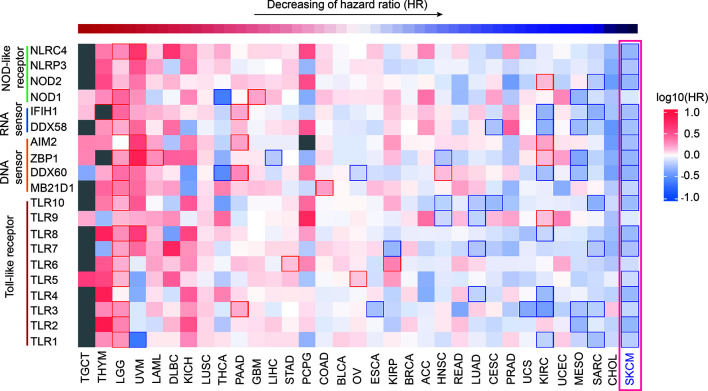
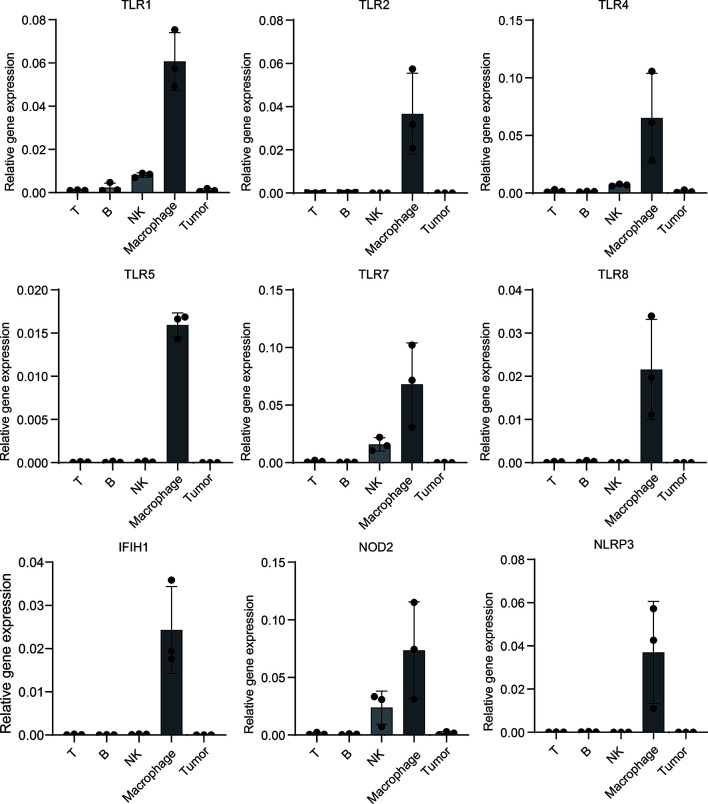
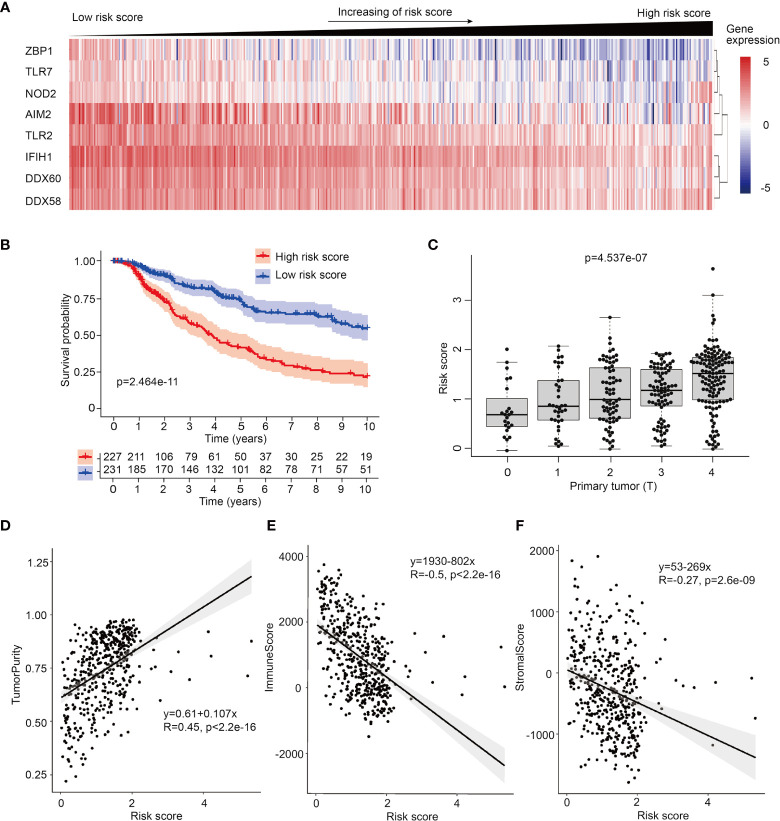
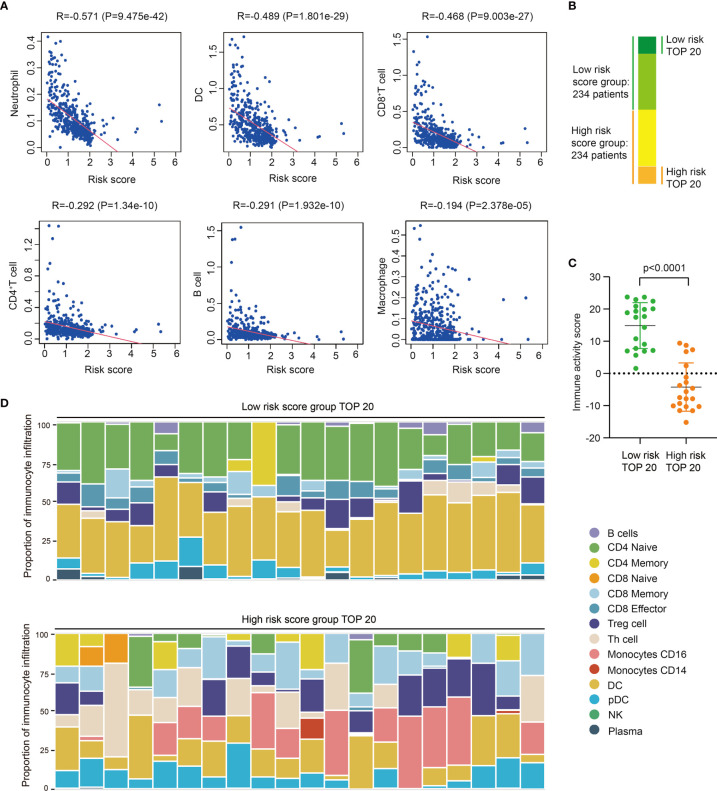
We analyzed expression of 20 canonical PRRs in tumor samples from 9502 patients of 33 tumor types. Next, we used expression profiles of PRRs in skin cutaneous melanoma (SKCM) to build a Cox prognosis model. Then, we analyzed immune infiltration features and immune activity of high risk score and low risk score patients. Finally, we analyzed the single-cell sequencing data of different cancers and detected the expression of PRRs in mouse melanoma model to identify PRRs-expressing cell types.
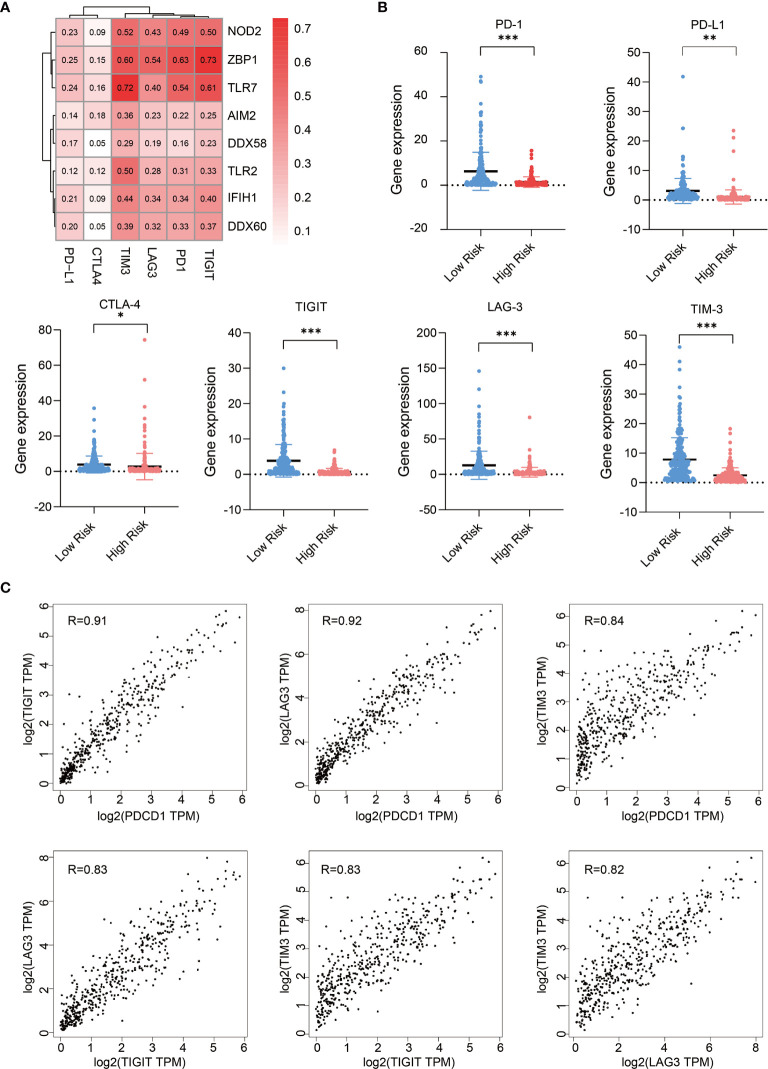
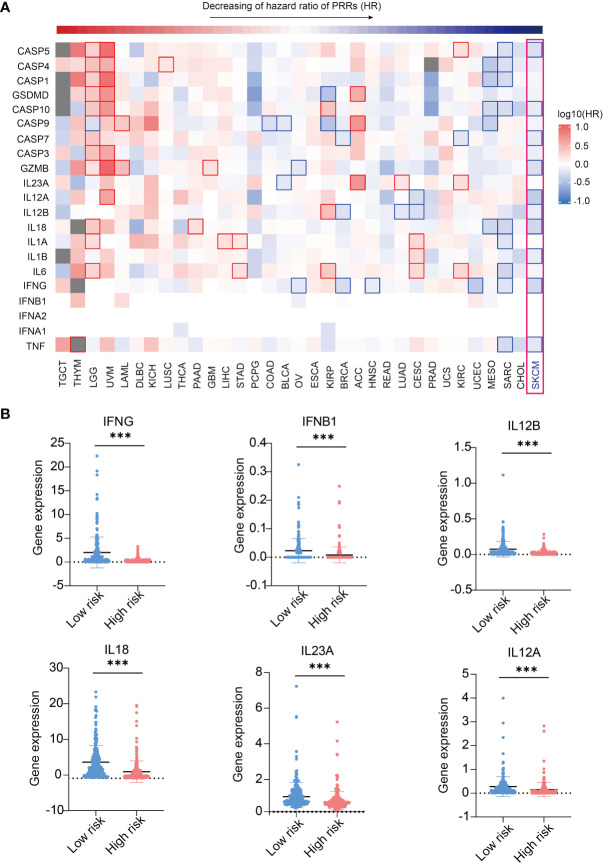
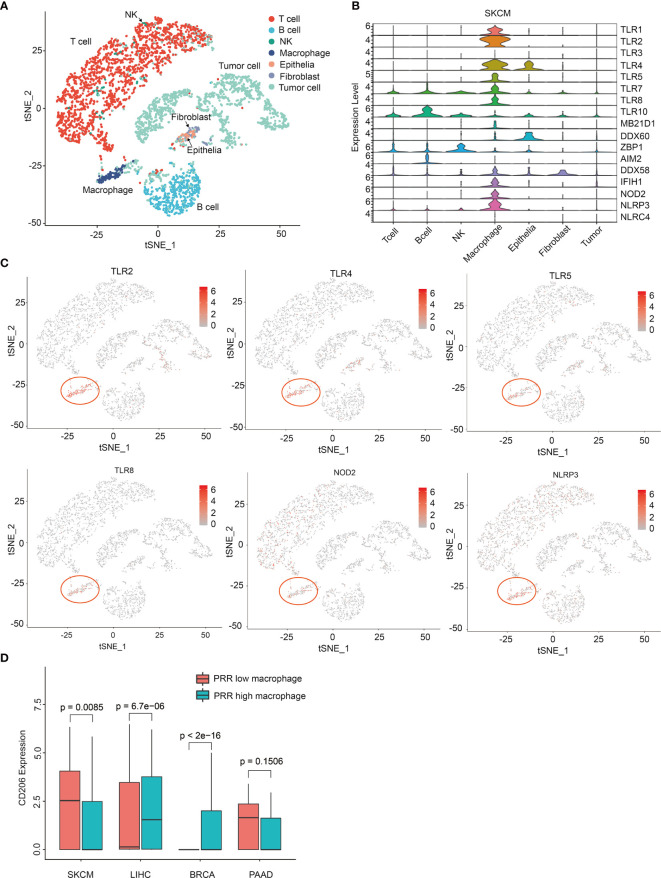
We found PRRs had a significantly positive correlation with prognosis in SKCM rather than other tumors, and PRR-based Cox model had a much better prognosis potential than any single PRR. Further analysis shows risk score could indicate immunocyte infiltration and immune activity in SKCM. We also found the expressions of some PRR genes were highly correlated with the expression of immune checkpoints molecules in SKCM, indicating they could be indicators for clinical immune therapy. Finally, we found only in SKCM samples, the expression of PRRs is especially high in a subpopulation of macrophages with a trait of CD206 low expression, probably explaining why PRRs have prognosis potential in melanoma.
Our study reveals PRR family in macrophages has a positive prognosis potential in melanoma and could be valuable for clinical prognosis and immune therapy.
模式识别受体(PRRs)家族在先天免疫反应的初始阶段和随后的适应性免疫激活中起着至关重要的作用。越来越多的证据表明,几种 PRRs 在炎症和肿瘤发生的进展中起着关键作用。然而,PRRs 家族在不同癌症的临床预后中的综合意义仍不清楚。
我们分析了来自 9502 例 33 种肿瘤类型患者的肿瘤样本中 20 种经典 PRRs 的表达。接下来,我们使用皮肤黑色素瘤(SKCM)中的 PRRs 表达谱构建 Cox 预后模型。然后,我们分析了高风险评分和低风险评分患者的免疫浸润特征和免疫活性。最后,我们分析了不同癌症的单细胞测序数据,并在小鼠黑色素瘤模型中检测了 PRRs 的表达,以鉴定表达 PRRs 的细胞类型。
我们发现 PRRs 与 SKCM 的预后呈显著正相关,而与其他肿瘤无显著相关性,基于 PRR 的 Cox 模型比任何单个 PRR 具有更好的预后潜力。进一步分析表明,风险评分可以指示 SKCM 中的免疫细胞浸润和免疫活性。我们还发现,一些 PRR 基因的表达与 SKCM 中免疫检查点分子的表达高度相关,表明它们可能是临床免疫治疗的指标。最后,我们发现只有在 SKCM 样本中,PRRs 的表达在一群具有低表达 CD206 特征的巨噬细胞亚群中特别高,这可能解释了为什么 PRRs 在黑色素瘤中有预后潜力。
我们的研究揭示了巨噬细胞中的 PRR 家族在黑色素瘤中具有积极的预后潜力,可能对临床预后和免疫治疗有价值。