Cuff Jordan P, Wilder Shawn M, Tercel Maximillian P T G, Hunt Rhiannon, Oluwaseun Somoye, Morley Paige S, Badell-Grau Rafael A, Vaughan Ian P, Bell James R, Orozco-terWengel Pablo, Symondson William O C, Müller Carsten T
School of Biosciences Cardiff University Cardiff UK.
Rothamsted Research Harpenden UK.
Methods Ecol Evol. 2021 Apr;12(4):593-601. doi: 10.1111/2041-210X.13551. Epub 2021 Jan 22.
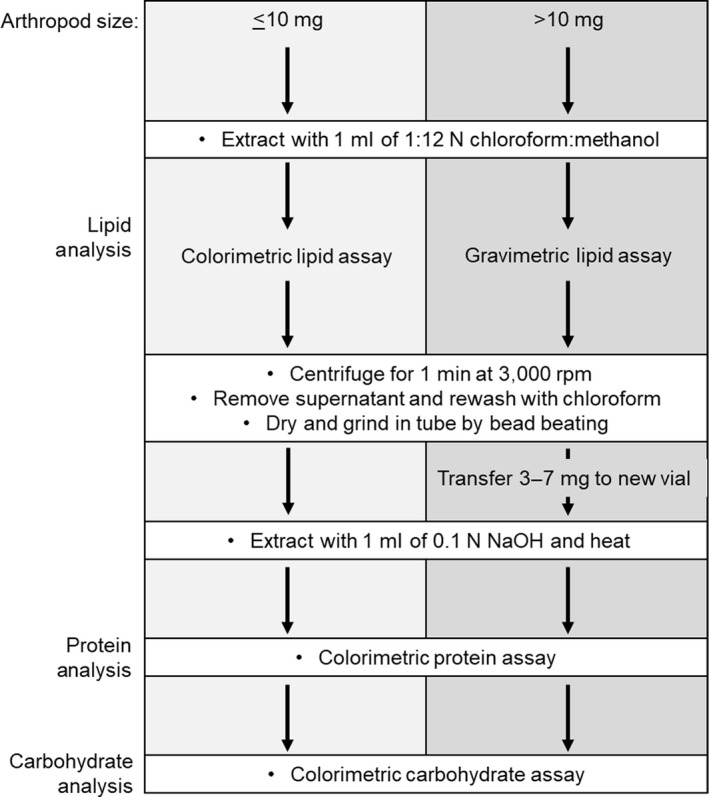
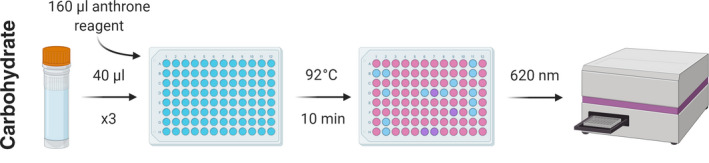
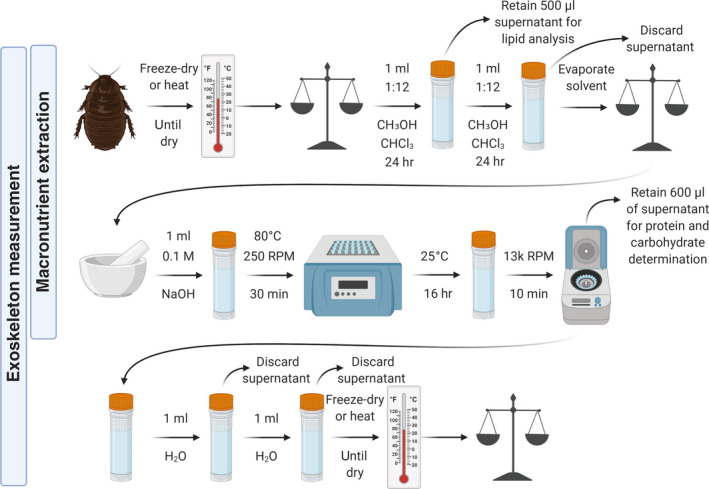
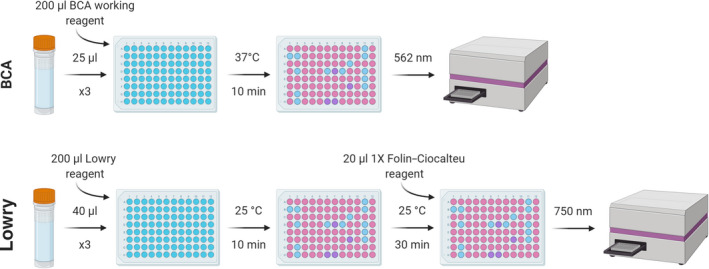
Macronutrients, comprising carbohydrates, proteins and lipids, underpin many ecological processes, but their quantification in ecological studies is often inaccurate and laborious, requiring large investments of time and bulk samples, which make individual-level studies impossible. This study presents Macronutrient Extraction and Determination from Invertebrates (MEDI), a protocol for the direct, rapid and relatively low-cost determination of macronutrient content from single small macroinvertebrates.Macronutrients were extracted by a sequential process of soaking in 1:12 chloroform:methanol solution to remove lipid and then solubilising tissue in 0.1 M NaOH. Proteins, carbohydrates and lipids were determined by colorimetric assays from the same individual specimens.The limits of detection of MEDI with the equipment and conditions used were 0.067, 0.065 and 0.006 mg/ml for proteins, carbohydrates and lipids respectively. Adjusting the volume of reagents used for extraction and determination can broaden the range of concentrations that can be detected. MEDI successfully identified taxonomic differences in macronutrient content between five insect species.Macronutrient Extraction and Determination from Invertebrates can directly and rapidly determine macronutrient content in tiny (dry mass ~3 mg) and much larger individual invertebrates. Using MEDI, the total macronutrient content of over 50 macroinvertebrates can be determined within around 3 days of collection at a cost of ~$1.35 per sample.
常量营养素包括碳水化合物、蛋白质和脂质,是许多生态过程的基础,但在生态研究中对它们进行量化往往不准确且费力,需要投入大量时间和大量样本,这使得个体层面的研究无法进行。本研究提出了一种从无脊椎动物中提取和测定常量营养素(MEDI)的方法,该方法可直接、快速且相对低成本地测定单个小型大型无脊椎动物的常量营养素含量。通过依次浸泡在氯仿:甲醇体积比为1:12的溶液中以去除脂质,然后将组织溶解在0.1M氢氧化钠中来提取常量营养素。通过比色法从相同的个体标本中测定蛋白质、碳水化合物和脂质。在所使用的设备和条件下,MEDI对蛋白质、碳水化合物和脂质的检测限分别为0.067、0.065和0.006mg/ml。调整用于提取和测定的试剂体积可以拓宽可检测的浓度范围。MEDI成功识别了五种昆虫物种之间常量营养素含量的分类学差异。从无脊椎动物中提取和测定常量营养素可以直接且快速地测定微小(干重约3mg)以及更大个体无脊椎动物中的常量营养素含量。使用MEDI,在采集后约3天内可以测定50多种大型无脊椎动物的总常量营养素含量,每个样本的成本约为1.35美元。