Zheng Xin, Liu Zijian, Mi Mi, Wen Qiuyue, Wu Gang, Zhang Liling
Cancer Center, Union Hospital, Tongji Medical College, Huazhong University of Science and Technology, Wuhan, China.
Front Oncol. 2021 Nov 10;11:734853. doi: 10.3389/fonc.2021.734853. eCollection 2021.
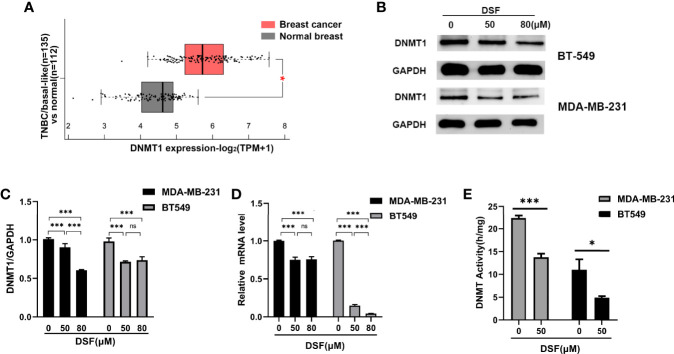
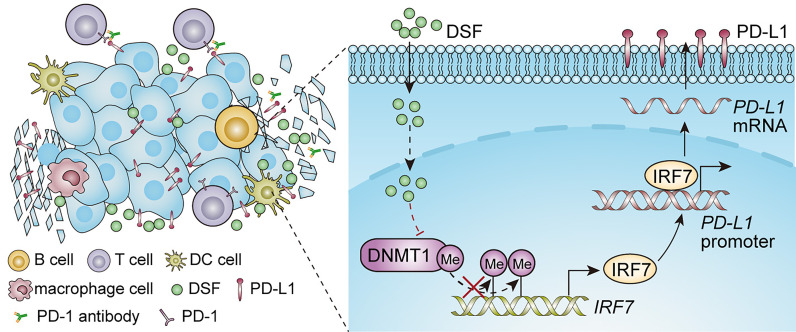
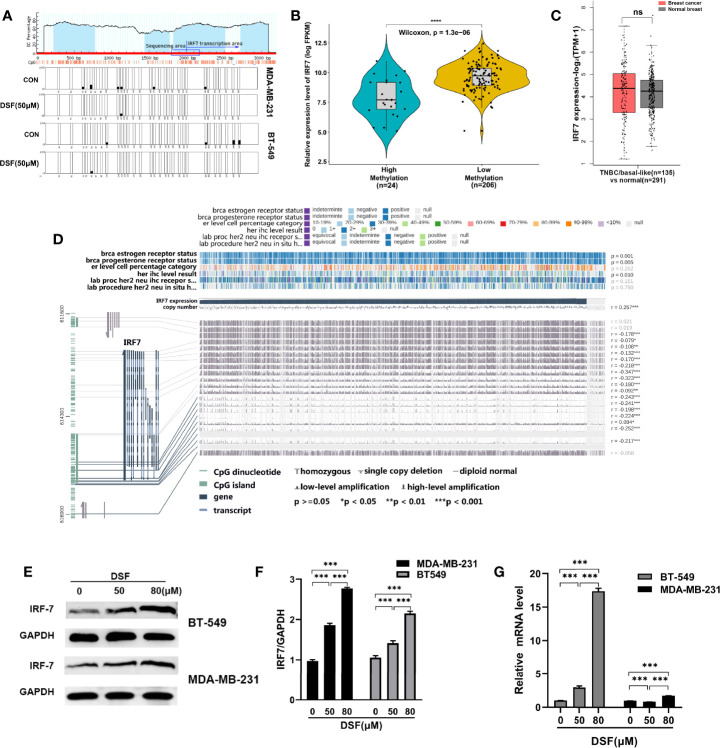
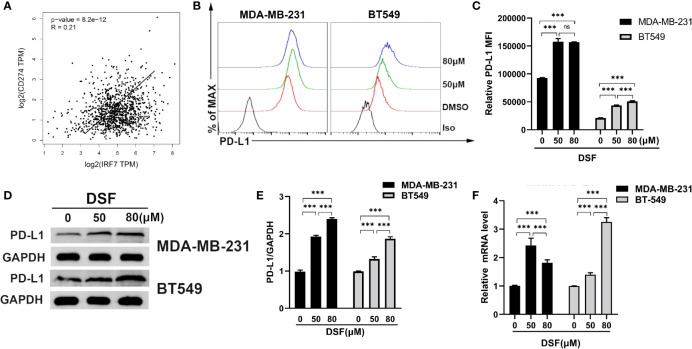
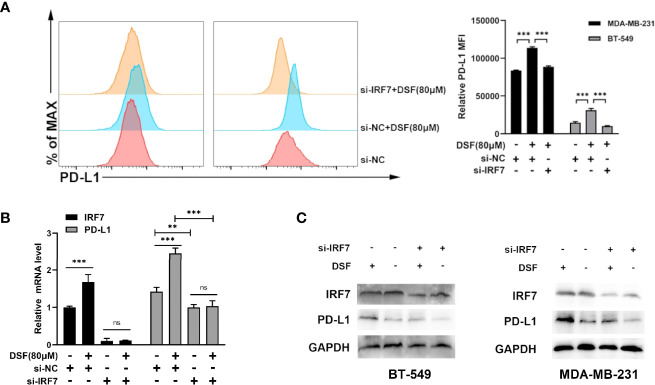
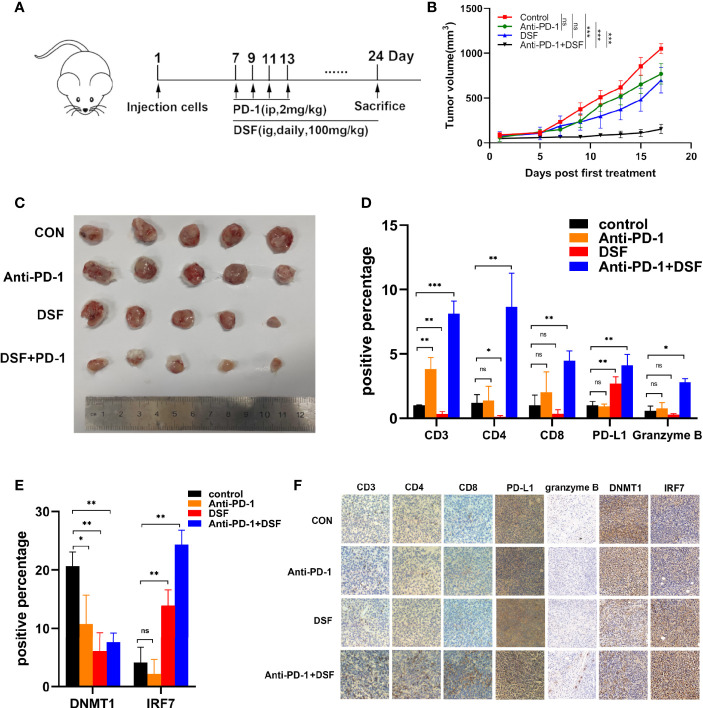
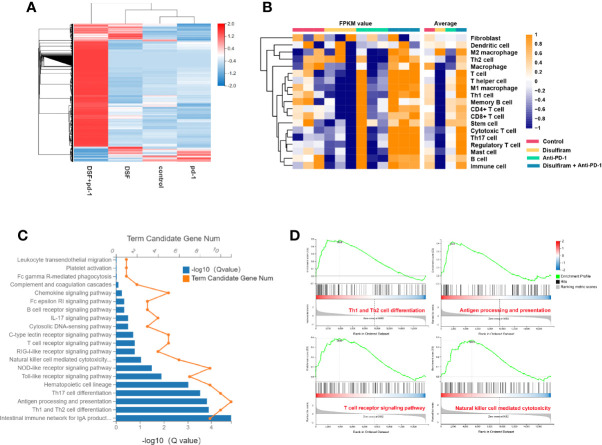
Immune checkpoint blockade (ICB), particularly programmed death 1 (PD-1) and its ligand (PD-L1), has shown considerable clinical benefits in patients with various cancers. Many studies show that PD-L1 expression may be biomarkers to help select responders for anti-PD-1 treatment. Therefore, it is necessary to elucidate the molecular mechanisms that control PD-L1 expression. As a potential chemosensitizer and anticancer drug, disulfiram (DSF) kills tumor cells regulating multiple signaling pathways and transcription factors. However, its effect on tumor immune microenvironment (TIME) remains unclear. Here, we showed that DSF increased PD-L1 expression in triple negative breast cancer (TNBC) cells. Through bioinformatics analysis, we found that DNMT1 was highly expressed in TNBC tissue and PD-L1 was negatively correlated with IRF7 expression. DSF reduced DNMT1 expression and activity, and hypomethylated IRF7 promoter region resulting in upregulation of IRF7. Furthermore, we found DSF enhanced PD-L1 expression DNMT1-mediated IRF7 hypomethylation. In experiments, DSF significantly improved the response to anti-PD-1 antibody (Ab) in 4T1 breast cancer mouse model. Immunohistochemistry staining showed that granzyme B+ and CD8+ T cells in the tumor tissues were significantly increased in the combination group. By analyzing the results of the tumor tissue RNA sequencing, four immune-associated pathways were significantly enriched in the DSF joint anti-PD-1 Ab group. In conclusion, we found that DSF could upregulate PD-L1 in TNBC cells and elucidated its mechanism. Our findings revealed that the combination of DSF and anti-PD-1 Ab could activate TIME to show much better antitumor efficacy than monotherapy.
免疫检查点阻断(ICB),尤其是程序性死亡1(PD-1)及其配体(PD-L1),已在多种癌症患者中显示出显著的临床益处。许多研究表明,PD-L1表达可能是有助于选择抗PD-1治疗反应者的生物标志物。因此,有必要阐明控制PD-L1表达的分子机制。作为一种潜在的化学增敏剂和抗癌药物,双硫仑(DSF)通过调节多种信号通路和转录因子来杀死肿瘤细胞。然而,其对肿瘤免疫微环境(TIME)的影响仍不清楚。在这里,我们表明DSF增加了三阴性乳腺癌(TNBC)细胞中PD-L1的表达。通过生物信息学分析,我们发现DNMT1在TNBC组织中高表达,且PD-L1与IRF7表达呈负相关。DSF降低了DNMT1的表达和活性,并使IRF7启动子区域去甲基化,导致IRF7上调。此外,我们发现DSF通过DNMT1介导的IRF7去甲基化增强了PD-L1的表达。在实验中,DSF显著改善了4T1乳腺癌小鼠模型对抗PD-1抗体(Ab)的反应。免疫组织化学染色显示,联合组肿瘤组织中的颗粒酶B+和CD8+T细胞显著增加。通过分析肿瘤组织RNA测序结果,DSF联合抗PD-1 Ab组中四条免疫相关通路显著富集。总之,我们发现DSF可以上调TNBC细胞中的PD-L1并阐明其机制。我们的研究结果表明,DSF与抗PD-1 Ab联合使用可以激活TIME,显示出比单一疗法更好的抗肿瘤疗效。