Department of Oncological Medicine, Gustave Roussy, Villejuif, France.
Department of Medical Biology and Pathology, Gustave Roussy, Villejuif, France; Medical School, University of Paris XI Sacly, Saclay, France.
ESMO Open. 2021 Dec;6(6):100312. doi: 10.1016/j.esmoop.2021.100312. Epub 2021 Dec 1.
Cabozantinib is a tyrosine kinase inhibitor with a substantial efficacy in metastatic renal cell carcinoma, and is associated with a challenging toxicity profile leading to frequent drug discontinuations. Whereas an exposure/safety relationship was demonstrated for this drug, an exposure/efficacy relationship is still unknown.
We carried out a monocentric, observational, pharmacokinetics/pharmacodynamics (PK/PD) study in patients with metastatic renal cell carcinoma (INDS MR 5612140520). We used measured blood concentrations of cabozantinib (C) to determine the area under the curve (AUC), apparent clearance (Cl/F) and residual blood concentration (C). Best overall response according to RECIST 1.1 and relevant toxicity (adverse event grade 3-4 or grade 2 requiring dose reduction or discontinuation) were assessed according to C C, AUC and Cl/F.
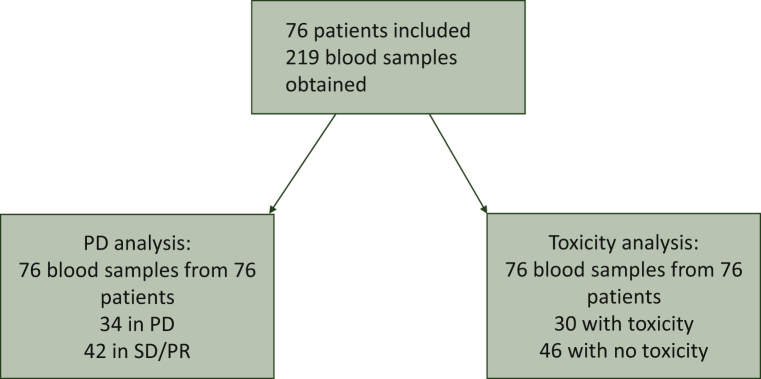
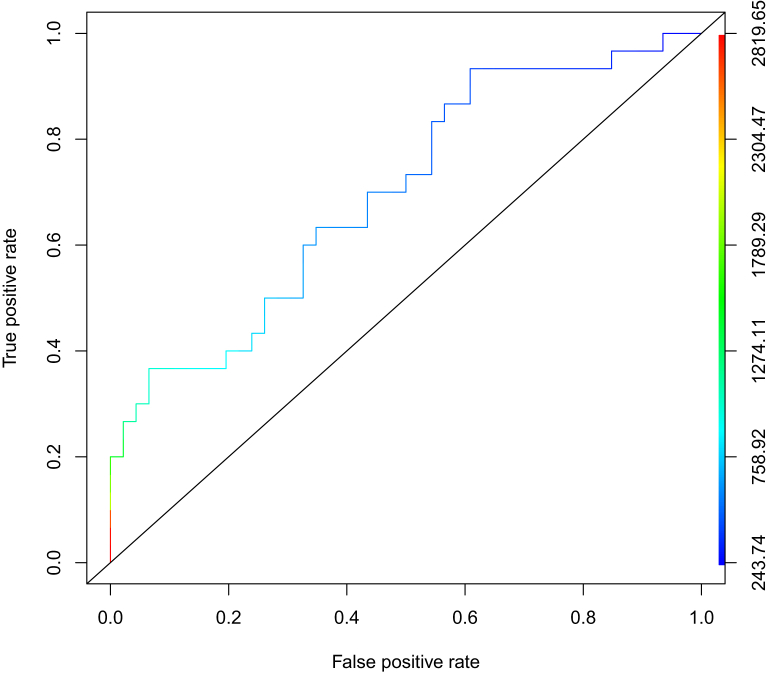
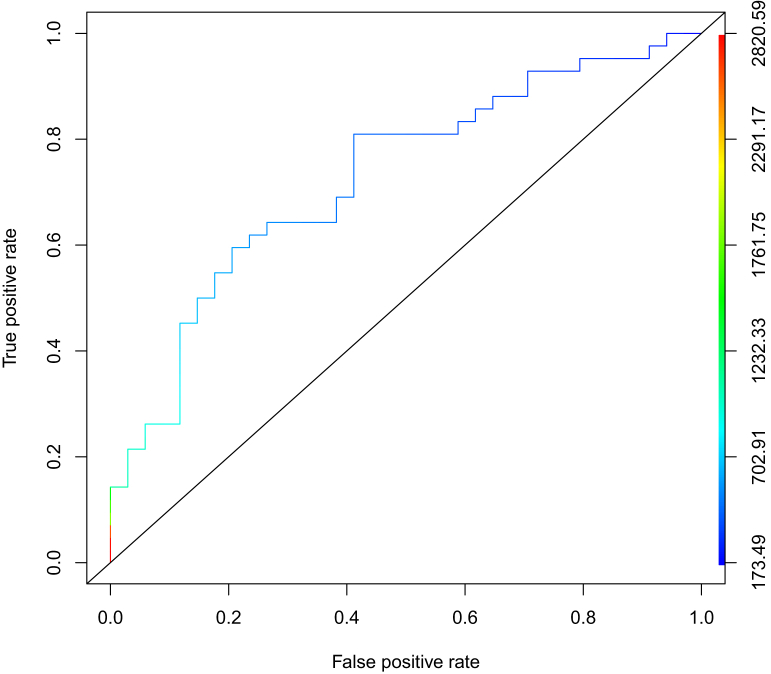
We enrolled 76 patients, including 35 who experienced disease progression and 30 with grade 3-4 toxicity. Patients with progressive disease had a significantly lower median C (406 versus 634 ng/ml, P = 0.001), Cl/F (2 versus 2.9 l/h, P = 0.002) and AUC (16 versus 20 μg h/ml, P = 0.037) compared with patients who had disease control as best response. Patients with relevant toxicity had a significantly higher C (732 versus 531 ng/ml, P = 0.006), C (693 versus 521 ng/ml, P = 0.005) and AUC (21 versus 16 μg h/ml, P = 0.046) compared with patients who did not experience any grade relevant toxicity. Receiver operating characteristic curves obtained from our study defined a threshold for drug efficacy of 536.8 ng/ml and of 617.7 ng/ml for toxicity.
We first demonstrate the PK/PD relationship for cabozantinib. Severe toxicities are associated with a higher drug exposure, whereas inefficacy is associated with a lower drug exposure. Cabozantinib plasma drug monitoring may be useful to optimize clinical practice.
卡博替尼是一种酪氨酸激酶抑制剂,在转移性肾细胞癌中具有显著疗效,但毒性作用复杂,导致频繁停药。虽然已经证明了这种药物的暴露与安全性之间存在关系,但暴露与疗效之间的关系仍不清楚。
我们在转移性肾细胞癌患者中进行了一项单中心、观察性、药代动力学/药效学(PK/PD)研究(INDS MR 5612140520)。我们使用测量的卡博替尼(C)血药浓度来确定曲线下面积(AUC)、表观清除率(Cl/F)和残留血药浓度(C)。根据 RECIST 1.1 评估最佳总体反应,根据 C、AUC 和 Cl/F 评估相关毒性(不良事件 3-4 级或 2 级需要减少剂量或停药)。
我们共纳入 76 例患者,其中 35 例患者疾病进展,30 例患者发生 3-4 级毒性。与疾病控制作为最佳反应的患者相比,疾病进展患者的中位 C(406 与 634ng/ml,P=0.001)、Cl/F(2 与 2.9 l/h,P=0.002)和 AUC(16 与 20μg h/ml,P=0.037)明显更低。与未发生任何 3-4 级相关毒性的患者相比,发生相关毒性的患者的 C(732 与 531ng/ml,P=0.006)、C(693 与 521ng/ml,P=0.005)和 AUC(21 与 16μg h/ml,P=0.046)明显更高。我们的研究获得的受试者工作特征曲线定义了药物疗效的阈值为 536.8ng/ml,毒性的阈值为 617.7ng/ml。
我们首次证明了卡博替尼的 PK/PD 关系。严重毒性与较高的药物暴露相关,而疗效不佳与较低的药物暴露相关。卡博替尼的血浆药物监测可能有助于优化临床实践。