Thawani Rajat, Repetto Matteo, Keddy Clare, Nicholson Katelyn, Jones Kristen, Nusser Kevin, Beach Catherine Z, Harada Guilherme, Drilon Alexander, Davare Monika A
Section of Hematology/Oncology, Department of Medicine, University of Chicago, Chicago, IL, 60637, USA.
Thoracic Oncology Service, Division of Solid Tumor Oncology, Department of Medicine, Memorial Sloan Kettering Cancer Center, Weill Cornell Medical College, New York, NY, 10065, USA.
NPJ Precis Oncol. 2024 Aug 8;8(1):175. doi: 10.1038/s41698-024-00663-1.
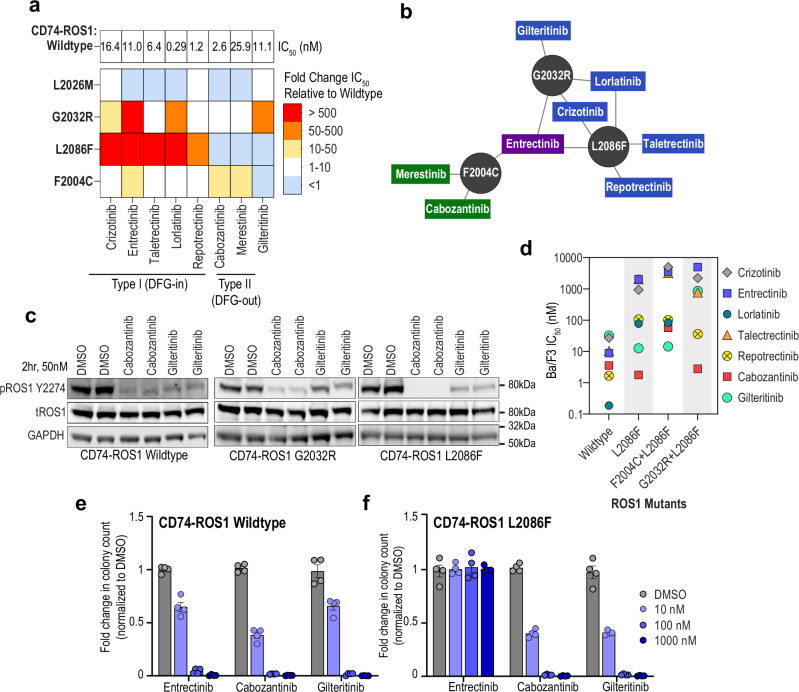
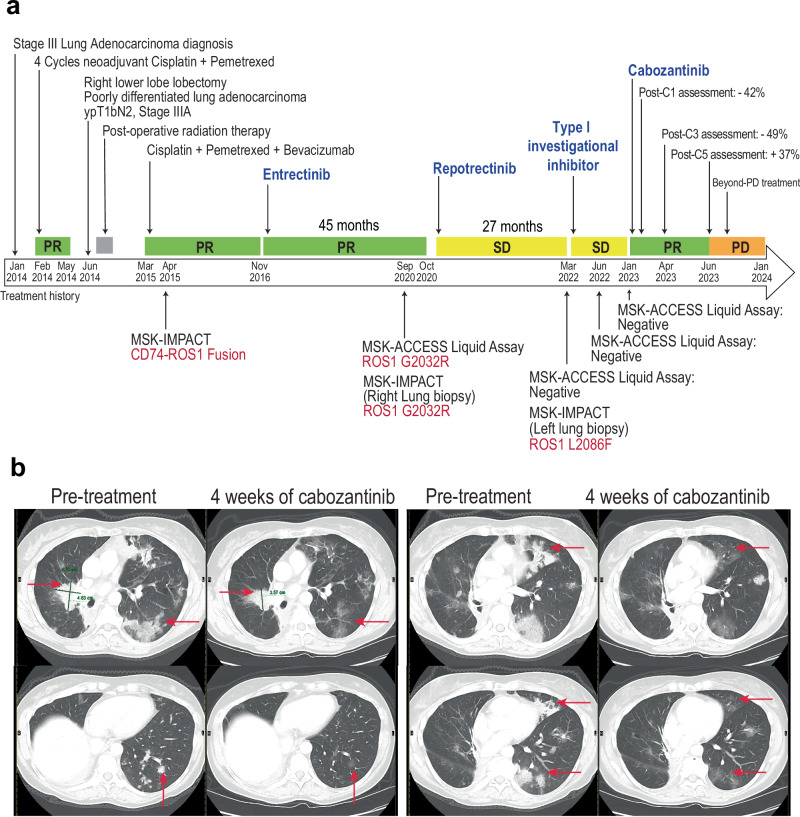
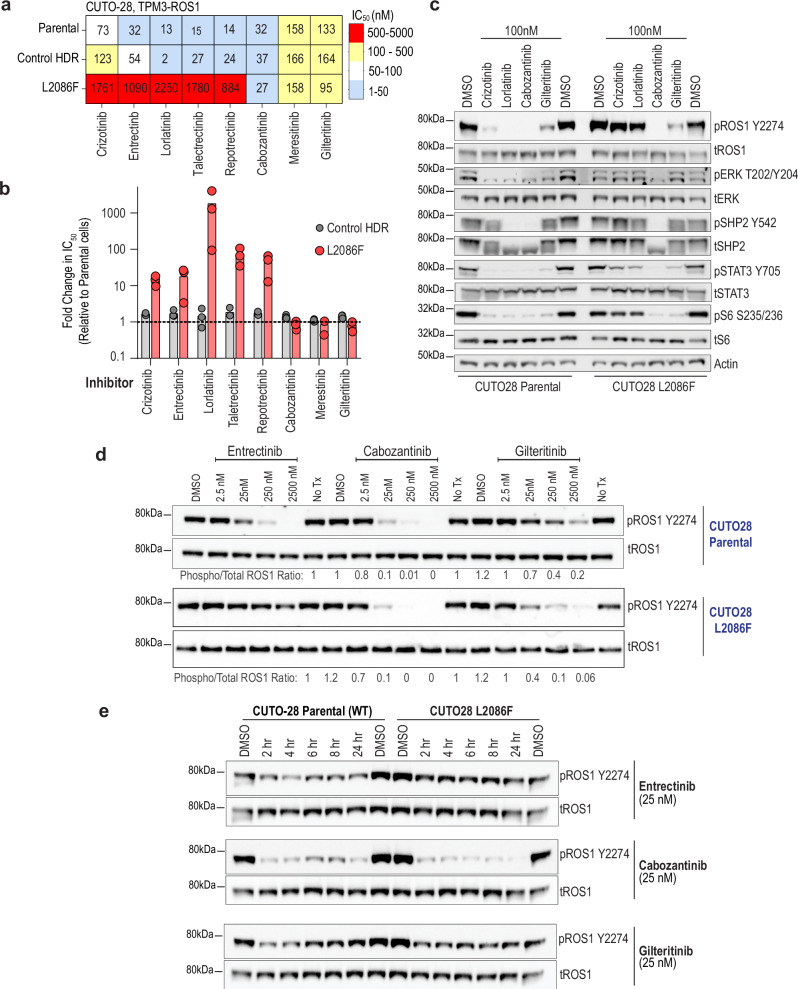
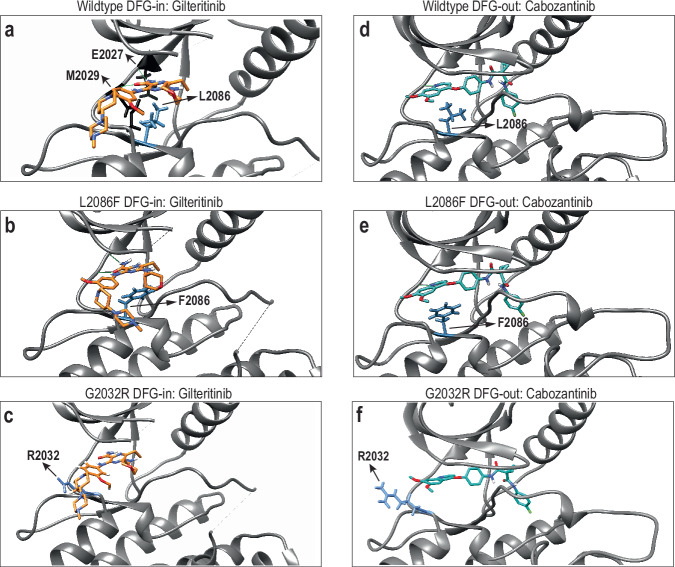
The grammar in this abstract is generally correct, but there's a minor issue with sentence structure in one part. Here's a slightly revised version with improved grammar and flow:ROS1 tyrosine kinase inhibitors (TKIs) are highly effective in ROS1-positive non-small cell lung cancer, but resistance remains a challenge. We investigated the activity of various TKIs against wildtype and mutant ROS1, focusing on the emerging L2086F resistance mutation. Using Ba/F3 and NIH3T3 cell models, CRISPR/Cas9-edited isogenic wildtype and mutant patient-derived cell lines, and in vivo tumor growth studies, we compared type I TKIs (crizotinib, entrectinib, taletrectinib, lorlatinib, and repotrectinib) to type II TKIs (cabozantinib and merestinib) and the type I FLT3 inhibitor gilteritinib. The ROS1 L2086F mutant kinase showed resistance to type I TKIs, while type II TKIs retained activity. Gilteritinib inhibited both wildtype and L2086F mutant ROS1 but was ineffective against the G2032R mutation. Structural analyses revealed distinct binding poses for cabozantinib and gilteritinib, explaining their efficacy against L2086F. Clinical cases demonstrated cabozantinib's effectiveness in patients with TKI-resistant, ROS1 L2086F mutant NSCLCs. This study provides the first comprehensive report of ROS1 L2086F in the context of later-generation TKIs, including macrocyclic inhibitors. While cabozantinib effectively inhibits ROS1 L2086F, its multi-kinase inhibitor nature highlights the need for more selective and better-tolerated TKIs to overcome kinase-intrinsic resistance. Gilteritinib may offer an alternative for targeting ROS1 L2086F with distinct off-target toxicities, but further studies are required to fully evaluate its potential in this setting.
本摘要中的语法总体正确,但其中一部分的句子结构存在小问题。以下是一个语法和流畅性有所改进的略微修订版:ROS1酪氨酸激酶抑制剂(TKIs)对ROS1阳性非小细胞肺癌非常有效,但耐药性仍然是一个挑战。我们研究了各种TKIs对野生型和突变型ROS1的活性,重点关注新出现的L2086F耐药突变。使用Ba/F3和NIH3T3细胞模型、CRISPR/Cas9编辑的同基因野生型和突变型患者来源细胞系以及体内肿瘤生长研究,我们将I型TKIs(克唑替尼、恩曲替尼、他雷替尼、洛拉替尼和瑞波替尼)与II型TKIs(卡博替尼和美瑞替尼)以及I型FLT3抑制剂吉列替尼进行了比较。ROS1 L2086F突变激酶对I型TKIs耐药,而II型TKIs保留活性。吉列替尼抑制野生型和L2086F突变型ROS1,但对G2032R突变无效。结构分析揭示了卡博替尼和吉列替尼不同的结合姿势,解释了它们对L2086F的疗效。临床病例证明卡博替尼对TKI耐药、ROS1 L2086F突变的非小细胞肺癌患者有效。本研究首次全面报道了在包括大环抑制剂在内的新一代TKIs背景下的ROS1 L2086F。虽然卡博替尼有效抑制ROS1 L2086F,但其多激酶抑制剂的性质凸显了需要更具选择性和耐受性更好的TKIs来克服激酶内在耐药性。吉列替尼可能为靶向ROS1 L2086F提供一种具有不同脱靶毒性的替代方案,但需要进一步研究以充分评估其在这种情况下的潜力。