Bioscience, Wageningen University and Research, Wageningen, 6700 AA, Netherlands.
Laboratory of Molecular Biology, Wageningen University and Research, Wageningen, 6700 AP, Netherlands.
Plant Physiol. 2022 Feb 4;188(2):1095-1110. doi: 10.1093/plphys/kiab558.
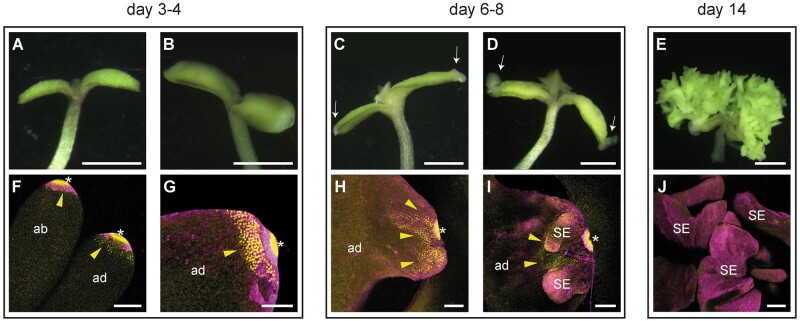
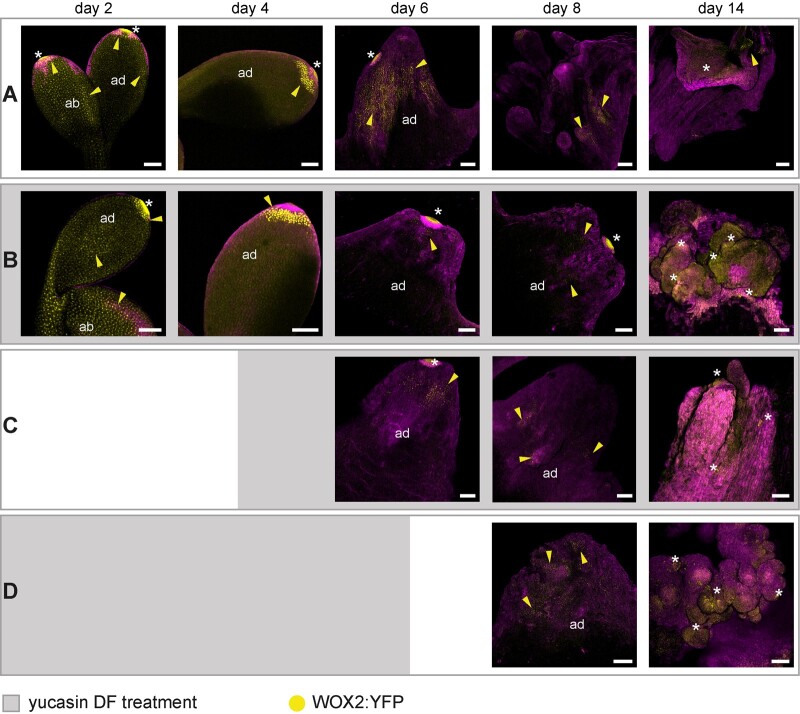
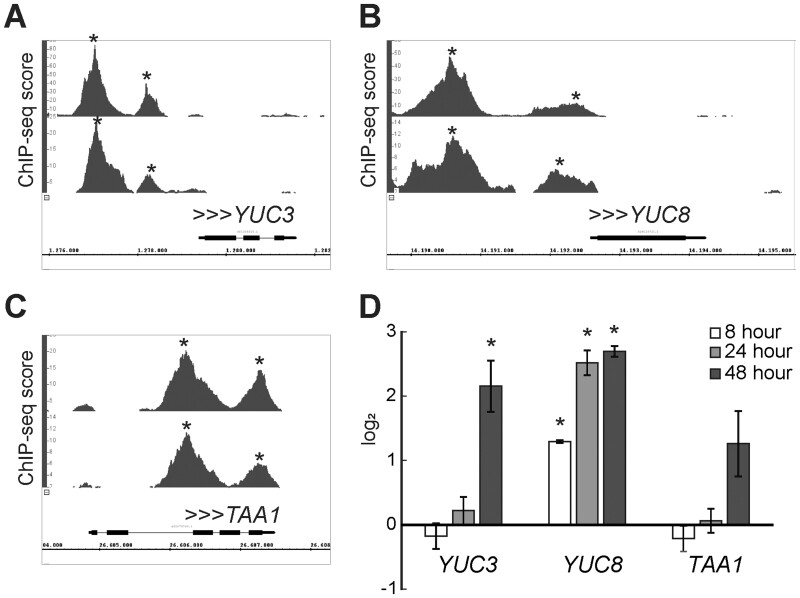
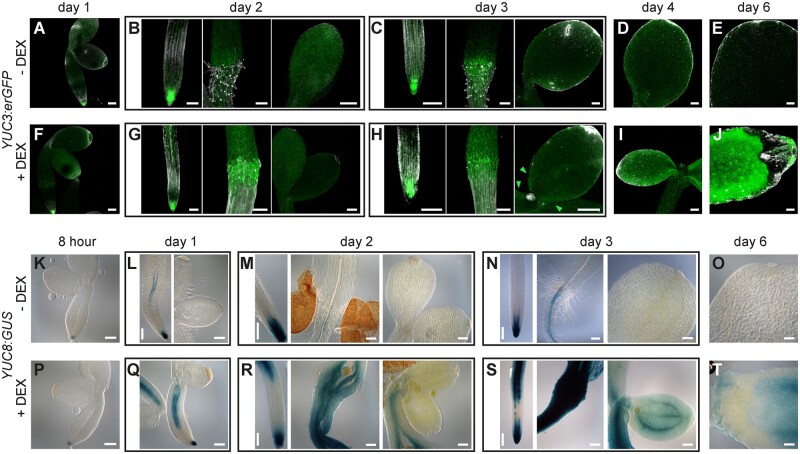
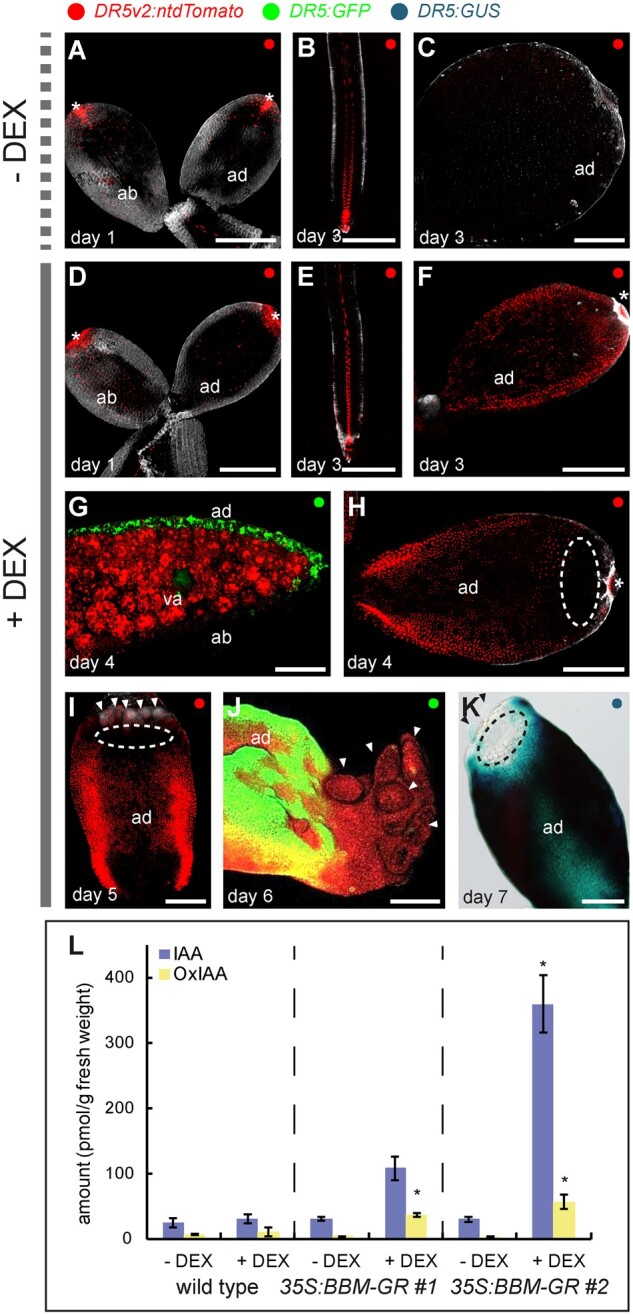
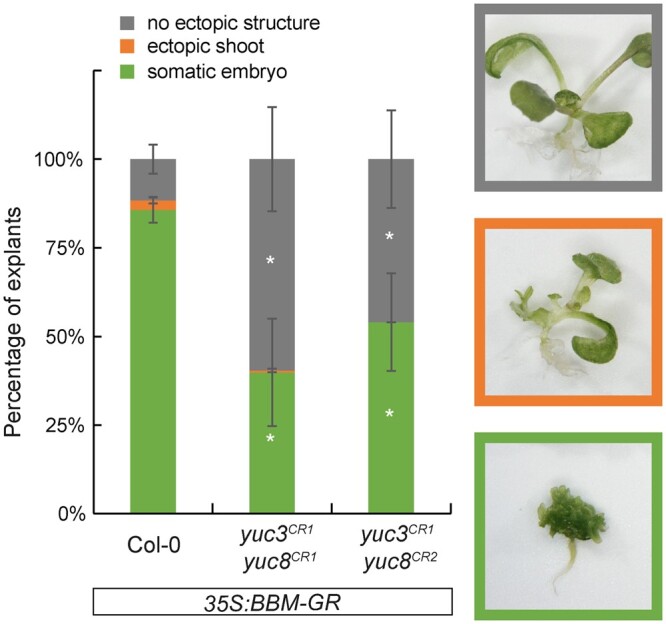
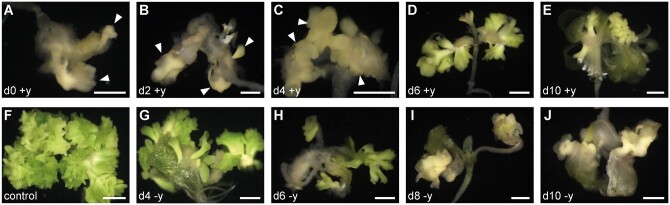
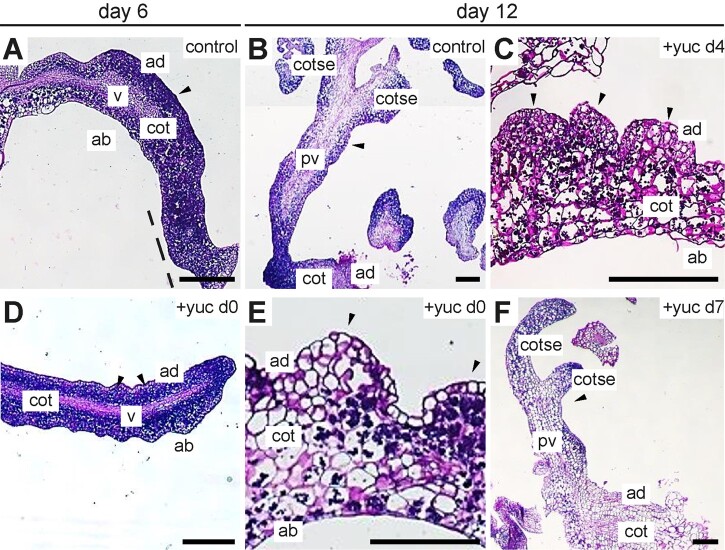
Somatic embryogenesis is a type of plant cell totipotency where embryos develop from nonreproductive (vegetative) cells without fertilization. Somatic embryogenesis can be induced in vitro by auxins, and by ectopic expression of embryo-expressed transcription factors like the BABY BOOM (BBM) AINTEGUMENTA-LIKE APETALA2/ETHYLENE RESPONSE FACTOR domain protein. These different pathways are thought to converge to promote auxin response and biosynthesis, but the specific roles of the endogenous auxin pathway in somatic embryogenesis induction have not been well-characterized. Here we show that BBM transcriptionally regulates the YUCCA3 (YUC3) and YUC8 auxin biosynthesis genes during BBM-mediated somatic embryogenesis in Arabidopsis (Arabidopsis thaliana) seedlings. BBM induced local and ectopic YUC3 and YUC8 expression in seedlings, which coincided with increased DR5 auxin response and indole-3-acetic acid (IAA) biosynthesis and with ectopic expression of the WOX2 embryo reporter. YUC-driven auxin biosynthesis was required for BBM-mediated somatic embryogenesis, as the number of embryogenic explants was reduced by ca. 50% in yuc3 yuc8 mutants and abolished after chemical inhibition of YUC enzyme activity. However, a detailed YUC inhibitor time-course study revealed that YUC-dependent IAA biosynthesis is not required for the re-initiation of totipotent cell identity in seedlings. Rather, YUC enzymes are required later in somatic embryo development for the maintenance of embryo identity and growth. This study resolves a long-standing question about the role of endogenous auxin biosynthesis in transcription factor-mediated somatic embryogenesis and also provides an experimental framework for understanding the role of endogenous auxin biosynthesis in other in planta and in vitro embryogenesis systems.
体细胞胚胎发生是一种植物细胞全能性,其中胚胎从非生殖(营养)细胞发育而来,无需受精。体细胞胚胎发生可以通过生长素在体外诱导,也可以通过胚胎表达的转录因子的异位表达来诱导,例如 BABY BOOM(BBM)AINTEGUMENTA-LIKE APETALA2/ETHYLENE RESPONSE FACTOR 结构域蛋白。这些不同的途径被认为会汇聚在一起促进生长素的响应和生物合成,但内源性生长素途径在体细胞胚胎发生诱导中的具体作用尚未得到很好的描述。在这里,我们表明 BBM 在 BBM 介导的拟南芥(Arabidopsis thaliana)幼苗体细胞胚胎发生过程中,转录调控 YUCCA3(YUC3)和 YUC8 生长素生物合成基因。BBM 在幼苗中诱导局部和异位 YUC3 和 YUC8 表达,这与 DR5 生长素响应和吲哚-3-乙酸(IAA)生物合成的增加以及 WOX2 胚胎报告基因的异位表达同时发生。YUC 驱动的生长素生物合成是 BBM 介导的体细胞胚胎发生所必需的,因为在 yuc3 yuc8 突变体中,胚状体发生外植体的数量减少了约 50%,并且在用化学抑制剂抑制 YUC 酶活性后完全被消除。然而,详细的 YUC 抑制剂时间进程研究表明,YUC 依赖性 IAA 生物合成对于幼苗中全能细胞身份的重新起始不是必需的。相反,YUC 酶在体细胞胚胎发育的后期对于胚胎身份和生长的维持是必需的。这项研究解决了关于内源性生长素生物合成在转录因子介导的体细胞胚胎发生中的作用的一个长期存在的问题,并且还为理解内源性生长素生物合成在其他体内和体外胚胎发生系统中的作用提供了一个实验框架。