State Key Laboratory of Cell Biology, Shanghai Key Laboratory of Molecular Andrology, CAS Center for Excellence in Molecular Cell Science, Shanghai Institute of Biochemistry and Cell Biology, University of Chinese Academy of Sciences, Chinese Academy of Sciences, Shanghai, 200031, China.
School of Life Science and Technology, ShanghaiTech University, Shanghai, 201210, China.
Protein Cell. 2022 Feb;13(2):102-119. doi: 10.1007/s13238-021-00890-3. Epub 2021 Dec 5.
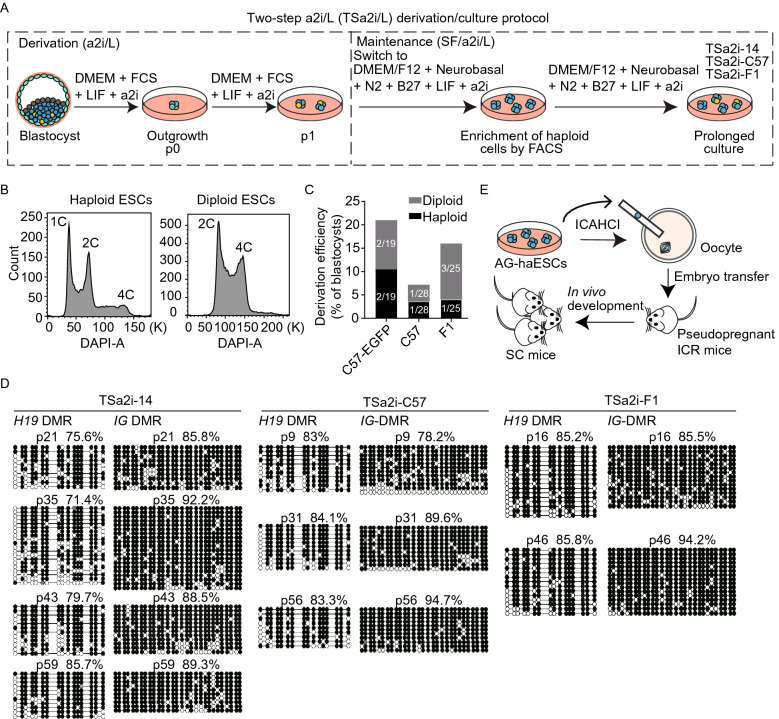
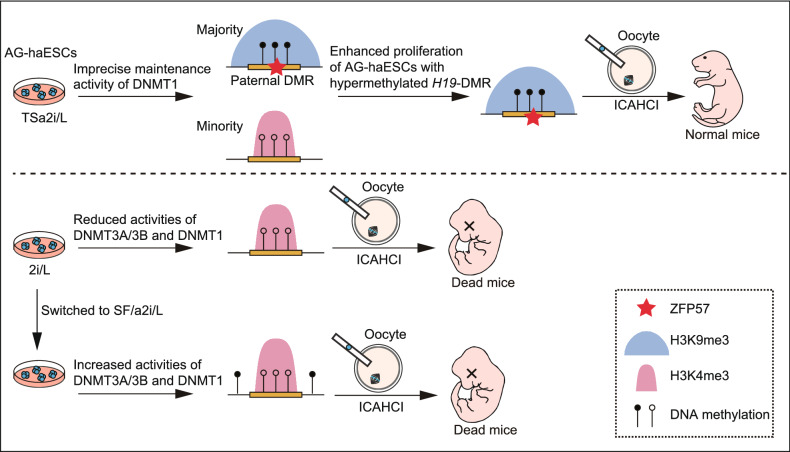
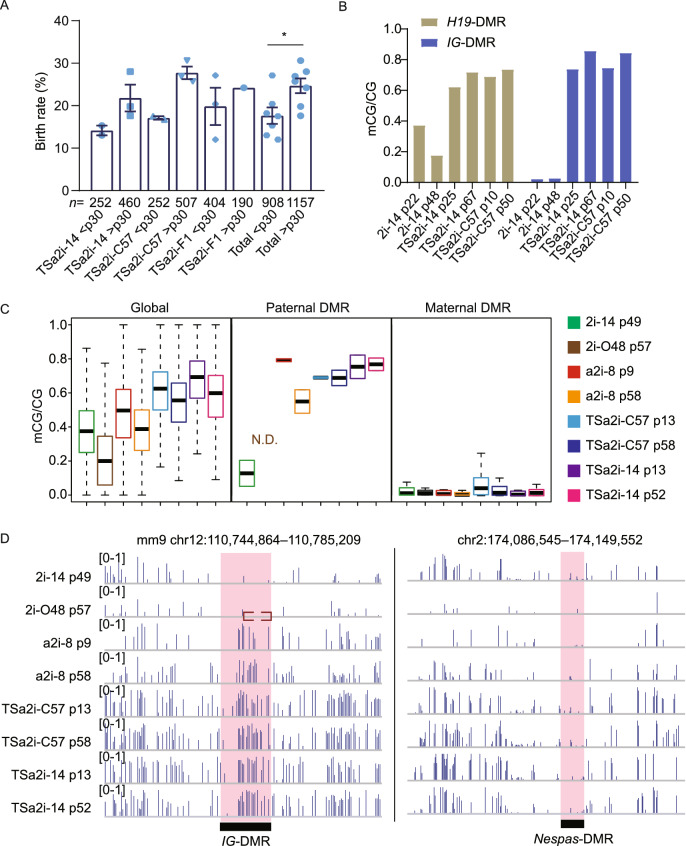
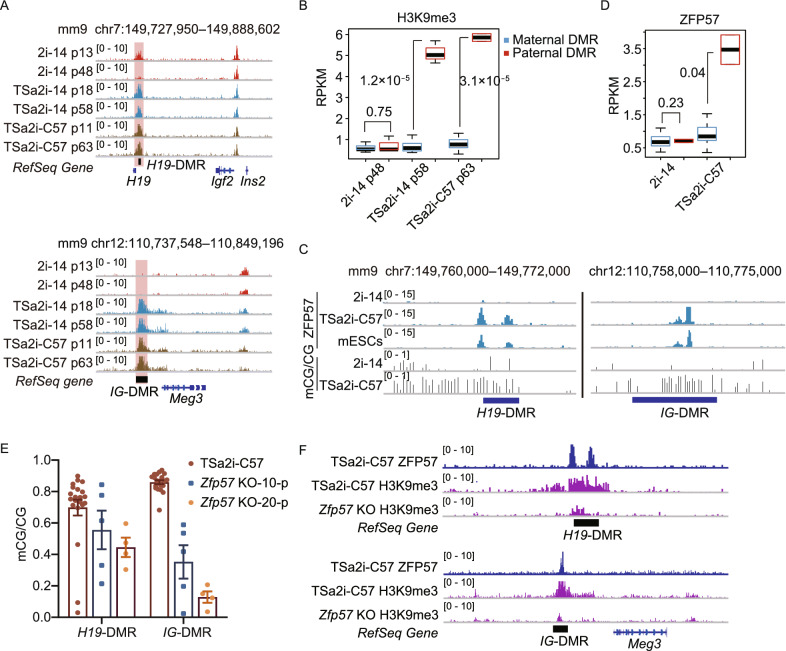
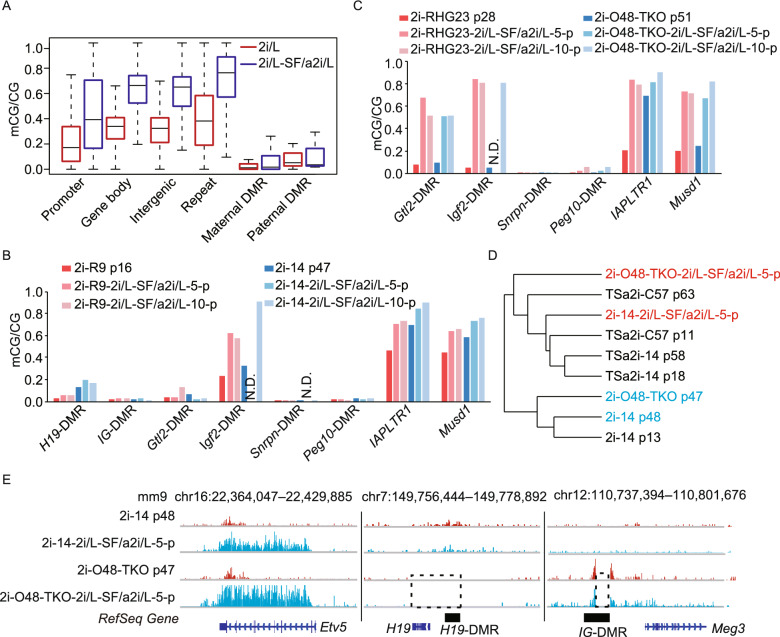
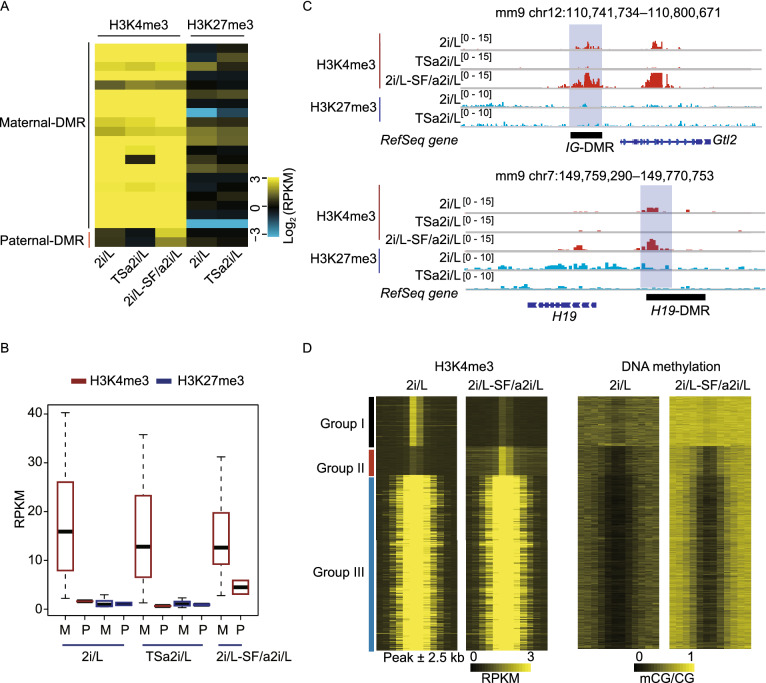
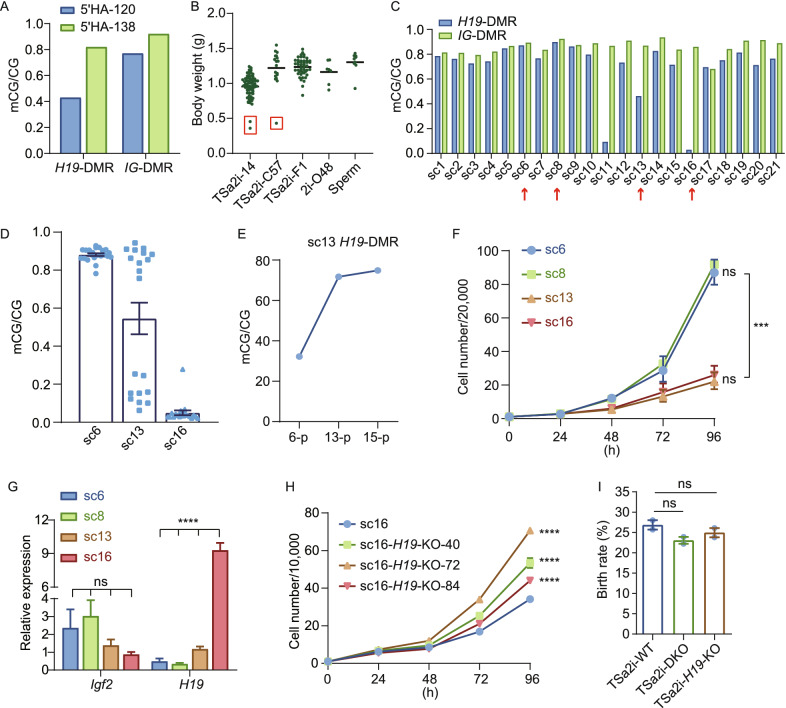
The use of two inhibitors of Mek1/2 and Gsk3β (2i) promotes the generation of mouse diploid and haploid embryonic stem cells (ESCs) from the inner cell mass of biparental and uniparental blastocysts, respectively. However, a system enabling long-term maintenance of imprints in ESCs has proven challenging. Here, we report that the use of a two-step a2i (alternative two inhibitors of Src and Gsk3β, TSa2i) derivation/culture protocol results in the establishment of androgenetic haploid ESCs (AG-haESCs) with stable DNA methylation at paternal DMRs (differentially DNA methylated regions) up to passage 60 that can efficiently support generating mice upon oocyte injection. We also show coexistence of H3K9me3 marks and ZFP57 bindings with intact DMR methylations. Furthermore, we demonstrate that TSa2i-treated AG-haESCs are a heterogeneous cell population regarding paternal DMR methylation. Strikingly, AG-haESCs with late passages display increased paternal-DMR methylations and improved developmental potential compared to early-passage cells, in part through the enhanced proliferation of H19-DMR hypermethylated cells. Together, we establish AG-haESCs that can long-term maintain paternal imprints.
两种 Mek1/2 和 Gsk3β 抑制剂(2i)的使用分别促进了双亲和单亲囊胚的内细胞团生成二倍体和单倍体胚胎干细胞(ESCs)。然而,建立一种能够长期维持 ESCs 印迹的系统一直具有挑战性。在这里,我们报告了两步 a2i(Src 和 Gsk3β 的两种抑制剂的替代物,TSa2i)衍生/培养方案的使用导致了建立了具有稳定的父系 DMR(差异 DNA 甲基化区域)DNA 甲基化的雄性单倍体 ESCs(AG-haESCs),在通过卵母细胞注射生成小鼠时可达 60 代。我们还显示了 H3K9me3 标记物和 ZFP57 结合物与完整的 DMR 甲基化共存。此外,我们证明了 TSa2i 处理的 AG-haESCs 在父系 DMR 甲基化方面是一种异质细胞群体。引人注目的是,与早期传代细胞相比,晚期传代的 AG-haESCs 具有更高的父系 DMR 甲基化和改善的发育潜力,部分原因是 H19-DMR 高甲基化细胞的增殖增强。总之,我们建立了能够长期维持父系印迹的 AG-haESCs。