Yin Xuecheng, Büyüktahtakın I Esra, Patel Bhumi P
Yale School of Public Health, New Haven, CT, United States.
Systems Optimization and Data Analytics Lab (SODAL), Department of Mechanical and Industrial Engineering, New Jersey Institute of Technology, Newark, NJ, United States.
Eur J Oper Res. 2023 Jan 1;304(1):255-275. doi: 10.1016/j.ejor.2021.11.052. Epub 2021 Dec 1.
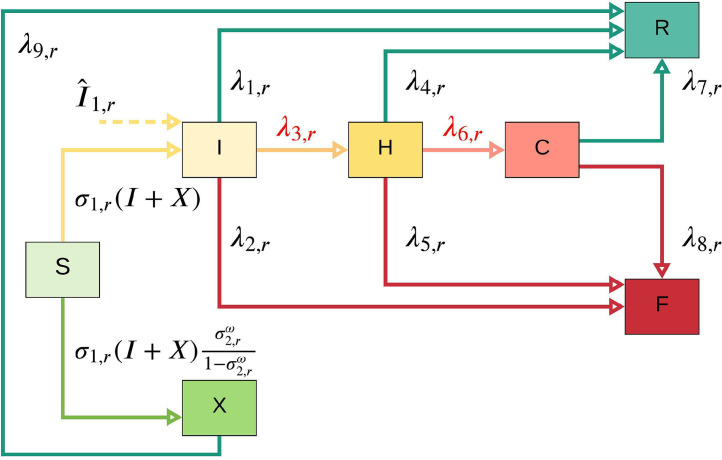
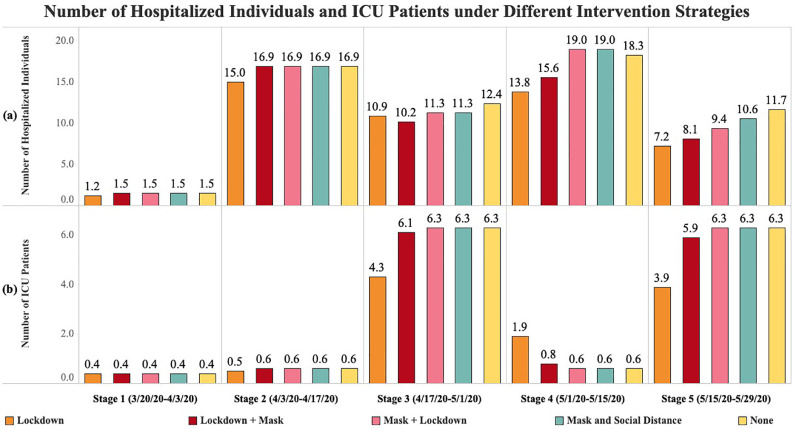
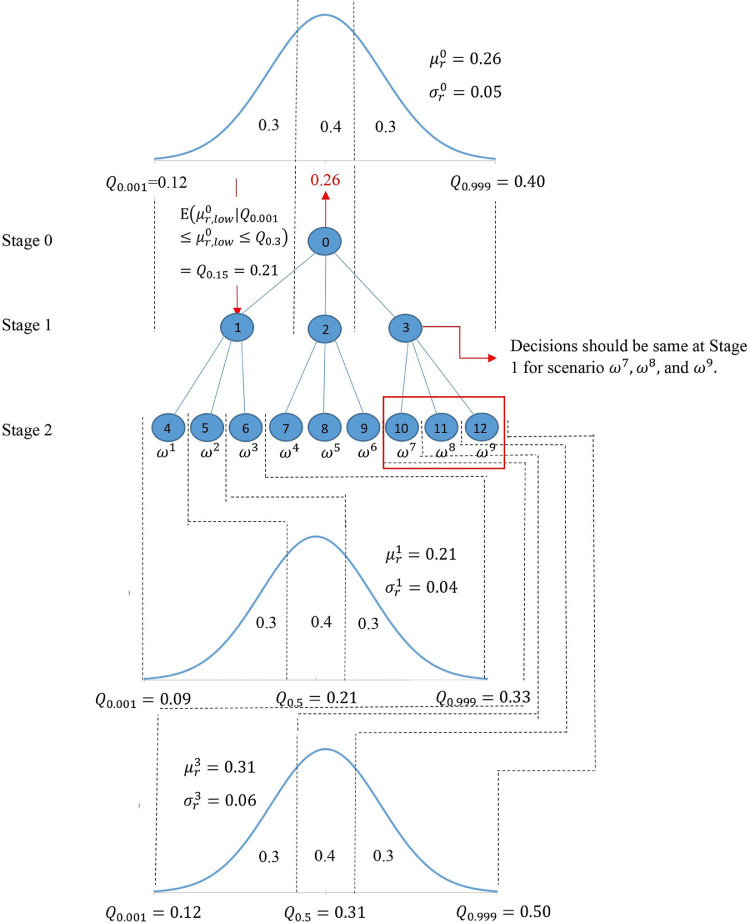
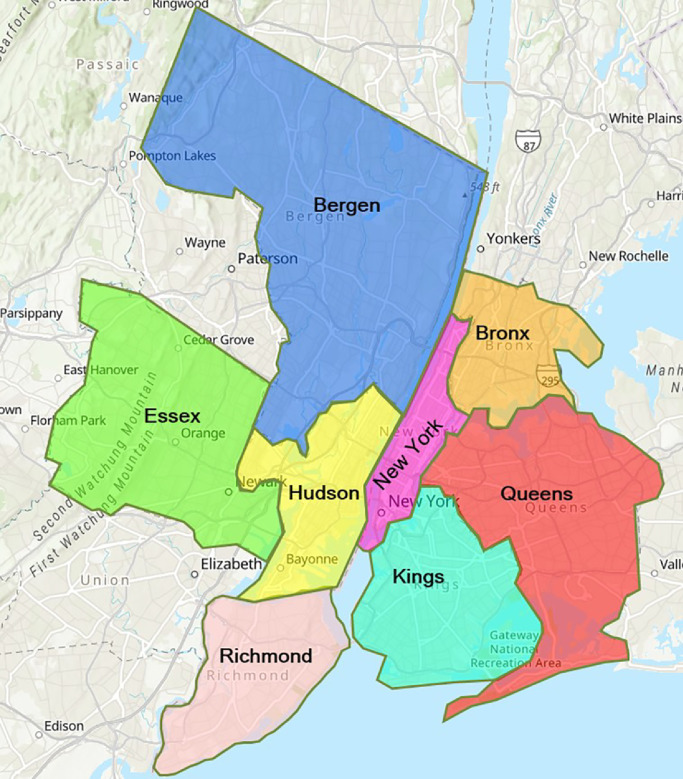
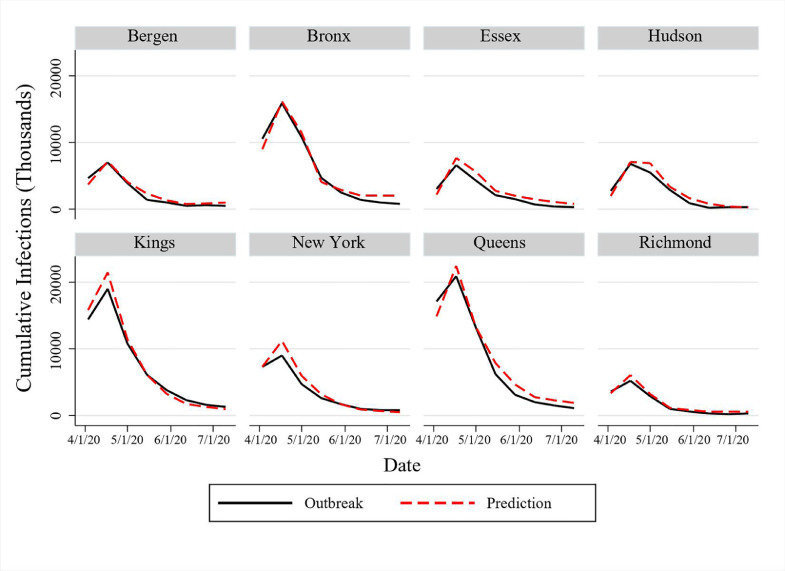
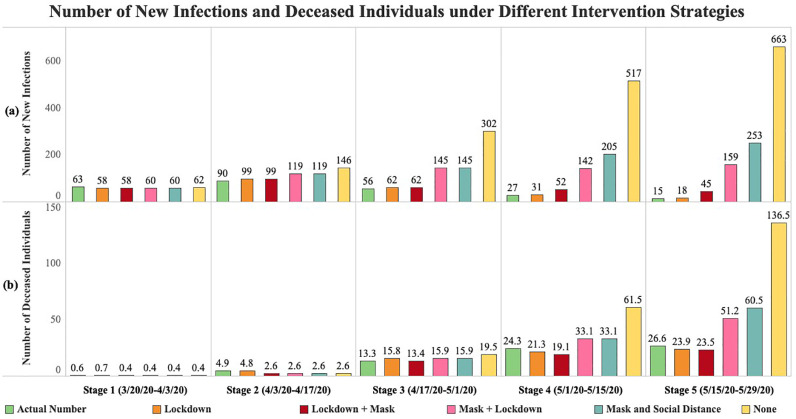
This study presents a new risk-averse multi-stage stochastic epidemics-ventilator-logistics compartmental model to address the resource allocation challenges of mitigating COVID-19. This epidemiological logistics model involves the uncertainty of untested asymptomatic infections and incorporates short-term human migration. Disease transmission is also forecasted through a new formulation of transmission rates that evolve over space and time with respect to various non-pharmaceutical interventions, such as wearing masks, social distancing, and lockdown. The proposed multi-stage stochastic model overviews different scenarios on the number of asymptomatic individuals while optimizing the distribution of resources, such as ventilators, to minimize the total expected number of newly infected and deceased people. The Conditional Value at Risk (CVaR) is also incorporated into the multi-stage mean-risk model to allow for a trade-off between the weighted expected loss due to the outbreak and the expected risks associated with experiencing disastrous pandemic scenarios. We apply our multi-stage mean-risk epidemics-ventilator-logistics model to the case of controlling COVID-19 in highly-impacted counties of New York and New Jersey. We calibrate, validate, and test our model using actual infection, population, and migration data. We also define a new region-based sub-problem and bounds on the problem and then show their computational benefits in terms of the optimality and relaxation gaps. The computational results indicate that short-term migration influences the transmission of the disease significantly. The optimal number of ventilators allocated to each region depends on various factors, including the number of initial infections, disease transmission rates, initial ICU capacity, the population of a geographical location, and the availability of ventilator supply. Our data-driven modeling framework can be adapted to study the disease transmission dynamics and logistics of other similar epidemics and pandemics.
本研究提出了一种新的风险规避型多阶段随机流行病 - 呼吸机 - 物流 compartmental 模型,以应对缓解 COVID - 19 带来的资源分配挑战。这种流行病学物流模型涉及未检测出的无症状感染的不确定性,并纳入了短期人口迁移。疾病传播还通过一种新的传播率公式进行预测,该公式会随着空间和时间以及各种非药物干预措施(如戴口罩、保持社交距离和封锁)而变化。所提出的多阶段随机模型概述了无症状个体数量的不同情景,同时优化资源(如呼吸机)的分配,以尽量减少新感染和死亡人员的总预期数量。条件风险价值(CVaR)也被纳入多阶段均值 - 风险模型,以便在疫情爆发导致的加权预期损失与经历灾难性大流行情景相关的预期风险之间进行权衡。我们将多阶段均值 - 风险流行病 - 呼吸机 - 物流模型应用于纽约和新泽西受影响严重的县控制 COVID - 19 的案例。我们使用实际感染、人口和迁移数据对模型进行校准、验证和测试。我们还定义了一个基于区域的子问题及其边界,然后展示它们在最优性和松弛间隙方面的计算优势。计算结果表明,短期迁移对疾病传播有显著影响。分配给每个区域的呼吸机最佳数量取决于各种因素,包括初始感染数量、疾病传播率、初始重症监护病房容量、地理位置的人口以及呼吸机供应情况。我们的数据驱动建模框架可用于研究其他类似流行病和大流行的疾病传播动态和物流情况。