Ikram Muhammad, Park Hyun Young, Ali Tahir, Kim Myeong Ok
Division of Life Science and Applied Life Science (BK21 Four), College of Natural Sciences, Gyeongsang National University, Jinju, 52828, Republic of Korea.
Department of Pediatrics, Maastricht University Medical Center, Maastricht, 6202 AZ, the Netherlands.
J Inflamm Res. 2021 Nov 27;14:6251-6264. doi: 10.2147/JIR.S334423. eCollection 2021.
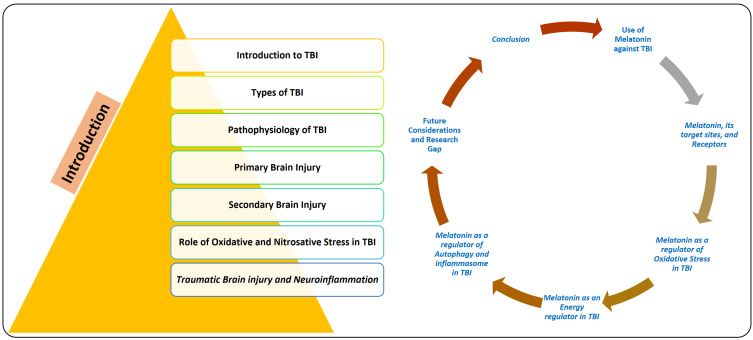
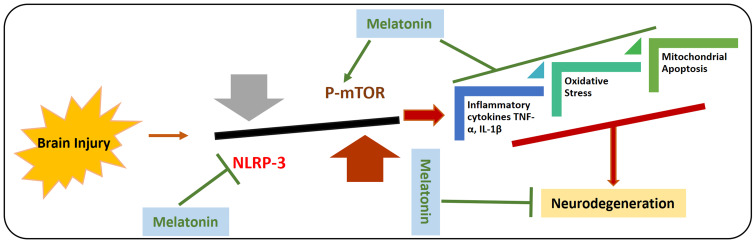
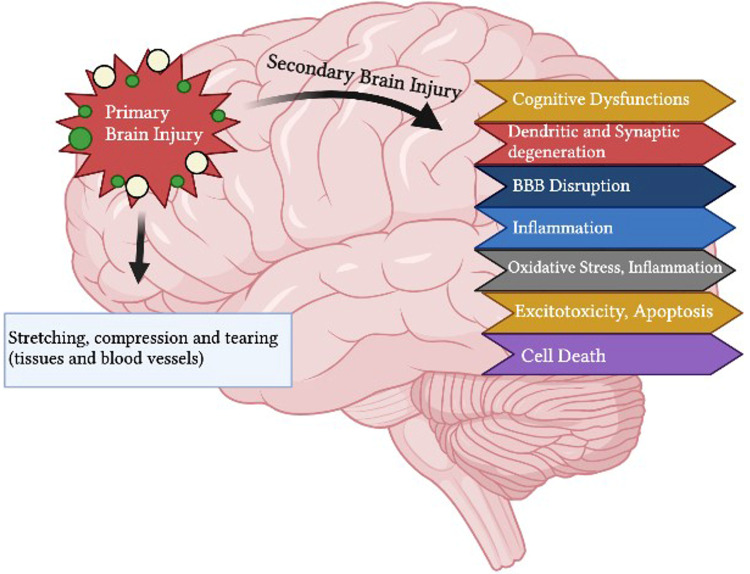
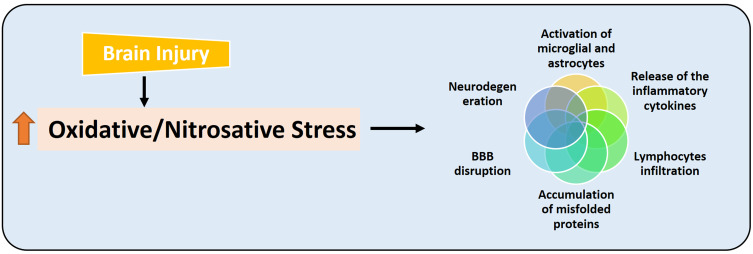
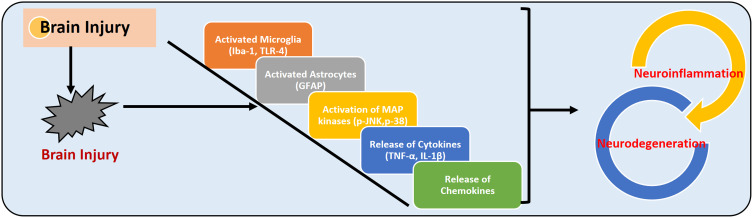
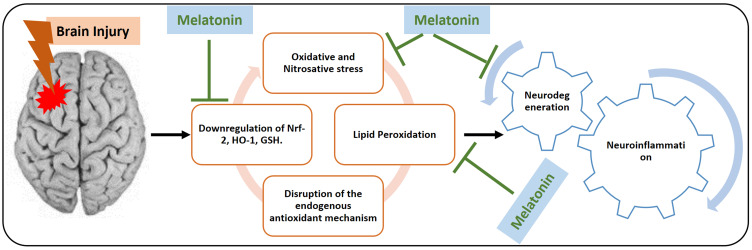
This review covers the preclinical and clinical literature supporting the role of melatonin in the management of brain injury-induced oxidative stress, neuroinflammation, and neurodegeneration, and reviews the past and current therapeutic strategies. Traumatic brain injury (TBI) is a neurodegenerative condition, unpredictably and potentially progressing into chronic neurodegeneration, with permanent cognitive, neurologic, and motor dysfunction, having no standard therapies. Due to its complex and multi-faceted nature, the TBI has highly heterogeneous pathophysiology, characterized by the highest mortality and disability worldwide. Mounting evidence suggests that the TBI induces oxidative and nitrosative stress, which is involved in the progression of chronic and acute neurodegenerative diseases. Defenses against such conditions are mostly dependent on the usage of antioxidant compounds, the majority of whom are ingested as nutraceuticals or as dietary supplements. A large amount of literature is available regarding the efficacy of antioxidant compounds to counteract the TBI-associated damage in animal and cellular models of the TBI and several clinical studies. Collectively, the studies have suggested that TBI induces oxidative stress, by suppressing the endogenous antioxidant system, such as nuclear factor erythroid 2-related factor-2 (Nrf-2) increasing the lipid peroxidation and elevation of oxidative damage. Moreover, elevated oxidative stress may induce neuroinflammation by activating the microglial cells, releasing and activating the inflammatory cytokines and inflammatory mediators, and energy dyshomeostasis. Thus, melatonin has shown regulatory effects against the TBI-induced autophagic dysfunction, regulation of mitogen-activated protein kinases, such as ERK, activation of the NLRP-3 inflammasome, and release of the inflammatory cytokines. The collective findings strongly suggest that melatonin may regulate TBI-induced neurodegeneration, although further studies should be conducted to better facilitate future therapeutic windows.
本综述涵盖了支持褪黑素在脑损伤诱导的氧化应激、神经炎症和神经退行性变管理中作用的临床前和临床文献,并回顾了过去和当前的治疗策略。创伤性脑损伤(TBI)是一种神经退行性疾病,不可预测且可能进展为慢性神经退行性变,伴有永久性认知、神经和运动功能障碍,目前尚无标准治疗方法。由于其复杂多面的性质,TBI具有高度异质性的病理生理学,在全球范围内死亡率和致残率最高。越来越多的证据表明,TBI会诱导氧化和亚硝化应激,这与慢性和急性神经退行性疾病的进展有关。对抗这些情况的防御措施大多依赖于抗氧化化合物的使用,其中大多数作为营养保健品或膳食补充剂摄入。关于抗氧化化合物在TBI动物和细胞模型以及一些临床研究中对抗TBI相关损伤的疗效,有大量文献可供参考。总体而言,这些研究表明,TBI通过抑制内源性抗氧化系统,如核因子红细胞2相关因子2(Nrf-2),诱导氧化应激,增加脂质过氧化和氧化损伤程度。此外,氧化应激升高可能通过激活小胶质细胞、释放和激活炎性细胞因子及炎症介质以及能量稳态失调来诱导神经炎症。因此,褪黑素已显示出对TBI诱导的自噬功能障碍、丝裂原活化蛋白激酶(如ERK)的调节、NLRP-炎症小体的激活以及炎性细胞因子释放的调节作用。这些研究结果强烈表明,褪黑素可能调节TBI诱导的神经退行性变,尽管还需要进一步研究以更好地促进未来的治疗时机。