Pontifex Matthew G, Malik Mohammad M A H, Connell Emily, Müller Michael, Vauzour David
Norwich Medical School, Biomedical Research Centre, Faculty of Medicine and Health Sciences, University of East Anglia, Norwich, United Kingdom.
Front Neurosci. 2021 Feb 19;15:640648. doi: 10.3389/fnins.2021.640648. eCollection 2021.
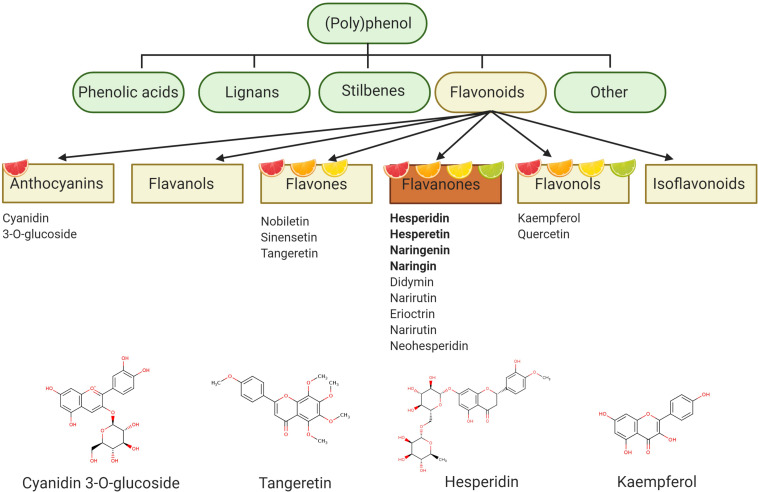
In addition to essential micronutrients such as vitamin C, citrus fruits represent a considerably rich source of non-essential bioactive compounds, in particular flavanones which form a sub-set of the flavonoid group. Preclinical studies have demonstrated the neuroprotective potential of citrus flavonoids and have highlighted both the well-established (anti-inflammatory and anti-oxidative properties), and newly emerging (influence upon blood-brain barrier function/integrity) mechanistic actions by which these neurological effects are mediated. Encouragingly, results from human studies, although limited in number, appear to support this preclinical basis, with improvements in cognitive performance and disease risk observed across healthy and disease states. Therefore, citrus fruits - both as whole fruit and 100% juices - should be encouraged within the diet for their potential neurological benefit. In addition, there should be further exploration of citrus polyphenols to establish therapeutic efficacy, particularly in the context of well-designed human interventions.
除了维生素C等必需的微量营养素外,柑橘类水果还是非必需生物活性化合物的丰富来源,尤其是黄烷酮,它是类黄酮类的一个子集。临床前研究已经证明了柑橘类黄酮的神经保护潜力,并强调了这些神经学效应所介导的既定机制(抗炎和抗氧化特性)以及新出现的机制(对血脑屏障功能/完整性的影响)。令人鼓舞的是,尽管人体研究的数量有限,但其结果似乎支持这一临床前基础,在健康和疾病状态下都观察到了认知能力和疾病风险的改善。因此,应鼓励在饮食中食用柑橘类水果,包括整个水果和100%果汁,因为它们具有潜在的神经学益处。此外,应该进一步探索柑橘多酚以确定其治疗效果,特别是在精心设计的人体干预的背景下。