Chen Zixia, Yi Long, Pan Yanni, Long Xingyao, Mu Jianfei, Yi Ruokun, Zhao Xin
Chongqing Collaborative Innovation Center for Functional Food, Chongqing Engineering Research Center of Functional Food, Chongqing Engineering Laboratory for Research and Development of Functional Food, Chongqing University of Education, Chongqing, China.
Chongqing Key Laboratory of Translational Research for Cancer Metastasis and Individualized Treatment, Chongqing University Cancer Hospital, Chongqing, China.
Front Pharmacol. 2021 Nov 19;12:700217. doi: 10.3389/fphar.2021.700217. eCollection 2021.
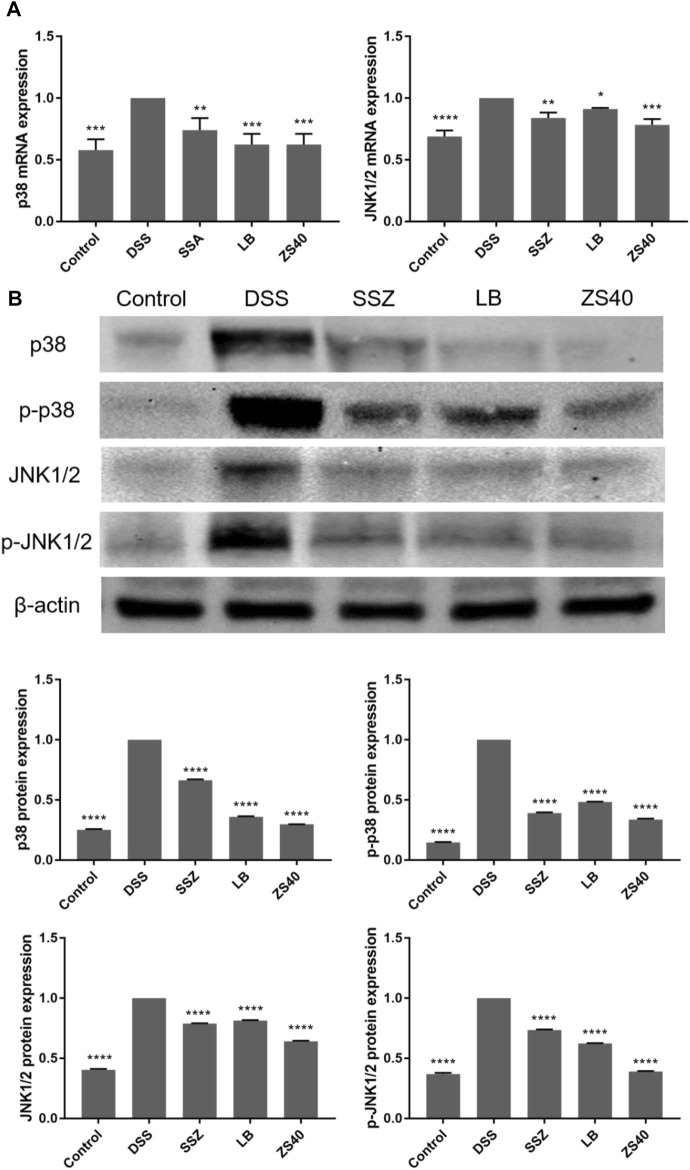
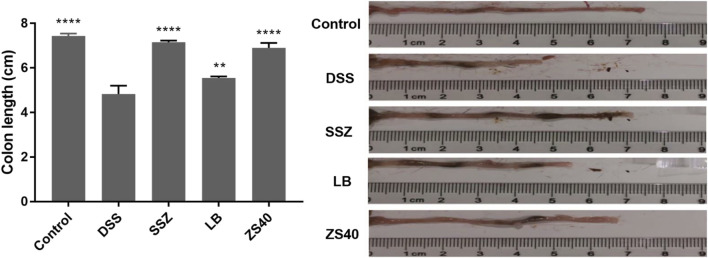
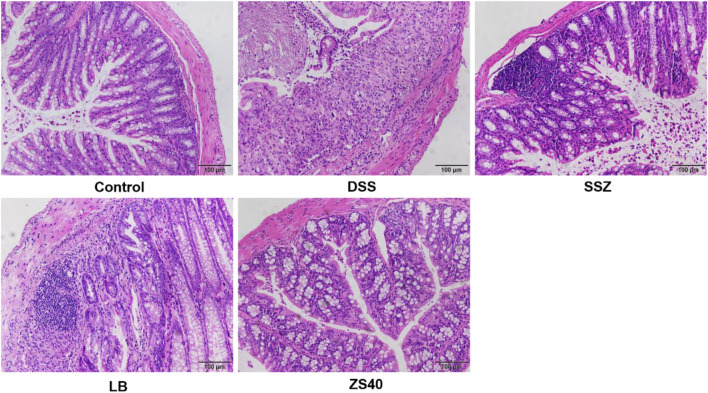
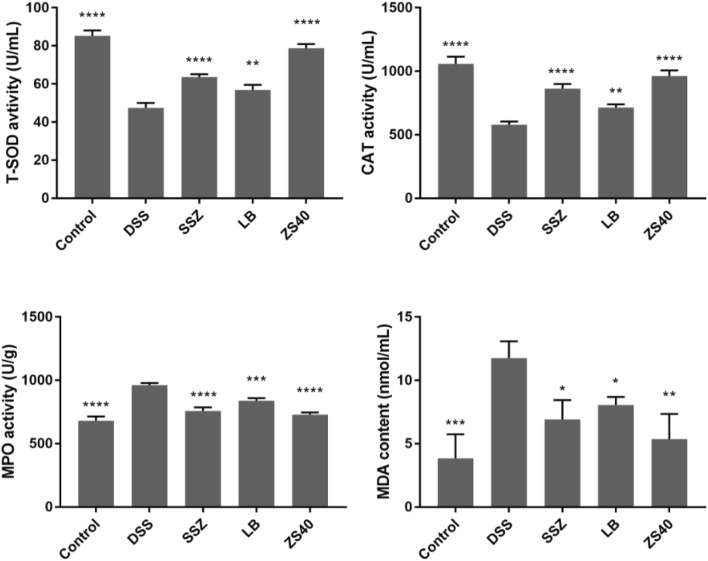
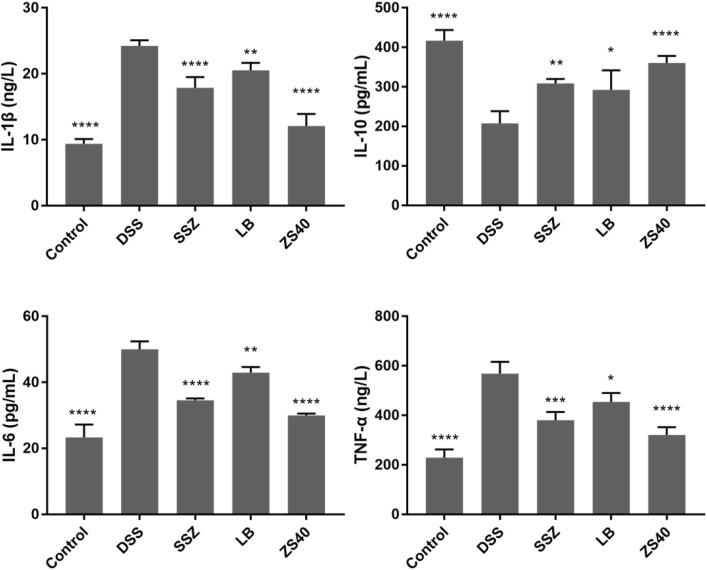
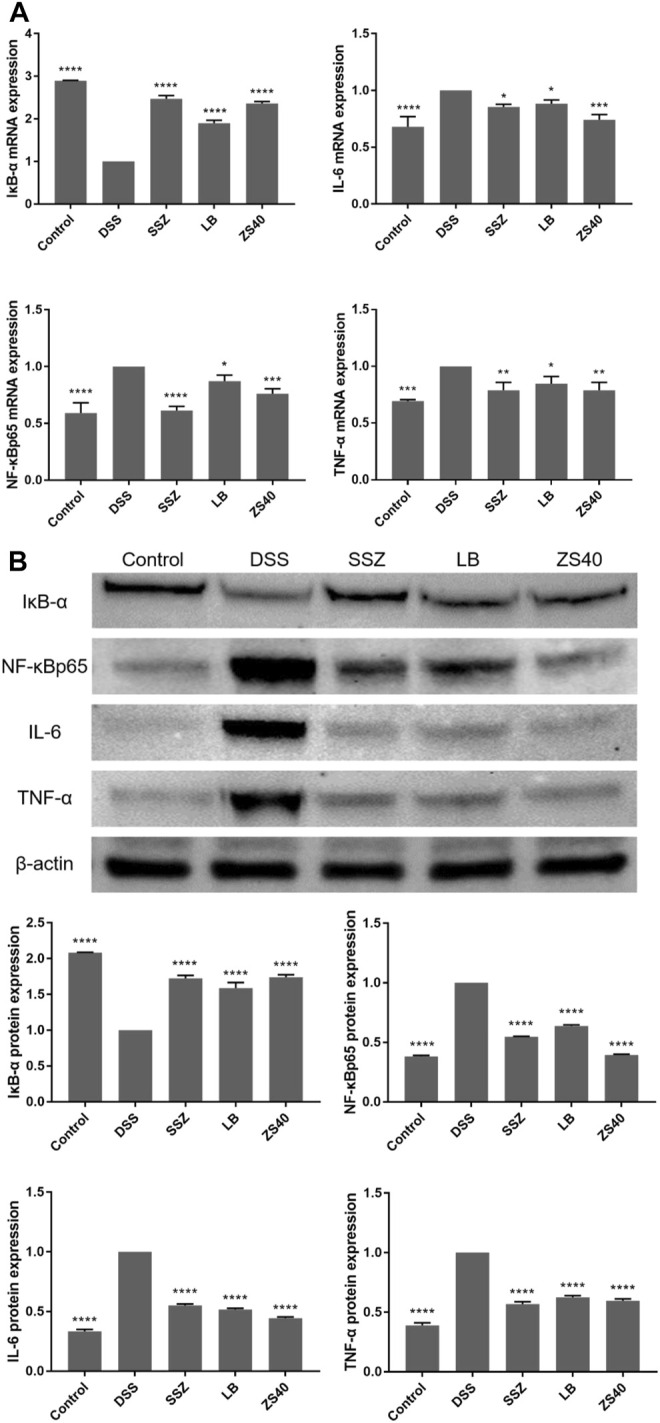
Ulcerative colitis is an inflammatory disease of the intestine caused by many reasons, and it may even develop into colon cancer. Probiotics are normal bacteria that exist in the human body and have been proven to regulate the balance of intestinal flora and alleviate inflammation. The current study aimed to study the effect of ZS40 (ZS40) on dextran sulfate sodium (DSS)-induced ulcerative colitis mice. The length and weight of the colon were measured, and the histopathological morphological changes of colon tissue were observed to evaluate the effects of ZS40 on colitis. Biochemical kits, ELISA kits, real-time quantitative PCR (RT-qPCR), and western blot were also used to detect the effects of ZS40 on serum and colon tissue related oxidative indicators and pro-inflammatory and anti-inflammatory cytokines. We found that ZS40 could reduce colonic inflammatory cell infiltration and goblet cell necrosis, increase total superoxide dismutase and catalase in mouse serum, and reduce myeloperoxidase and malondialdehyde levels. ZS40 could down-regulate the level of proinflammatory cytokines and up-regulate the level of anti-inflammatory cytokines. More importantly, ZS40 down-regulated the relative expression of nuclear factor-κB p65 (NF-κBp65), IL-6, and TNF-α mRNA and protein, up-regulated the relative expression of inhibitor kapa B alpha (IκB-α). By regulating the NF-κB and MAPK pathways to down-regulated the relative expression of p38 and JNK1/2 mRNA and p38, p-p38, JNK1/2, and p-JNK1/2 proteins. Our study suggested that ZS40 may serve as a potential therapeutical strategy for ulcerative colitis.
溃疡性结肠炎是一种由多种原因引起的肠道炎症性疾病,甚至可能发展为结肠癌。益生菌是存在于人体中的正常细菌,已被证明可调节肠道菌群平衡并减轻炎症。本研究旨在探讨ZS40对葡聚糖硫酸钠(DSS)诱导的溃疡性结肠炎小鼠的影响。测量结肠的长度和重量,并观察结肠组织的组织病理学形态变化,以评估ZS40对结肠炎的影响。还使用生化试剂盒、ELISA试剂盒、实时定量PCR(RT-qPCR)和蛋白质印迹法检测ZS40对血清和结肠组织相关氧化指标以及促炎和抗炎细胞因子的影响。我们发现,ZS40可减少结肠炎症细胞浸润和杯状细胞坏死,增加小鼠血清中的总超氧化物歧化酶和过氧化氢酶,并降低髓过氧化物酶和丙二醛水平。ZS40可下调促炎细胞因子水平,上调抗炎细胞因子水平。更重要的是,ZS40下调核因子-κB p65(NF-κBp65)、IL-6和TNF-α mRNA及蛋白的相对表达,上调抑制蛋白κBα(IκB-α)的相对表达。通过调节NF-κB和MAPK信号通路,下调p38和JNK1/2 mRNA以及p38、p-p38、JNK1/2和p-JNK1/2蛋白的相对表达。我们的研究表明,ZS40可能是一种潜在的溃疡性结肠炎治疗策略。