Gomes João Victor Dutra, Herz Corinna, Helmig Simone, Förster Nadja, Mewis Inga, Lamy Evelyn
Molecular Preventive Medicine, University Medical Center and Faculty of Medicine-University of Freiburg, Freiburg, Germany.
Institute for Occupational and Social Medicine and Department of Anesthesiology, Justus-Liebig University Giessen, Giessen, Germany.
Front Pharmacol. 2021 Nov 18;12:779801. doi: 10.3389/fphar.2021.779801. eCollection 2021.
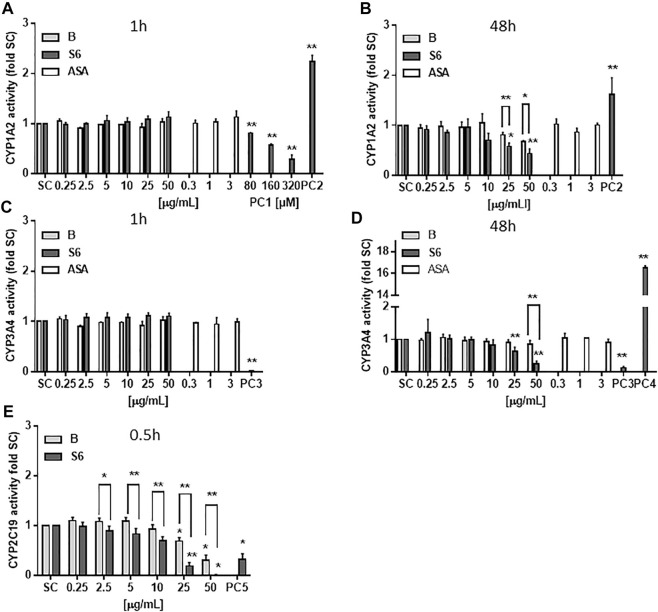
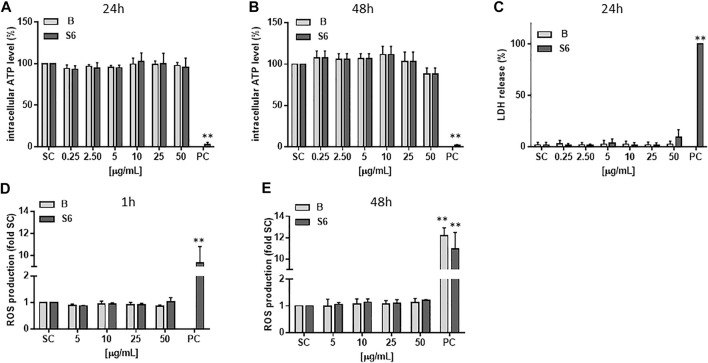
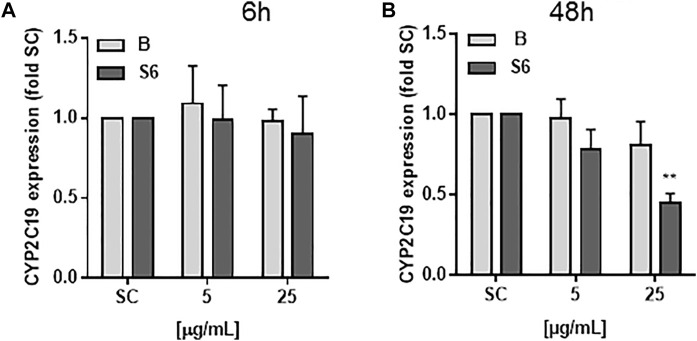
Herbal preparations of willow bark ( cortex) are available in many countries as non-prescription medicines for pain and inflammation, and also as dietary supplements. Currently only little information on toxicity and drug interaction potential of the extracts is available. This study now evaluated the effects of two cortex extracts on human hepatocyte-like HepaRG cells, in view of clinically relevant CYP450 enzyme activity modulation, cytotoxicity and production of reactive oxygen species (ROS). Drug metabolism via the CYP450 enzyme system is considered an important parameter for the occurrence of drug-drug interactions, which can lead to toxicity, decreased pharmacological activity, and adverse drug reactions. We evaluated two different bark extracts standardized to 10 mg/ml phenolic content. Herein, extract S6 (, containing 8.15 mg/ml total salicylates and 0.08 mg/ml salicin) and extract B (industrial reference, containing 5.35 mg/ml total salicylates and 2.26 mg/ml salicin) were tested. Both cortex extracts showed no relevant reduction in cell viability or increase in ROS production in hepatocyte-like HepaRG cells. However, they reduced CYP1A2 and CYP3A4 enzyme activity after 48 h at ≥25 μg/ml, this was statistically significant only for S6. CYP2C19 activity inhibition (0.5 h) was also observed at ≥25 μg/ml, mRNA expression inhibition by 48 h treatment with S6 at 25 μg/ml. In conclusion, at higher concentrations, the tested cortex extracts showed a drug interaction potential, but with different potency. Given the high prevalence of polypharmacy, particularly in the elderly with chronic pain, further systematic studies of species of medical interest should be conducted in the future to more accurately determine the risk of potential drug interactions.
柳树皮(皮层)草药制剂在许多国家作为非处方药用于止痛和抗炎,也作为膳食补充剂。目前关于提取物的毒性和药物相互作用潜力的信息很少。鉴于临床上相关的细胞色素P450(CYP450)酶活性调节、细胞毒性和活性氧(ROS)的产生,本研究评估了两种皮层提取物对人肝样HepaRG细胞的影响。通过CYP450酶系统进行的药物代谢被认为是药物相互作用发生的一个重要参数,药物相互作用可导致毒性、药理活性降低和药物不良反应。我们评估了两种酚含量标准化为10mg/ml的不同树皮提取物。在此,测试了提取物S6(含有8.15mg/ml总水杨酸盐和0.08mg/ml水杨苷)和提取物B(工业对照品,含有5.35mg/ml总水杨酸盐和2.26mg/ml水杨苷)。两种皮层提取物在肝样HepaRG细胞中均未显示出细胞活力的相关降低或ROS产生的增加。然而,它们在≥25μg/ml处理48小时后降低了CYP1A2和CYP3A4酶活性,这仅对S6具有统计学意义。在≥25μg/ml时也观察到CYP2C19活性抑制(0.5小时),在25μg/ml时用S6处理48小时可抑制mRNA表达。总之,在较高浓度下,测试的皮层提取物显示出药物相互作用潜力,但效力不同。鉴于联合用药的高发生率,特别是在患有慢性疼痛的老年人中,未来应进一步对有医学研究价值的物种进行系统研究,以更准确地确定潜在药物相互作用的风险。