• 文献检索
  • 文档翻译
  • 深度研究
  • 学术资讯
  • Suppr Zotero 插件Zotero 插件
  • 邀请有礼
  • 套餐&价格
  • 历史记录
应用&插件
Suppr Zotero 插件Zotero 插件浏览器插件Mac 客户端Windows 客户端微信小程序
定价
高级版会员购买积分包购买API积分包
服务
文献检索文档翻译深度研究API 文档MCP 服务
关于我们
关于 Suppr公司介绍联系我们用户协议隐私条款
关注我们

Suppr 超能文献

核心技术专利:CN118964589B侵权必究
粤ICP备2023148730 号-1Suppr @ 2026

文献检索

告别复杂PubMed语法,用中文像聊天一样搜索,搜遍4000万医学文献。AI智能推荐,让科研检索更轻松。

立即免费搜索

文件翻译

保留排版,准确专业,支持PDF/Word/PPT等文件格式,支持 12+语言互译。

免费翻译文档

深度研究

AI帮你快速写综述,25分钟生成高质量综述,智能提取关键信息,辅助科研写作。

立即免费体验

肝脏血管系统的层次建模

Hierarchical Modeling of the Liver Vascular System.

作者信息

Torres Rojas Aimee M, Lorente Sylvie, Hautefeuille Mathieu, Sanchez-Cedillo Aczel

机构信息

Department of Mechanical Engineering, Villanova University, Villanova, PA, United States.

Departamento de Física, Facultad de Ciencias, Universidad Nacional Autónoma de México, Ciudad de México, Mexico.

出版信息

Front Physiol. 2021 Nov 16;12:733165. doi: 10.3389/fphys.2021.733165. eCollection 2021.

DOI:10.3389/fphys.2021.733165
PMID:34867439
原文链接:https://pmc.ncbi.nlm.nih.gov/articles/PMC8637164/
Abstract

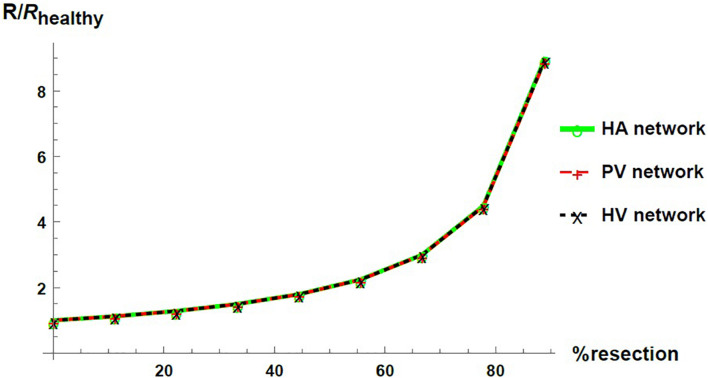
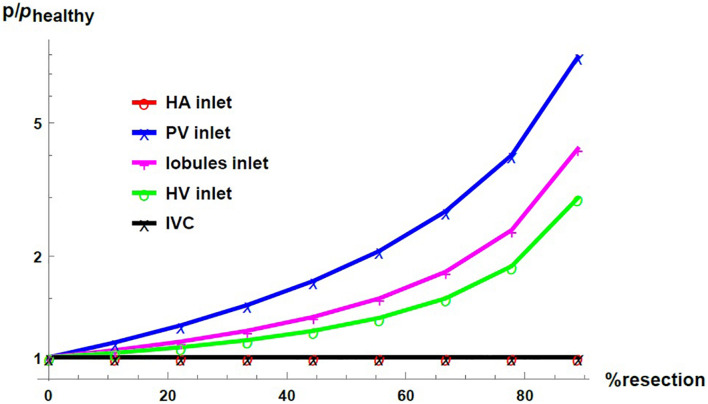
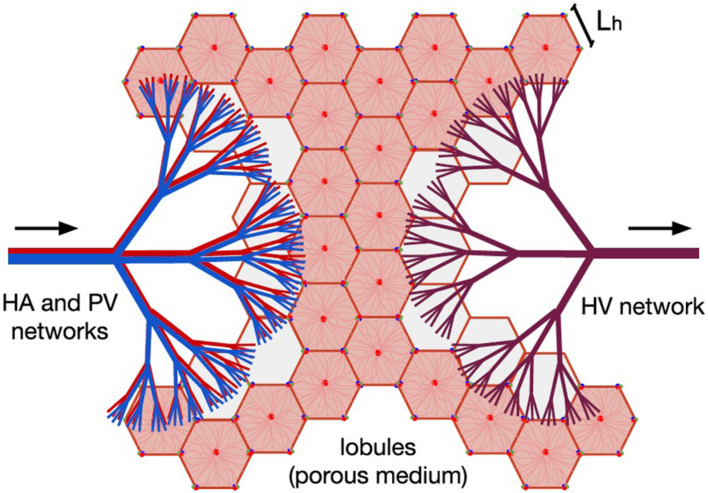
The liver plays a key role in the metabolic homeostasis of the whole organism. To carry out its functions, it is endowed with a peculiar circulatory system, made of three main dendritic flow structures and lobules. Understanding the vascular anatomy of the liver is clinically relevant since various liver pathologies are related to vascular disorders. Here, we develop a novel liver circulation model with a deterministic architecture based on the constructal law of design over the entire scale range (from macrocirculation to microcirculation). In this framework, the liver vascular structure is a combination of superimposed tree-shaped networks and porous system, where the main geometrical features of the dendritic fluid networks and the permeability of the porous medium, are defined from the constructal viewpoint. With this model, we are able to emulate physiological scenarios and to predict changes in blood pressure and flow rates throughout the hepatic vasculature due to resection or thrombosis in certain portions of the organ, simulated as deliberate blockages in the blood supply to these sections. This work sheds light on the critical impact of the vascular network on mechanics-related processes occurring in hepatic diseases, healing and regeneration that involve blood flow redistribution and are at the core of liver resilience.

摘要

肝脏在整个机体的代谢稳态中发挥着关键作用。为了执行其功能,它拥有一个特殊的循环系统,由三个主要的树枝状血流结构和小叶组成。了解肝脏的血管解剖结构在临床上具有重要意义,因为各种肝脏疾病都与血管紊乱有关。在此,我们基于设计的构造法则,在整个尺度范围(从大循环到微循环)内开发了一种具有确定性结构的新型肝脏循环模型。在此框架下,肝脏血管结构是叠加的树形网络和多孔系统的组合,其中树枝状流体网络的主要几何特征和多孔介质的渗透率是从构造角度定义的。利用这个模型,我们能够模拟生理场景,并预测由于器官某些部分的切除或血栓形成(模拟为对这些区域血液供应的故意阻塞)而导致的整个肝血管系统血压和流速的变化。这项工作揭示了血管网络对肝脏疾病、愈合和再生中发生的与力学相关过程的关键影响,这些过程涉及血流重新分布,并且是肝脏恢复力的核心。
https://cdn.ncbi.nlm.nih.gov/pmc/blobs/52a1/8637164/71d96e8fb920/fphys-12-733165-g008.jpg
https://cdn.ncbi.nlm.nih.gov/pmc/blobs/52a1/8637164/3b822682de36/fphys-12-733165-g001.jpg
https://cdn.ncbi.nlm.nih.gov/pmc/blobs/52a1/8637164/5abed7cee9af/fphys-12-733165-g002.jpg
https://cdn.ncbi.nlm.nih.gov/pmc/blobs/52a1/8637164/19c88685483d/fphys-12-733165-g003.jpg
https://cdn.ncbi.nlm.nih.gov/pmc/blobs/52a1/8637164/4e7065c6a185/fphys-12-733165-g004.jpg
https://cdn.ncbi.nlm.nih.gov/pmc/blobs/52a1/8637164/7906427c4af5/fphys-12-733165-g005.jpg
https://cdn.ncbi.nlm.nih.gov/pmc/blobs/52a1/8637164/3e37edcb2f84/fphys-12-733165-g006.jpg
https://cdn.ncbi.nlm.nih.gov/pmc/blobs/52a1/8637164/807db80420b1/fphys-12-733165-g007.jpg
https://cdn.ncbi.nlm.nih.gov/pmc/blobs/52a1/8637164/71d96e8fb920/fphys-12-733165-g008.jpg
https://cdn.ncbi.nlm.nih.gov/pmc/blobs/52a1/8637164/3b822682de36/fphys-12-733165-g001.jpg
https://cdn.ncbi.nlm.nih.gov/pmc/blobs/52a1/8637164/5abed7cee9af/fphys-12-733165-g002.jpg
https://cdn.ncbi.nlm.nih.gov/pmc/blobs/52a1/8637164/19c88685483d/fphys-12-733165-g003.jpg
https://cdn.ncbi.nlm.nih.gov/pmc/blobs/52a1/8637164/4e7065c6a185/fphys-12-733165-g004.jpg
https://cdn.ncbi.nlm.nih.gov/pmc/blobs/52a1/8637164/7906427c4af5/fphys-12-733165-g005.jpg
https://cdn.ncbi.nlm.nih.gov/pmc/blobs/52a1/8637164/3e37edcb2f84/fphys-12-733165-g006.jpg
https://cdn.ncbi.nlm.nih.gov/pmc/blobs/52a1/8637164/807db80420b1/fphys-12-733165-g007.jpg
https://cdn.ncbi.nlm.nih.gov/pmc/blobs/52a1/8637164/71d96e8fb920/fphys-12-733165-g008.jpg

相似文献

1
Hierarchical Modeling of the Liver Vascular System.肝脏血管系统的层次建模
Front Physiol. 2021 Nov 16;12:733165. doi: 10.3389/fphys.2021.733165. eCollection 2021.
2
The liver, a functionalized vascular structure.肝脏,一种功能化的血管结构。
Sci Rep. 2020 Oct 1;10(1):16194. doi: 10.1038/s41598-020-73208-8.
3
1D-model of the human liver circulatory system.人体肝脏循环系统的 1D 模型。
Comput Methods Programs Biomed. 2023 Aug;238:107612. doi: 10.1016/j.cmpb.2023.107612. Epub 2023 May 16.
4
Engineering point of view on liver transplantation strategies: multi-level modeling of hepatic perfusion.肝移植策略的工程学视角:肝脏灌注的多层次建模
Transplant Proc. 2014 Nov;46(9):3143-6. doi: 10.1016/j.transproceed.2014.09.167.
5
The hepatic vasculature and its response to hepatic injury: a working hypothesis.肝血管系统及其对肝损伤的反应:一个工作假说。
Yale J Biol Med. 1977 Sep-Oct;50(5):497-506.
6
A multilevel modeling framework to study hepatic perfusion characteristics in case of liver cirrhosis.一种用于研究肝硬化病例中肝脏灌注特征的多水平建模框架。
J Biomech Eng. 2015 May;137(5):051007. doi: 10.1115/1.4029280. Epub 2015 Mar 10.
7
Constructal law of vascular trees for facilitation of flow.促进血流的血管树构造定律。
PLoS One. 2014 Dec 31;9(12):e116260. doi: 10.1371/journal.pone.0116260. eCollection 2014.
8
Microcirculation in the murine liver: a computational fluid dynamic model based on 3D reconstruction from in vivo microscopy.小鼠肝脏中的微循环:基于体内显微镜三维重建的计算流体动力学模型
J Biomech. 2017 Oct 3;63:125-134. doi: 10.1016/j.jbiomech.2017.08.011. Epub 2017 Sep 2.
9
"Small-for-flow" syndrome: shifting the "size" paradigm.小流量综合征:改变“大小”范式。
Med Hypotheses. 2013 May;80(5):573-7. doi: 10.1016/j.mehy.2013.01.028. Epub 2013 Feb 19.
10
Perfusion characteristics of the human hepatic microcirculation based on three-dimensional reconstructions and computational fluid dynamic analysis.基于三维重建和计算流体动力学分析的人体肝脏微循环灌注特征
J Biomech Eng. 2012 Jan;134(1):011003. doi: 10.1115/1.4005545.

引用本文的文献

1
Dosimetrically coupled multiscale tetrahedral mesh models of human liver vasculature: implications for radiopharmaceutical dosimetry of both organ blood and parenchyma.人体肝脏血管系统的剂量耦合多尺度四面体网格模型:对器官血液和实质放射性药物剂量测定的影响。
Phys Med Biol. 2025 Jun 19;70(12). doi: 10.1088/1361-6560/addfa6.
2
Iceball growth 3D simulation model based on finite element method for hepatic cryoablation planning.基于有限元法的用于肝脏冷冻消融规划的冰球生长三维模拟模型
BMC Gastroenterol. 2025 Apr 7;25(1):227. doi: 10.1186/s12876-025-03817-y.
3
A simplified computational liver perfusion model, with applications to organ preservation.

本文引用的文献

1
The liver, a functionalized vascular structure.肝脏,一种功能化的血管结构。
Sci Rep. 2020 Oct 1;10(1):16194. doi: 10.1038/s41598-020-73208-8.
2
Modeling the hepatic arterial flow in living liver donor after left hepatectomy and postoperative boundary condition exploration.活体肝移植供体左半肝切除术后肝动脉血流模型建立及术后边界条件探索。
Int J Numer Method Biomed Eng. 2020 Mar;36(3):e3268. doi: 10.1002/cnm.3268. Epub 2019 Dec 26.
3
Anatomically based simulation of hepatic perfusion in the human liver.基于解剖结构的人体肝脏血流灌注模拟。
一种简化的肝脏灌注计算模型及其在器官保存中的应用。
Sci Rep. 2025 Jan 16;15(1):2178. doi: 10.1038/s41598-025-85170-4.
4
Lumped parameter liver simulation to predict acute haemodynamic alterations following partial resections.整体参数肝脏模拟预测部分切除术后急性血液动力学变化。
J R Soc Interface. 2023 Oct;20(207):20230444. doi: 10.1098/rsif.2023.0444. Epub 2023 Oct 25.
5
From Seeing to Simulating: A Survey of Imaging Techniques and Spatially-Resolved Data for Developing Multiscale Computational Models of Liver Regeneration.从观察到模拟:用于开发肝脏再生多尺度计算模型的成像技术和空间分辨数据综述
Front Syst Biol. 2022;2. doi: 10.3389/fsysb.2022.917191. Epub 2022 Jun 6.
6
Assessing Enhanced Acoustic Absorption From Sonosensitive Perfluorocarbon Emulsion With Magnetic Resonance-Guided High-Intensity Focused Ultrasound and a Percolated Tissue-Mimicking Flow Phantom.采用磁共振引导高强度聚焦超声和渗透组织模拟流动体模评估声敏性全氟碳乳液的增强声吸收。
Ultrasound Med Biol. 2023 Jul;49(7):1510-1517. doi: 10.1016/j.ultrasmedbio.2023.01.022. Epub 2023 Apr 26.
7
Importance of Anatomical Variation of the Hepatic Artery for Complicated Liver and Pancreatic Surgeries: A Review Emphasizing Origin and Branching.肝动脉解剖变异对复杂肝脏和胰腺手术的重要性:一篇强调起源和分支的综述
Diagnostics (Basel). 2023 Mar 24;13(7):1233. doi: 10.3390/diagnostics13071233.
8
The Influence of Interdisciplinary Work towards Advancing Knowledge on Human Liver Physiology.跨学科工作对推进人类肝脏生理学知识的影响。
Cells. 2022 Nov 21;11(22):3696. doi: 10.3390/cells11223696.
Int J Numer Method Biomed Eng. 2019 Sep;35(9):e3229. doi: 10.1002/cnm.3229. Epub 2019 Jul 31.
4
Novel methods for segment-specific blood flow simulation for the liver.用于肝脏特定节段血流模拟的新方法。
Comput Methods Biomech Biomed Engin. 2018 Nov;21(15):780-783. doi: 10.1080/10255842.2018.1520224. Epub 2018 Nov 6.
5
A computational model of the hepatic circulation applied to analyze the sensitivity of hepatic venous pressure gradient (HVPG) in liver cirrhosis.一种用于分析肝硬化患者肝静脉压力梯度(HVPG)敏感性的肝循环计算模型。
J Biomech. 2017 Dec 8;65:23-31. doi: 10.1016/j.jbiomech.2017.09.023. Epub 2017 Oct 6.
6
Building a 3D Virtual Liver: Methods for Simulating Blood Flow and Hepatic Clearance on 3D Structures.构建3D虚拟肝脏:在3D结构上模拟血流和肝脏清除的方法。
PLoS One. 2016 Sep 20;11(9):e0162215. doi: 10.1371/journal.pone.0162215. eCollection 2016.
7
Differential visceral blood flow in the hyperdynamic circulation of patients with liver cirrhosis.肝硬化患者高动力循环中不同内脏血流情况
Aliment Pharmacol Ther. 2016 May;43(9):947-54. doi: 10.1111/apt.13571. Epub 2016 Mar 7.
8
A physiologically-based flow network model for hepatic drug elimination III: 2D/3D DLA lobule models.一种基于生理学的肝脏药物消除血流网络模型III:二维/三维扩散限制聚集小叶模型
Theor Biol Med Model. 2016 Mar 3;13:9. doi: 10.1186/s12976-016-0034-5.
9
Multiscale computational model of fluid flow and matrix deformation in decellularized liver.去细胞化肝脏中流体流动和基质变形的多尺度计算模型
J Mech Behav Biomed Mater. 2016 Apr;57:201-14. doi: 10.1016/j.jmbbm.2015.11.033. Epub 2015 Dec 7.
10
Small for Size and Flow (SFSF) syndrome: An alternative description for posthepatectomy liver failure.小肝综合征和小肝流出量(SFSF):肝切除术后肝功能衰竭的另一种描述。
Clin Res Hepatol Gastroenterol. 2016 Jun;40(3):267-275. doi: 10.1016/j.clinre.2015.06.024. Epub 2015 Oct 26.