Laboratory of Invertebrate Biology, Department of Biotechnology and Life Sciences, University of Insubria, Varese, Italy.
Laboratory of Comparative Immunology, Department of Theoretical and Applied Sciences, University of Insubria, Varese, Italy.
Front Immunol. 2021 Nov 18;12:745160. doi: 10.3389/fimmu.2021.745160. eCollection 2021.
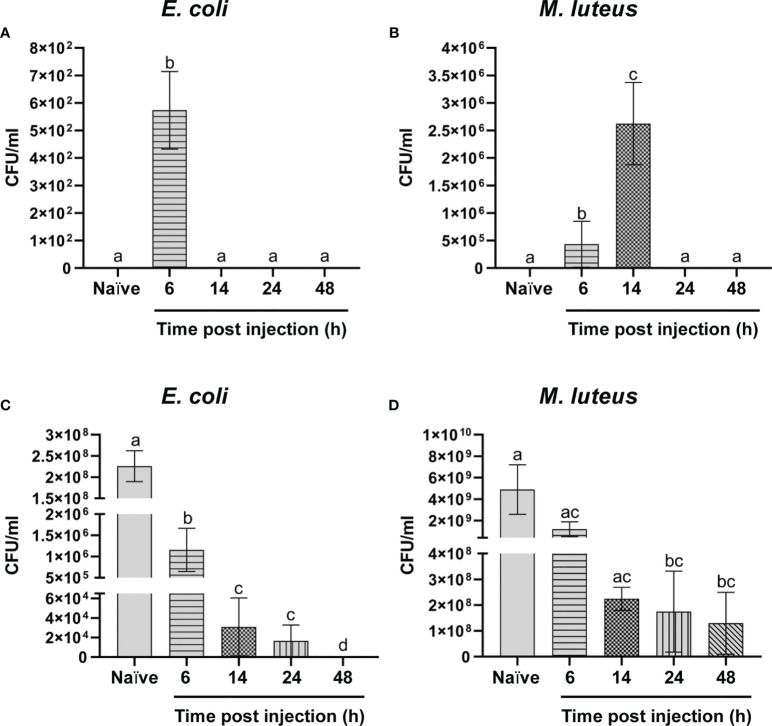
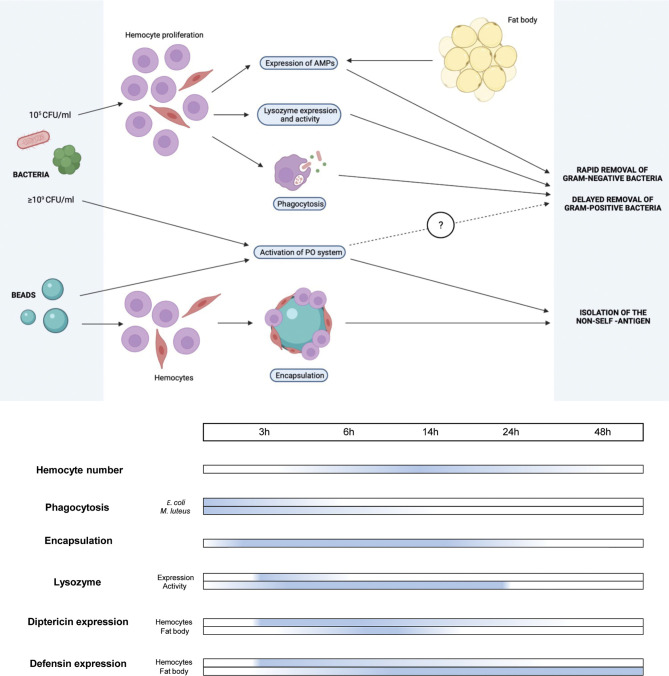
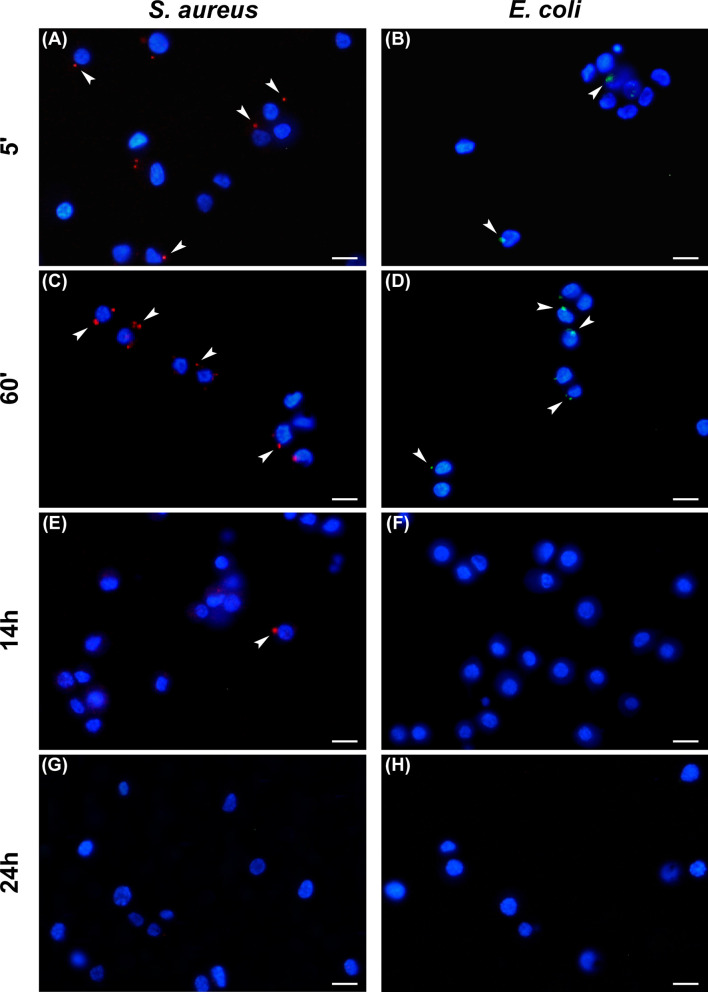
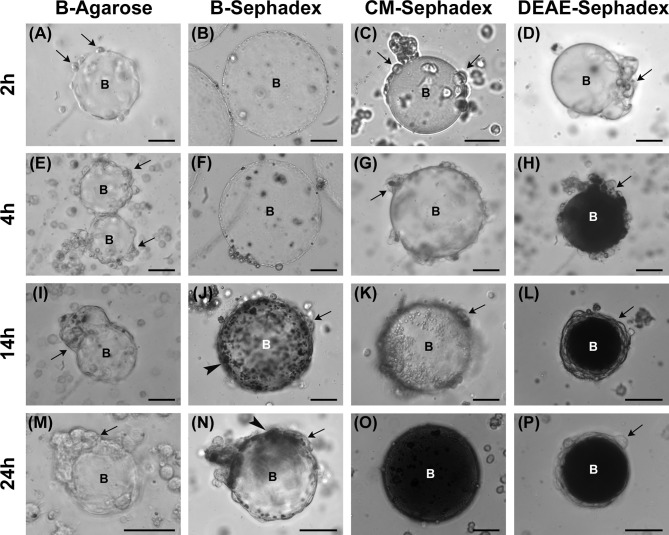
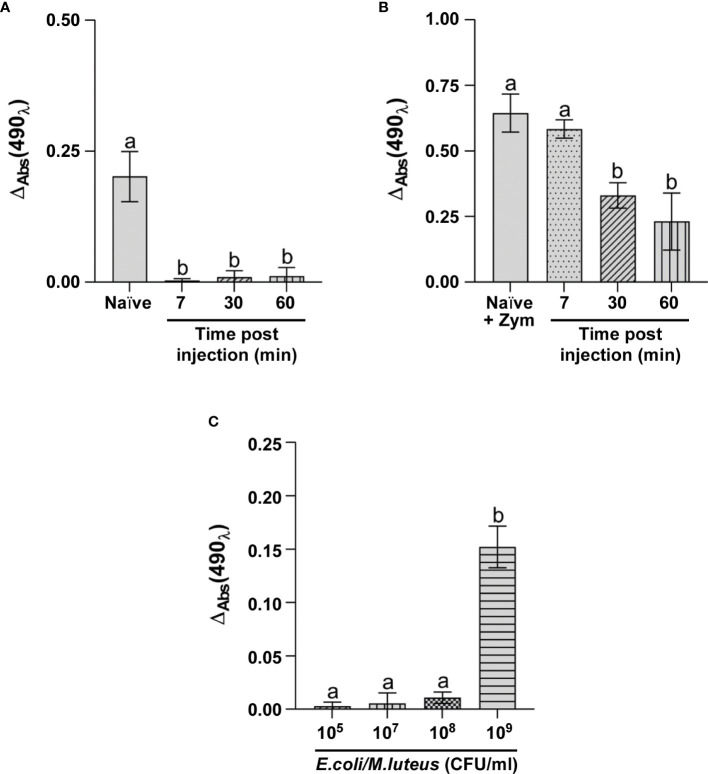
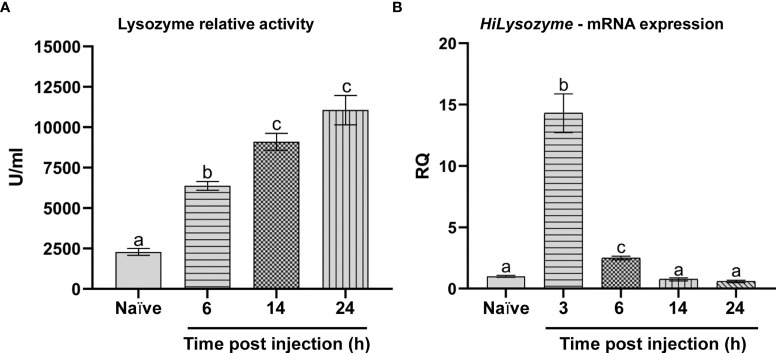
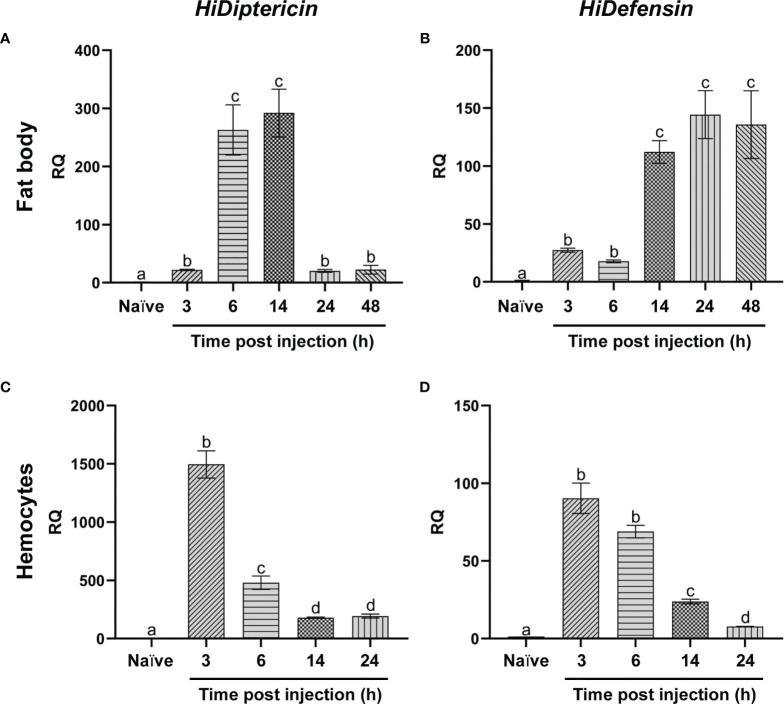
In insects, a complex and effective immune system that can be rapidly activated by a plethora of stimuli has evolved. Although the main cellular and humoral mechanisms and their activation pathways are highly conserved across insects, the timing and the efficacy of triggered immune responses can differ among different species. In this scenario, an insect deserving particular attention is the black soldier fly (BSF), (Diptera: Stratiomyidae). Indeed, BSF larvae can be reared on a wide range of decaying organic substrates and, thanks to their high protein and lipid content, they represent a valuable source of macromolecules useful for different applications (e.g., production of feedstuff, bioplastics, and biodiesel), thus contributing to the development of circular economy supply chains for waste valorization. However, decaying substrates bring the larvae into contact with different potential pathogens that can challenge their health status and growth. Although these life strategies have presumably contributed to shape the evolution of a sophisticated and efficient immune system in this dipteran, knowledge about its functional features is still fragmentary. In the present study, we investigated the processes underpinning the immune response to bacteria in larvae and characterized their reaction times. Our data demonstrate that the cellular and humoral responses in this insect show different kinetics: phagocytosis and encapsulation are rapidly triggered after the immune challenge, while the humoral components intervene later. Moreover, although both Gram-positive and Gram-negative bacteria are completely removed from the insect body within a few hours after injection, Gram-positive bacteria persist in the hemolymph longer than do Gram-negative bacteria. Finally, the activity of two key actors of the humoral response, i.e., lysozyme and phenoloxidase, show unusual dynamics as compared to other insects. This study represents the first detailed characterization of the immune response to bacteria of larvae, expanding knowledge on the defense mechanisms of this insect among Diptera. This information is a prerequisite to manipulating the larval immune response by nutritional and environmental factors to increase resistance to pathogens and optimize health status during mass rearing.
在昆虫中,进化出了一种复杂而有效的免疫系统,可以被大量刺激迅速激活。尽管昆虫之间主要的细胞和体液机制及其激活途径高度保守,但触发免疫反应的时间和效果在不同物种之间可能有所不同。在这种情况下,一种特别值得关注的昆虫是黑水虻(BSF),(双翅目:Stratiomyidae)。事实上,BSF 幼虫可以在广泛的腐烂有机基质上饲养,由于其高蛋白和高脂肪含量,它们是一种有价值的大分子来源,可用于不同的应用(例如,生产饲料、生物塑料和生物柴油),从而有助于发展循环经济废物增值供应链。然而,腐烂的基质使幼虫接触到不同的潜在病原体,这些病原体可能会挑战它们的健康状况和生长。尽管这些生活策略可能有助于塑造这种双翅目昆虫复杂而高效的免疫系统的进化,但对其功能特征的了解仍然是零散的。在本研究中,我们研究了 幼虫对细菌的免疫反应背后的过程,并描述了它们的反应时间。我们的数据表明,这种昆虫的细胞和体液反应表现出不同的动力学:吞噬作用和包被作用在免疫挑战后迅速被触发,而体液成分则介入较晚。此外,尽管革兰氏阳性菌和革兰氏阴性菌在注射后几个小时内完全从昆虫体内清除,但革兰氏阳性菌在血液中停留的时间比革兰氏阴性菌长。最后,体液反应的两个关键因素,即溶菌酶和酚氧化酶的活性与其他昆虫相比表现出异常的动态。这项研究代表了对 幼虫对细菌的免疫反应的首次详细描述,扩展了对这种昆虫在双翅目昆虫中的防御机制的了解。这些信息是通过营养和环境因素操纵幼虫免疫反应以增加对病原体的抵抗力并优化大规模饲养期间健康状况的前提。