Zhou Wanhai, Kong Wenbin, Yang Can, Feng Ruizhang, Xi Wanpeng
Key Lab of Aromatic Plant Resources Exploitation and Utilization in Sichuan Higher Education, Yibin University, Yibin, China.
China Chongqing Agricultural Technology Extension Station, Chongqing, China.
Front Plant Sci. 2021 Nov 11;12:763139. doi: 10.3389/fpls.2021.763139. eCollection 2021.
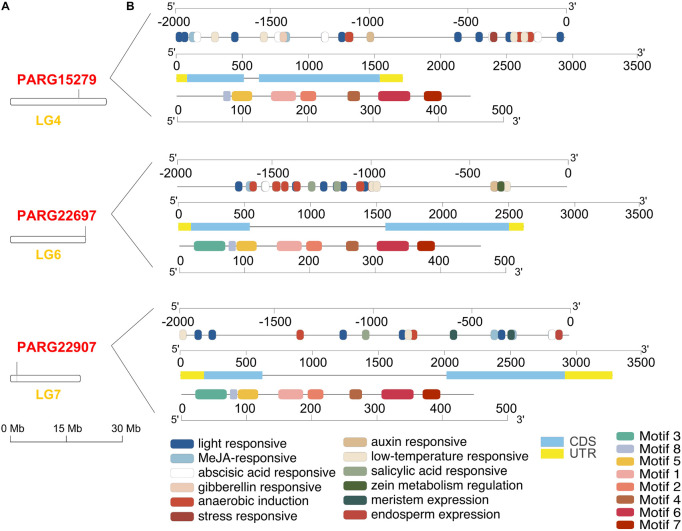
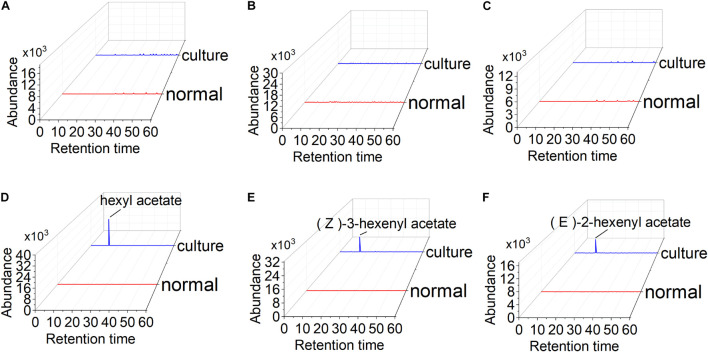
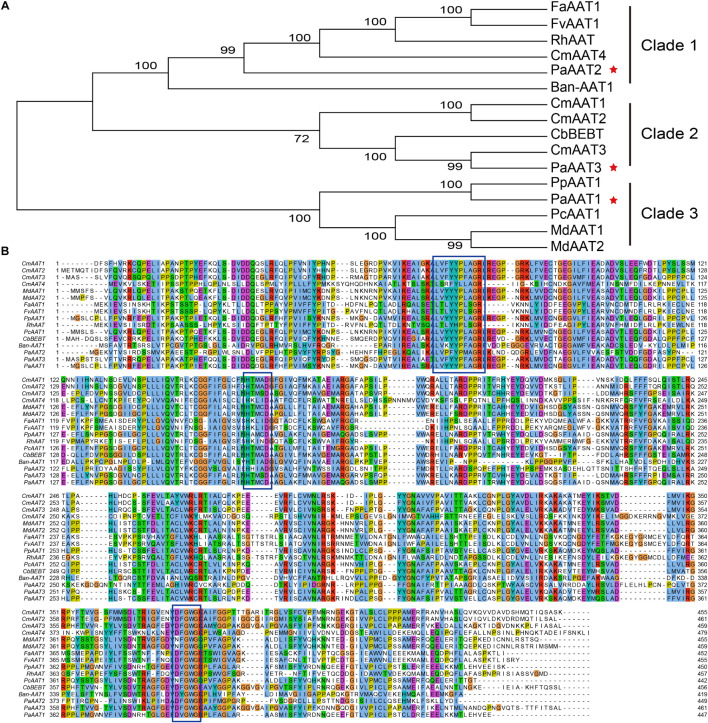
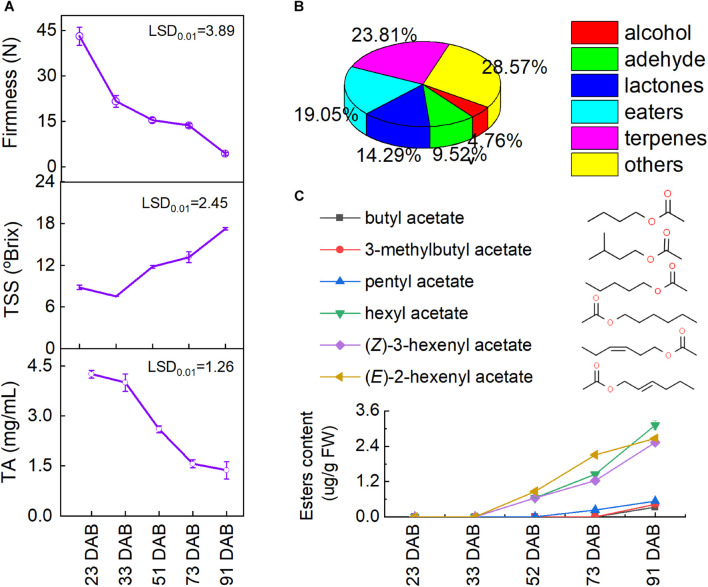
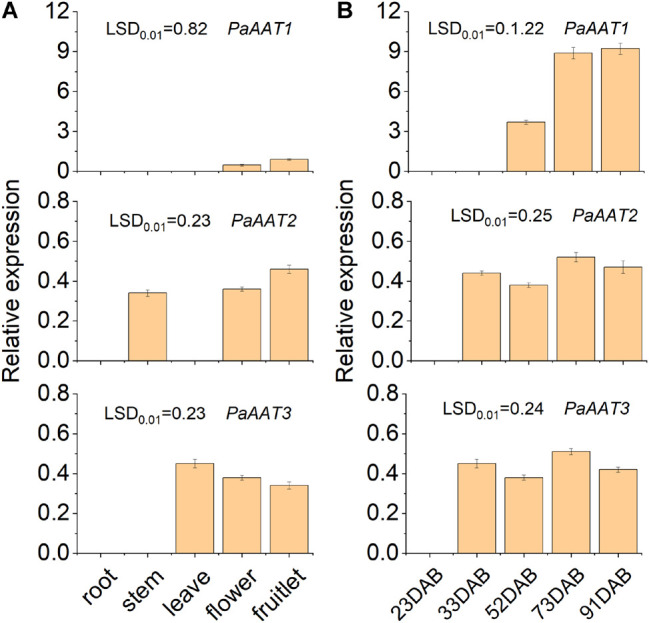
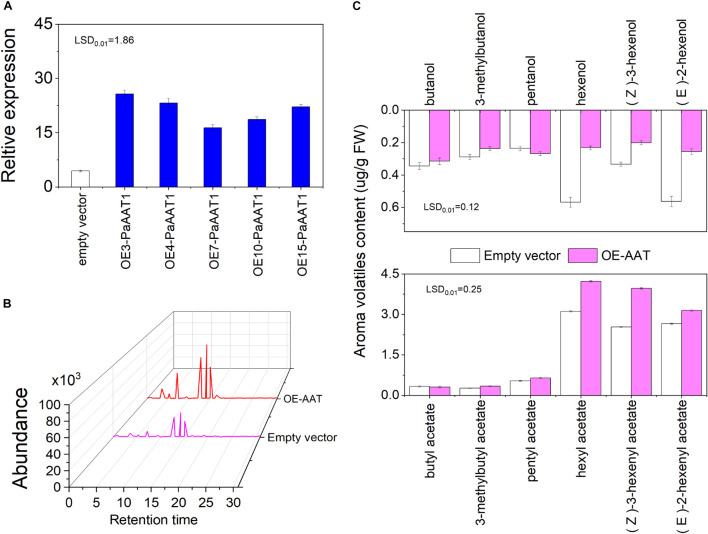
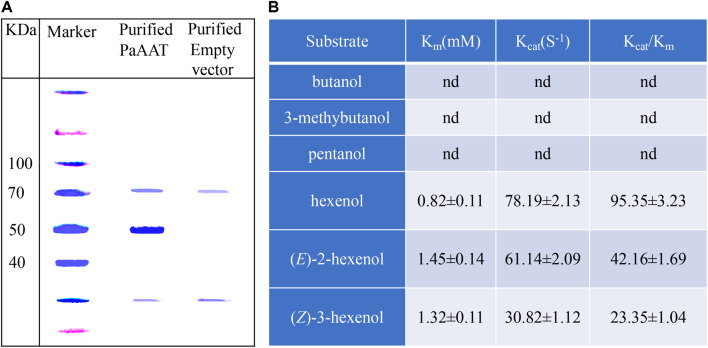
Short-chain esters derived from fatty acid contribute to the characteristic flavor of apricot fruit, and the biosynthesis of these compounds in fruit is catalyzed by alcohol acyltransferase (AAT). In this work, we investigated the AAT gene family via genome-wide scanning, and three AAT loci were identified in different linkage groups (LGs), with PaAAT1 (PARG22907m01) in LG7, PaAAT2 (PARG15279m01) in LG4, and PaAAT3 (PARG22697m01) in LG6. Phylogenetic analysis showed that PaAAT1 belongs to clade 3, while PaAAT2 and PaAAT3 belong to clade 1 and clade 2, respectively. In contrast, the three AAT genes present different expression patterns. Only PaAAT1 exhibited distinct patterns of fruit-specific expression, and the expression of PaAAT1 sharply increased during fruit ripening, which is consistent with the abundance of C4-C6 esters such as ()-2-hexenyl acetate and ()-3-hexenyl acetate. The transient overexpression of PaAAT1 in Katy (KT) apricot fruit resulted in a remarkable decrease in hexenol, ()-2-hexenol, and ()-3-hexenol levels while significantly increasing the corresponding acetate production ( < 0.01). A substrate assay revealed that the PaAAT1 protein enzyme can produce hexenyl acetate, ()-2-hexenyl acetate, and ()-3-hexenyl acetate when C6 alcohols are used as substrates for the reaction. Taken together, these results indicate that PaAAT1 plays a crucial role in the production of C6 esters in apricot fruit during ripening.
源自脂肪酸的短链酯类物质构成了杏果实的特征风味,而这些化合物在果实中的生物合成由醇酰基转移酶(AAT)催化。在本研究中,我们通过全基因组扫描对AAT基因家族进行了研究,在不同的连锁群(LG)中鉴定出了3个AAT基因座,LG7中的PaAAT1(PARG22907m01)、LG4中的PaAAT2(PARG15279m01)以及LG6中的PaAAT3(PARG22697m01)。系统发育分析表明,PaAAT1属于第3进化枝,而PaAAT2和PaAAT3分别属于第1进化枝和第2进化枝。相比之下,这3个AAT基因呈现出不同的表达模式。只有PaAAT1表现出明显的果实特异性表达模式,且PaAAT1的表达在果实成熟过程中急剧增加,这与诸如()-2-己烯基乙酸酯和()-3-己烯基乙酸酯等C4 - C6酯类物质的含量变化一致。在凯帝(KT)杏果实中瞬时过表达PaAAT1导致己烯醇、()-2-己烯醇和()-3-己烯醇水平显著降低,同时相应的乙酸酯产量显著增加(<0.01)。底物分析表明,当以C6醇类作为反应底物时,PaAAT1蛋白酶能够产生己烯基乙酸酯、()-2-己烯基乙酸酯和()-3-己烯基乙酸酯。综上所述,这些结果表明PaAAT1在杏果实成熟过程中C6酯类物质的产生中起着关键作用。