Wang Xiaoying, Zhou Peng, Huang Rongyu, Zhang Jianfu, Ouyang Xinhao
State Key Laboratory of Cellular Stress Biology, School of Life Sciences, Xiamen University, Xiamen, China.
Rice Research Institute, Fujian Academy of Agricultural Sciences, Fuzhou, China.
Front Plant Sci. 2021 Nov 18;12:778515. doi: 10.3389/fpls.2021.778515. eCollection 2021.
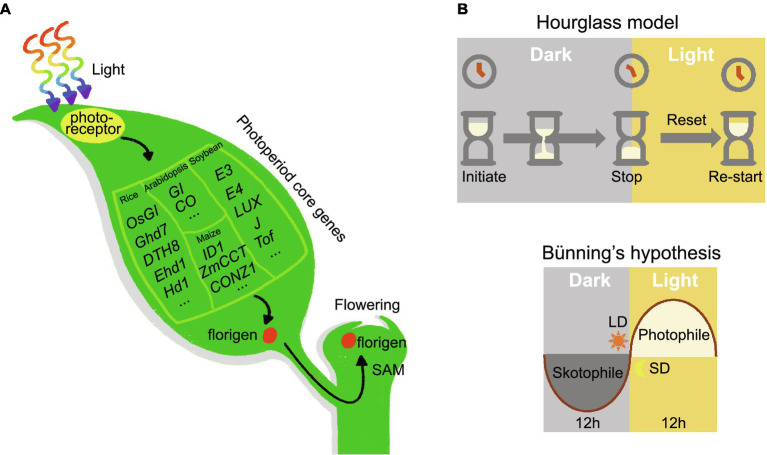
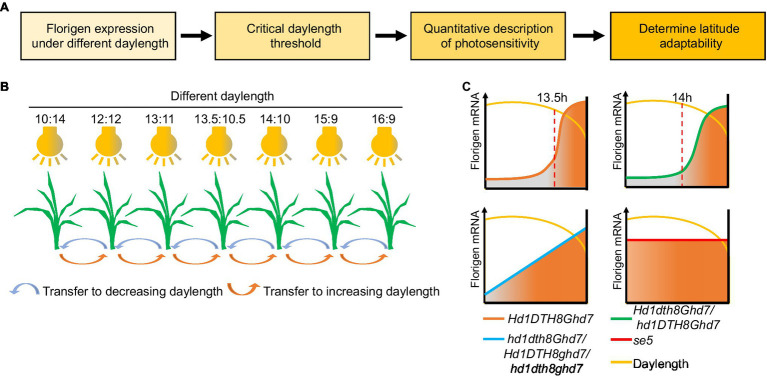
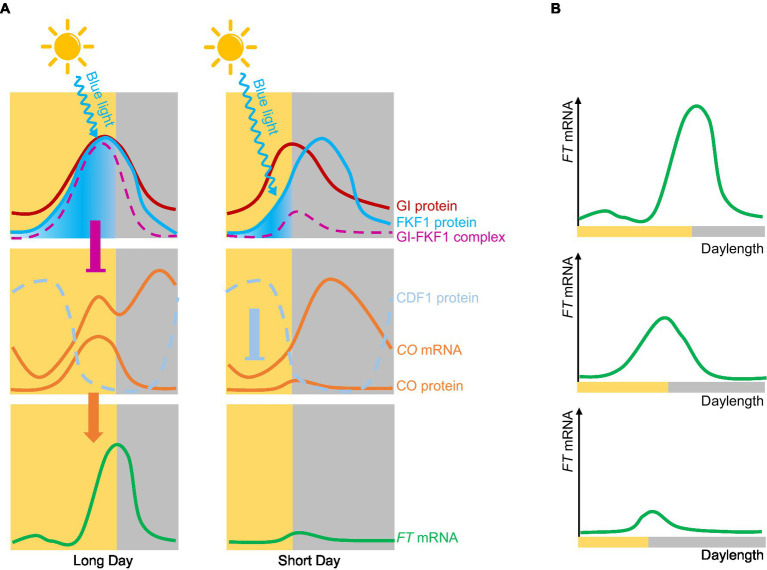
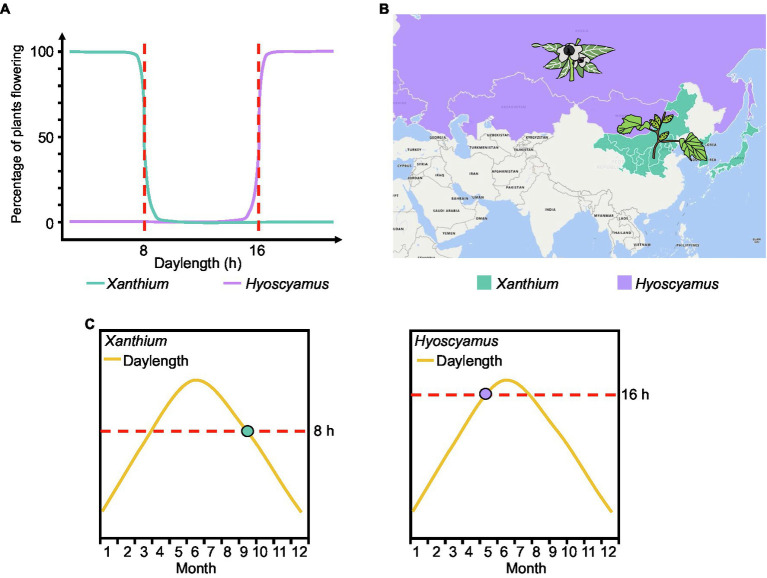
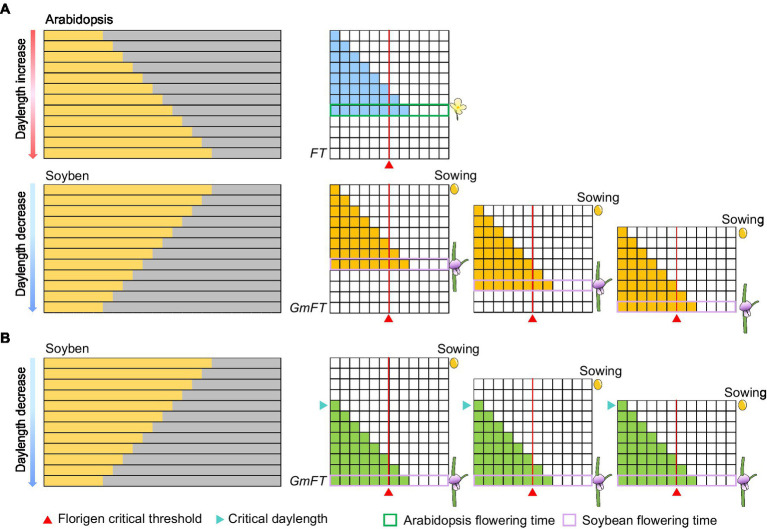
The photoperiodic flowering pathway is crucial for plant development to synchronize internal signaling events and external seasons. One hundred years after photoperiodic flowering was discovered, the underlying core signaling network has been elucidated in model plants such as Arabidopsis (), rice (), and soybean (). Here, we review the progress made in the photoperiodic flowering area and summarize previously accepted photoperiodic flowering models. We then introduce a new model based on daylength recognition by florigen. By determining the expression levels of the florigen gene, this model can assess the mechanism of daylength sensing and crop latitude adaptation. Future applications of this model under the constraints of global climate change are discussed.
光周期开花途径对于植物发育以同步内部信号事件和外部季节至关重要。在光周期开花被发现一百年后,其潜在的核心信号网络已在拟南芥、水稻和大豆等模式植物中得到阐明。在这里,我们回顾了光周期开花领域取得的进展,并总结了先前被认可的光周期开花模型。然后,我们介绍了一种基于成花素对日照长度识别的新模型。通过确定成花素基因的表达水平,该模型可以评估日照长度感知机制和作物纬度适应性。我们还讨论了该模型在全球气候变化限制下的未来应用。