Department of General Surgery, The First Affiliated Hospital of Jinan University, Guangzhou 510632, China.
International School, Jinan University, Guangzhou, Guangdong 510632, China.
Dis Markers. 2021 Nov 26;2021:2385406. doi: 10.1155/2021/2385406. eCollection 2021.
Gastric cancer (GC) is the third leading cause of cancer death worldwide with complicated molecular and cellular heterogeneity. Iron metabolism and ferroptosis play crucial roles in the pathogenesis of GC. However, the prognostic role and immunotherapy biomarker potential of ferroptosis-related genes (FRGs) in GC still remains to be clarified.
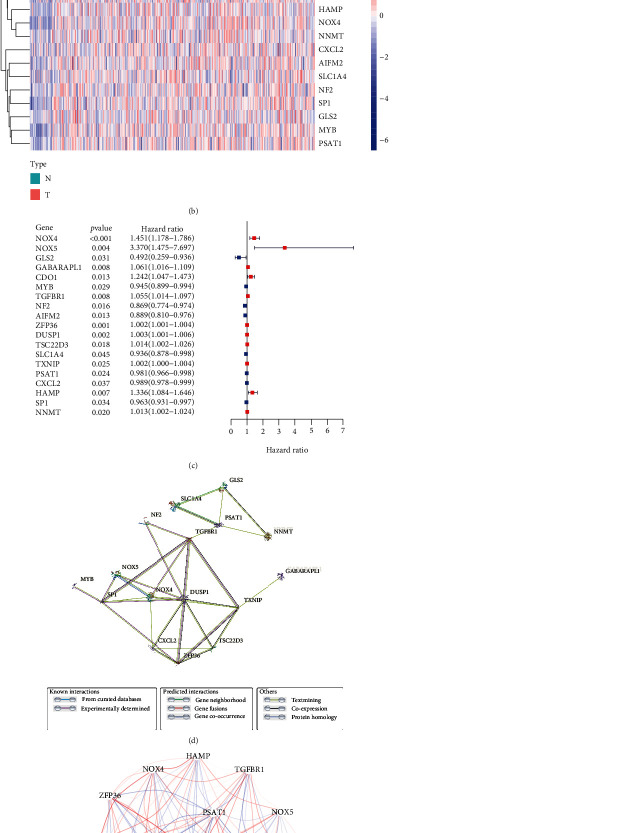
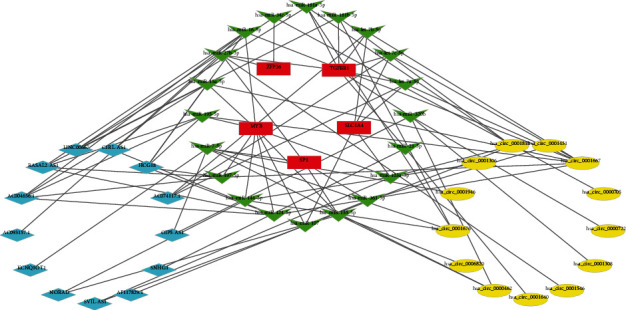
We comprehensively analyzed the prognosis of different expression FRGs, based on gastric carcinoma patients in the TCGA cohort. The functional enrichment and immune microenvironment associated with these genes in gastric cancer were investigated. The prognostic model was constructed to clarify the relation between FRGs and the prognosis of GC. Meanwhile, the ceRNA network of FRGs in the prognostic model was performed to explore the regulatory mechanisms.
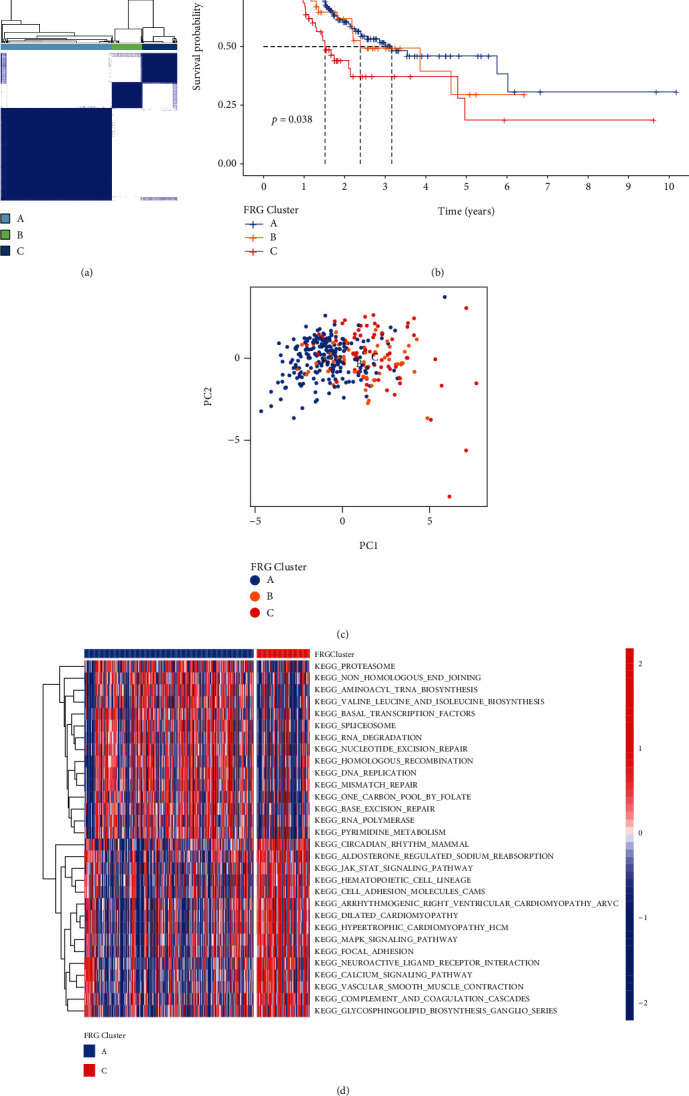
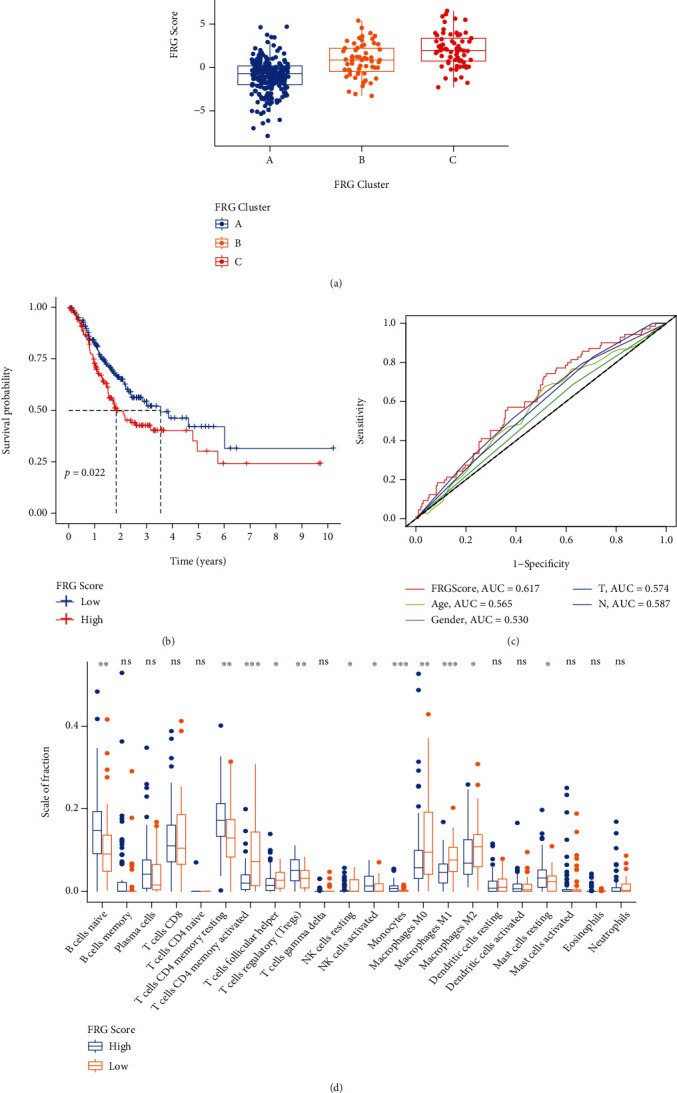
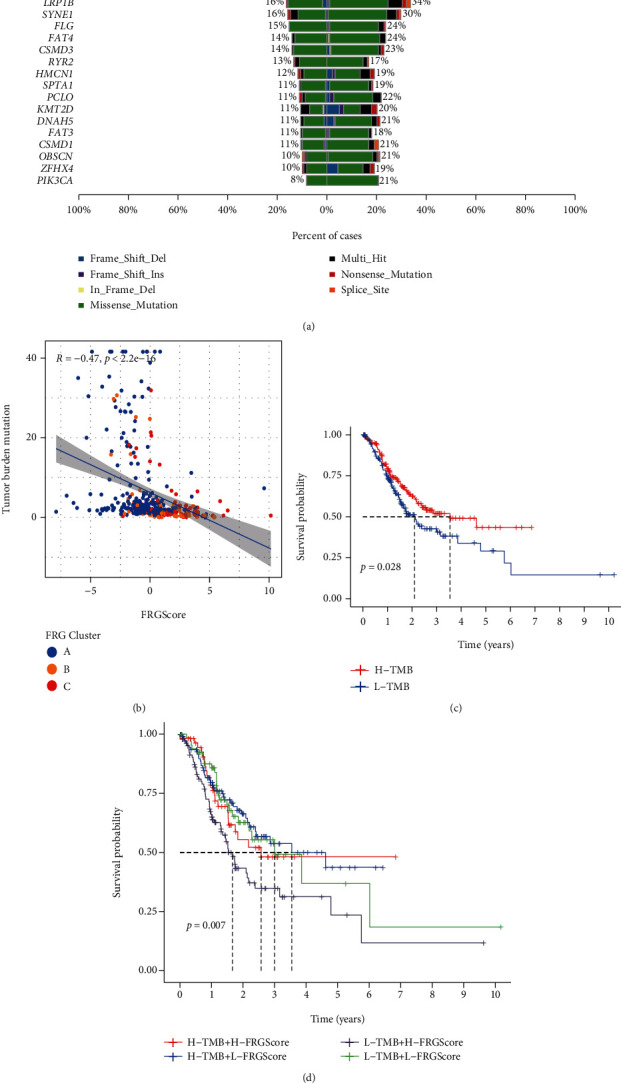
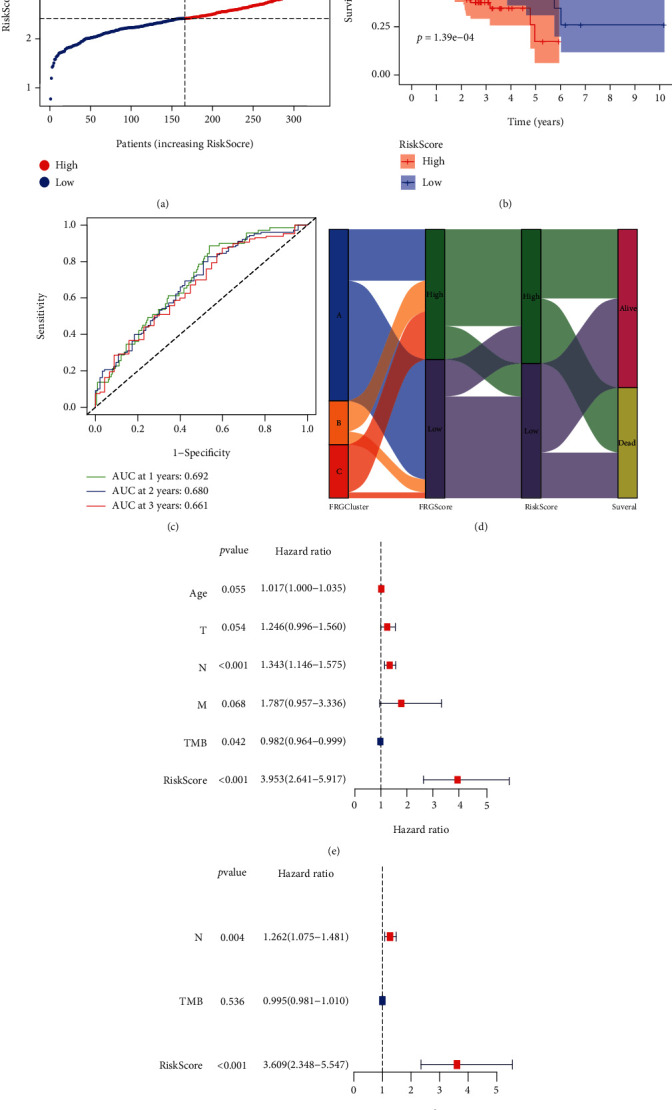
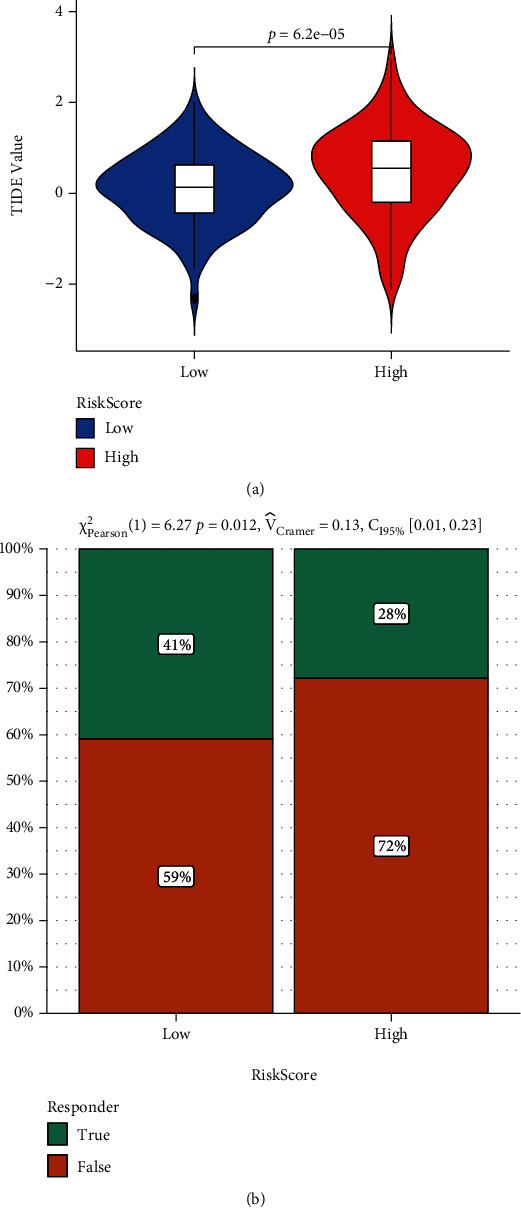
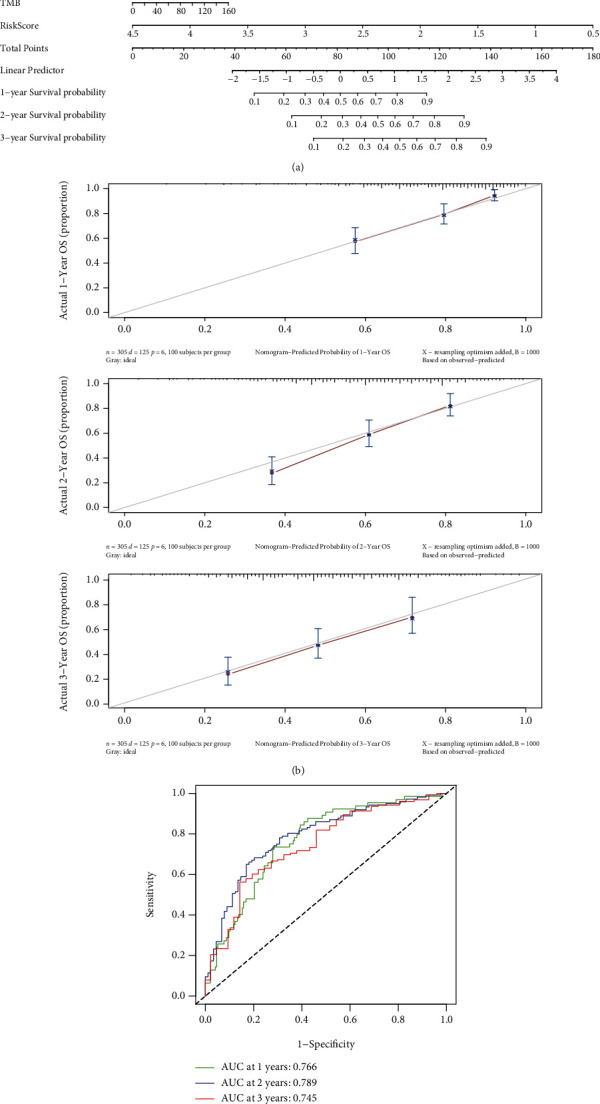
Gastric carcinoma patients were classified into the A, B, and C FRGClusters with different features based on 19 prognostic ferroptosis-related differentially expressed genes in the TCGA database. To quantify the FRG characteristics of individual patients, FRGScore was constructed. And the research shows the GC patients with higher FRGScore had worse survival outcome. Moreover, thirteen prognostic ferroptosis-related differentially expressed genes (DEGs) were selected to construct a prognostic model for GC survival outcome with a superior accuracy in this research. And we also found that FRG RiskScore can be an independent biomarker for the prognosis of GC patients. Interestingly, GC patients with lower RiskScore had less immune dysfunction and were more likely to respond to immunotherapy according to TIDE value analysis. Finally, a ceRNA network based on FRGs in the prognostic model was analyzed to show the concrete regulation mechanisms.
The ferroptosis-related gene risk signature has a superior potent in predicting GC prognosis and acts as the biomarkers for immunotherapy, which may provide a reference in clinic.
胃癌(GC)是全球癌症死亡的第三大主要原因,具有复杂的分子和细胞异质性。铁代谢和铁死亡在 GC 的发病机制中起着关键作用。然而,铁死亡相关基因(FRGs)在 GC 中的预后作用和免疫治疗生物标志物潜力仍有待阐明。
我们综合分析了 TCGA 队列中不同表达 FRGs 的预后,基于胃腺癌患者。研究了这些基因在胃癌中的功能富集和免疫微环境。构建了预后模型,以阐明 FRGs 与 GC 预后的关系。同时,对预后模型中的 FRGs 进行 ceRNA 网络分析,探讨其调控机制。
根据 TCGA 数据库中 19 个预后铁死亡相关差异表达基因,将胃腺癌患者分为 A、B 和 C FRGCluster,具有不同的特征。为了量化个体患者的 FRG 特征,构建了 FRGScore。研究表明,GC 患者的 FRGScore 越高,生存结局越差。此外,本研究还选择了 13 个预后铁死亡相关差异表达基因(DEGs)来构建 GC 生存结局的预后模型,该模型具有更高的准确性。我们还发现,FRG RiskScore 可以作为 GC 患者预后的独立生物标志物。有趣的是,根据 TIDE 值分析,风险评分较低的 GC 患者免疫功能障碍较少,更有可能对免疫治疗产生反应。最后,基于预后模型中的 FRGs 进行了 ceRNA 网络分析,以展示具体的调控机制。
铁死亡相关基因风险特征在预测 GC 预后方面具有较高的潜力,并可作为免疫治疗的生物标志物,为临床提供参考。