Orlandi Ester, Ferrari Marco, Lafe Elvis, Preda Lorenzo, Benazzo Marco, Vischioni Barbara, Bonora Maria, Rampinelli Vittorio, Schreiber Alberto, Licitra Lisa, Nicolai Piero
Radiation Oncology Clinical Department, National Center for Oncological Hadrontherapy ("Fondazione CNAO"), Pavia, Italy.
Section of Otorhinolaryngology - Head and Neck Surgery, Department of Neurosciences, University of Padua - "Azienda Ospedaliera di Padova", Padua, Italy.
Front Oncol. 2021 Nov 18;11:781205. doi: 10.3389/fonc.2021.781205. eCollection 2021.
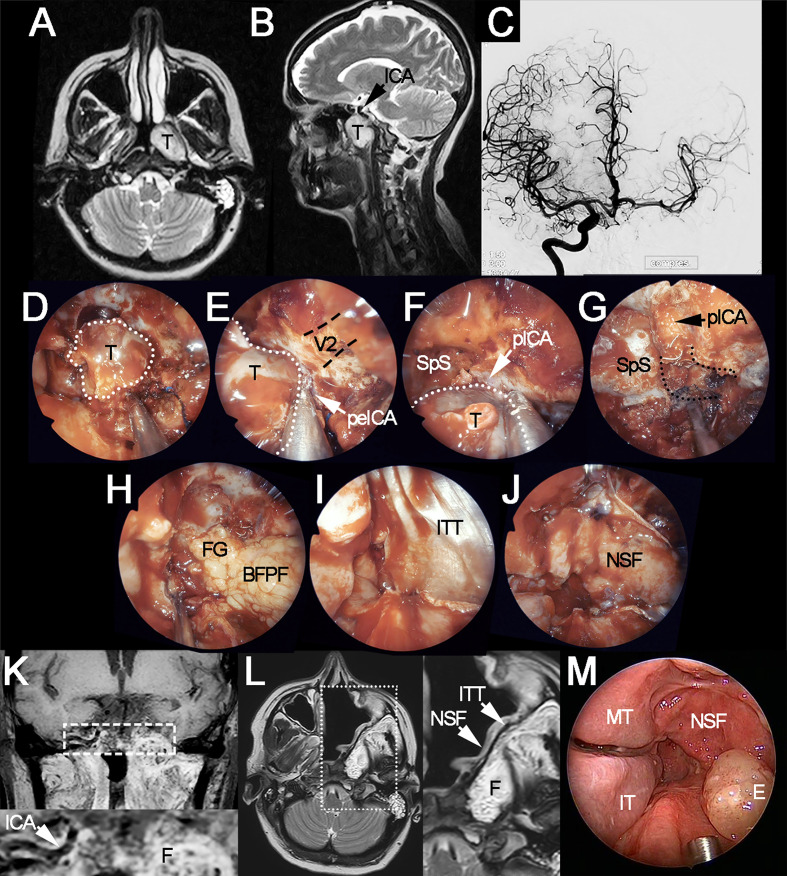
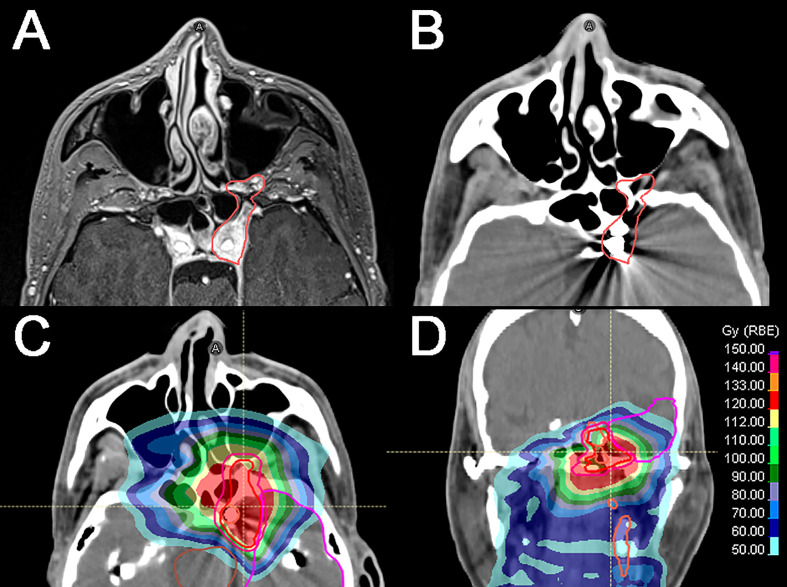
Internal or common carotid artery encasement (CAE) is observed in almost 2-7% of head and neck cancers (HNC) and designates the tumor with the T4b category. This clinical scenario is associated with a dismal prognosis, owing to the risk for thrombosis and bleeding that usually characterizes such an advanced cancer. Standardized radiological criteria to infer invasion of the carotid artery are lacking. Complete surgical resection in the context of a multimodality treatment is supposed to offer the greatest chances of cure. Surgery can either be carotid-sparing or include carotidectomy. Data on probability of cerebrovascular and non-cerebrovascular complications, risk of carotid blowout, poor oncologic outcomes, and less-than-certain efficacy of diagnostic and interventional preventive procedures against cerebral infarction make it difficult to define surgery as the recommended option among other therapeutic strategies. Non-surgical therapies based on radiation therapy possibly combined with chemotherapy are more frequently employed in HNC with CAE. In this context, carotid blowout is the most feared complication, and its probability increases with tumor stage and cumulative radiation dose received by the vessel. The use of highly conformal radiotherapies such as intensity-modulated particle therapy might substantially improve the manageability of HNC with CAE by possibly reducing the risk of late sequalae. Despite evidence is frail, it appears logical that a case-by-case evaluation through multidisciplinary decision making between head and neck surgeons, radiation oncologists, medical oncologists, diagnostic and interventional radiologists, and vascular surgeons are of paramount value to offer the best therapeutic solution to patients affected by HNC with CAE.
在几乎2%-7%的头颈癌(HNC)中可观察到颈内动脉或颈总动脉包绕(CAE),这将肿瘤归为T4b类别。这种临床情况预后不佳,因为这种晚期癌症通常有血栓形成和出血的风险。目前缺乏推断颈动脉侵犯的标准化放射学标准。在多模式治疗中进行完整的手术切除被认为是提供最大治愈机会的方法。手术可以是保留颈动脉的,也可以包括颈动脉切除术。关于脑血管和非脑血管并发症的概率、颈动脉破裂的风险、不良肿瘤学结果以及针对脑梗死的诊断和介入预防程序疗效不确切的数据,使得难以将手术定义为其他治疗策略中推荐的选择。基于放射治疗可能联合化疗的非手术治疗在伴有CAE的头颈癌中更常被采用。在这种情况下,颈动脉破裂是最令人担忧的并发症,其概率随着肿瘤分期和血管接受的累积放射剂量增加而增加。使用高度适形放疗,如调强粒子治疗,可能通过降低晚期后遗症的风险,显著改善伴有CAE的头颈癌的可管理性。尽管证据不足,但通过头颈外科医生、放射肿瘤学家、医学肿瘤学家、诊断和介入放射学家以及血管外科医生之间的多学科决策进行个案评估,对于为患有伴有CAE的头颈癌患者提供最佳治疗方案似乎至关重要。