Lu Lichun, Hu Yifang, Wang Chen, Jiang Feng, Wu Chuyan
Department of Neurology, The Affiliated Suzhou Science & Technology Town Hospital of Nanjing Medical University, Suzhou, China.
Department of Geriatrics, The First Affiliated Hospital of Nanjing Medical University, Nanjing, China.
Front Mol Biosci. 2021 Nov 16;8:747933. doi: 10.3389/fmolb.2021.747933. eCollection 2021.
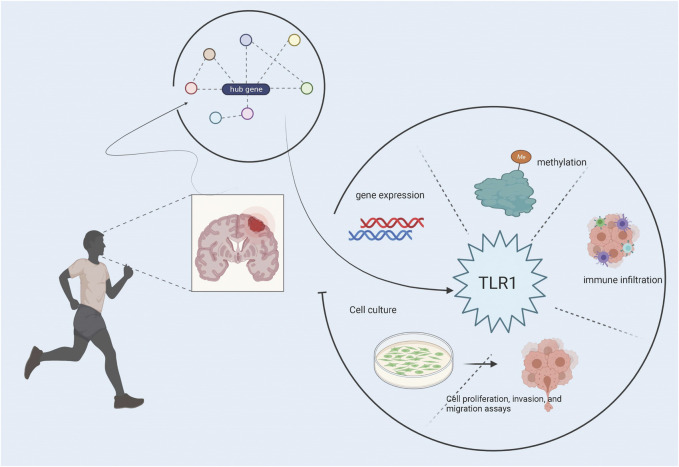
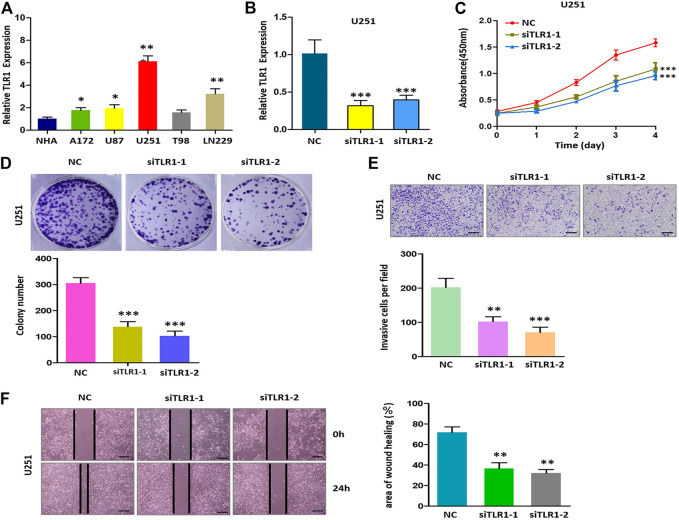
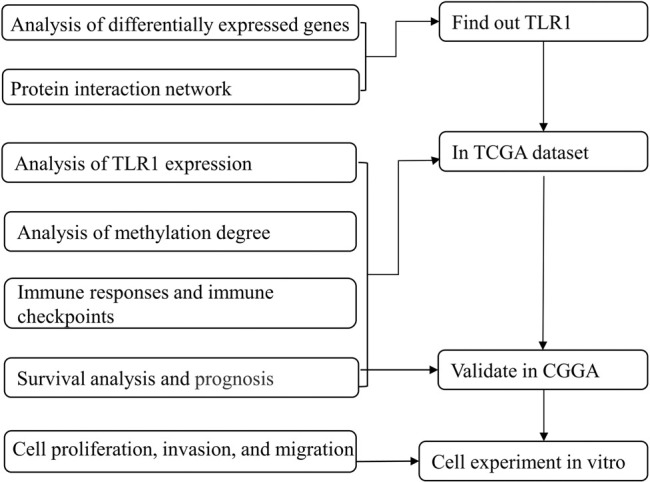
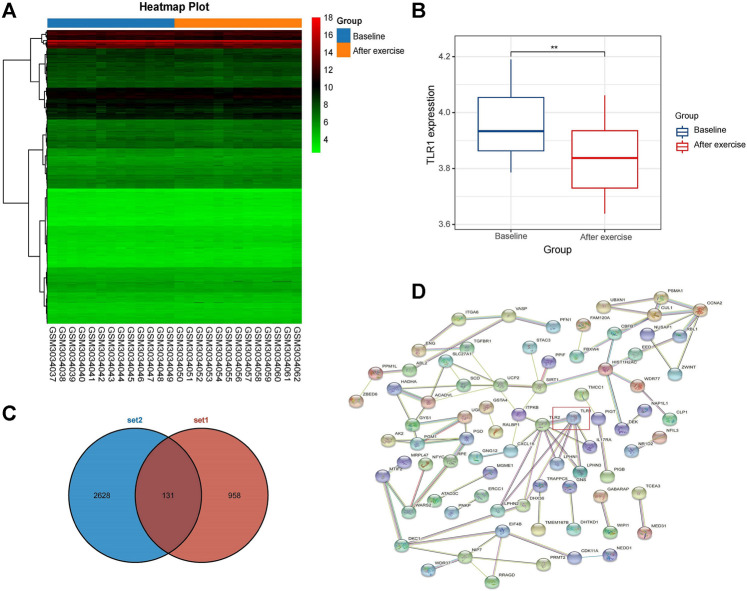
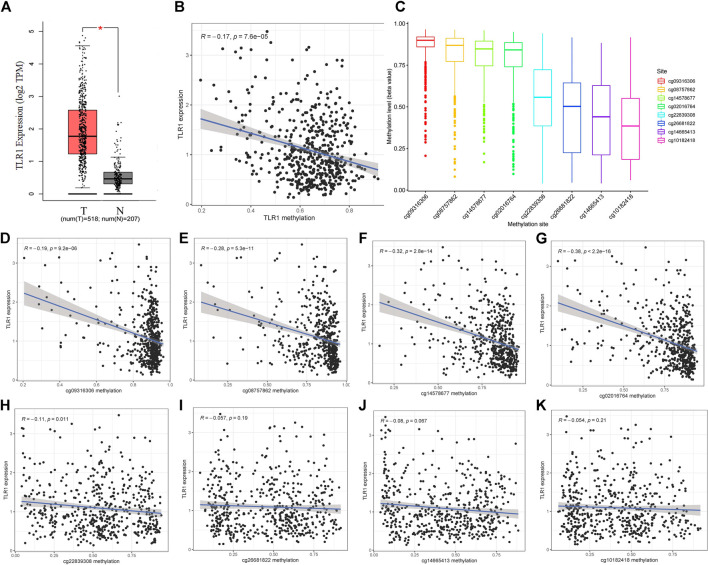
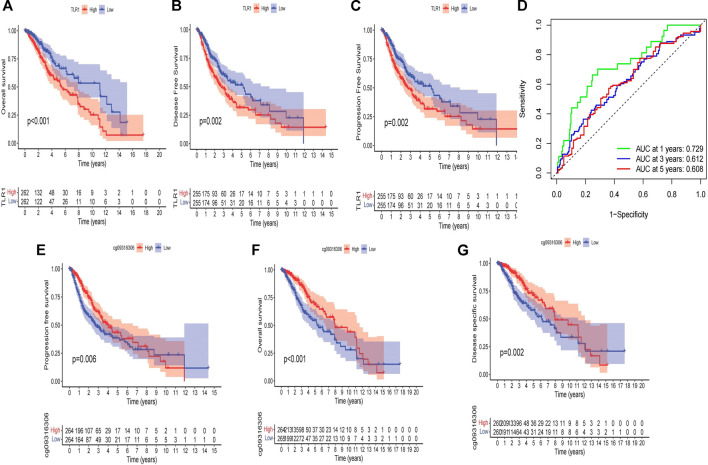
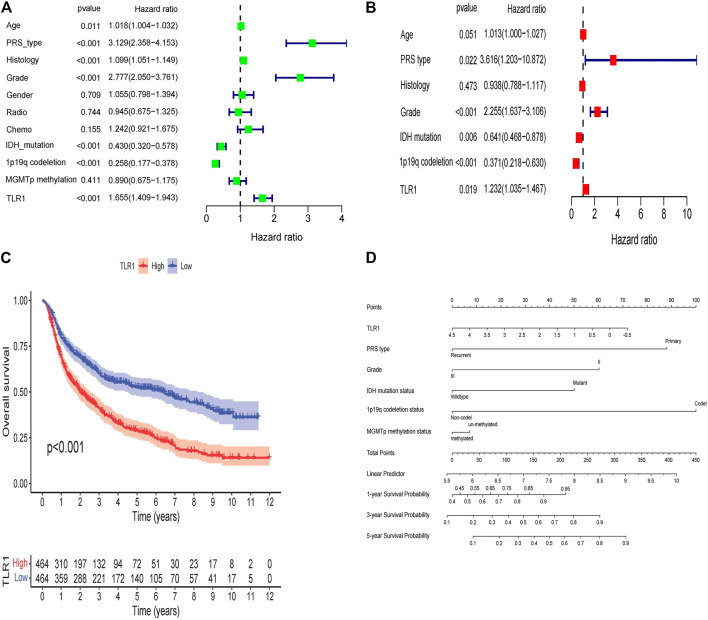
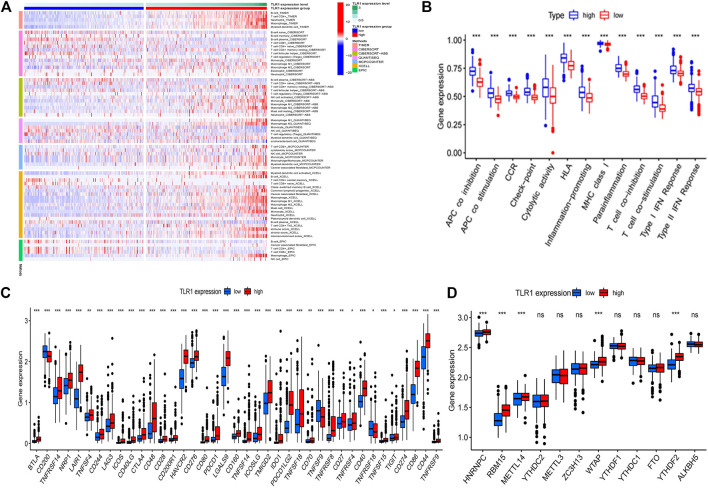
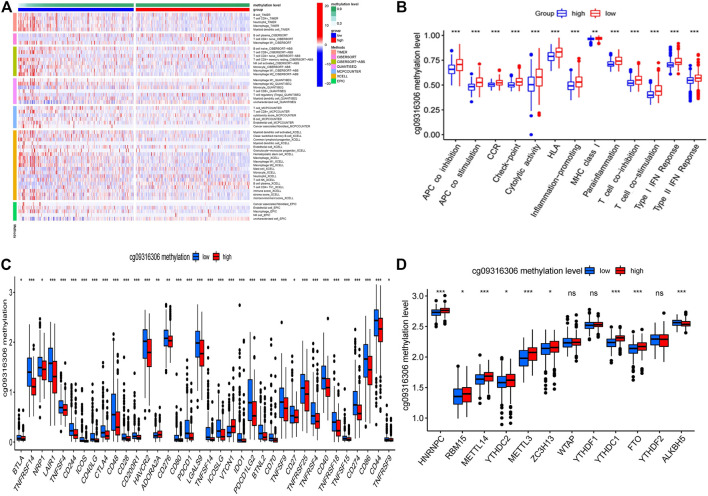
Exercise improves function, reduces disability, maintains independence, and improves quality of life for low-grade glioma (LGG) patients. Exercise can also improve the effectiveness of cancer treatment. The goal of this research was to find potential exercise related genes that may be used to predict exercise levels and may be used as a biomarker for cancer outcomes. The GSE111551 database was thoroughly examined in this research, and the resulting conclusion of exercise-related genes was reached. The protein interaction network (PPI) was used to examine the differentially expressed genes (DEGs). Then the exercise-related gene TLR1 was chosen. The expression, methylation degree, prognosis, and immune relevance of TLR1 were investigated using bioinformatics. In addition, we verified the role of TLR1 in Glioma cell lines. LGG patients with reduced TLR1 expression and hypermethylation had a better overall survival (OS) and progression free survival (PFS), using the TCGA database. Low TLR1 expression and hypermethylation of TLR1 were found to be independent biomarkers for OS using Cox regression. Furthermore, the CGGA database was used to confirm the prognostic function of TLR1 in this cancer. Finally, most methylation sites of TLR1 were strongly correlated with immune infiltration and immune checkpoint. Then, reducing TLR1 expression substantially slowed the cell cycle and decreased LGG cell proliferation, emigration, and infiltration . Exercise-related gene TLR1 has the potential to be a useful prognostic biomarker, and it is thought to be involved in immune cell infiltration and immunotherapy in LGG.
运动可改善低级别胶质瘤(LGG)患者的功能、减少残疾、维持独立性并提高生活质量。运动还可提高癌症治疗的效果。本研究的目的是寻找与运动相关的潜在基因,这些基因可用于预测运动水平,并可作为癌症预后的生物标志物。本研究对GSE111551数据库进行了全面检查,并得出了与运动相关基因的结论。利用蛋白质相互作用网络(PPI)来检测差异表达基因(DEG)。然后选择了与运动相关的基因TLR1。使用生物信息学研究了TLR1的表达、甲基化程度、预后及免疫相关性。此外,我们验证了TLR1在胶质瘤细胞系中的作用。利用TCGA数据库,TLR1表达降低和甲基化程度较高的LGG患者总生存期(OS)和无进展生存期(PFS)较好。使用Cox回归发现,TLR1低表达和高甲基化是OS的独立生物标志物。此外,利用CGGA数据库证实了TLR1在该癌症中的预后功能。最后,TLR1的大多数甲基化位点与免疫浸润和免疫检查点密切相关。然后,降低TLR1表达可显著减缓细胞周期,并减少LGG细胞的增殖、迁移和浸润。与运动相关的基因TLR1有可能成为一种有用的预后生物标志物,并且被认为参与了LGG中的免疫细胞浸润和免疫治疗。