Jarosińska Olga D, Rüdiger Stefan G D
Cellular Protein Chemistry, Bijvoet Centre for Biomolecular Research, Utrecht University, Utrecht, Netherlands.
Science for Life, Utrecht University, Utrecht, Netherlands.
Front Mol Biosci. 2021 Nov 12;8:769184. doi: 10.3389/fmolb.2021.769184. eCollection 2021.
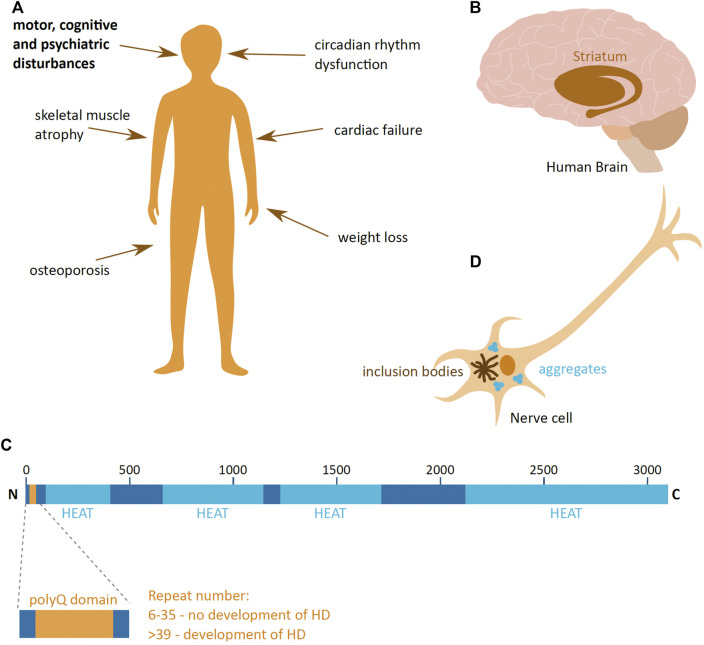
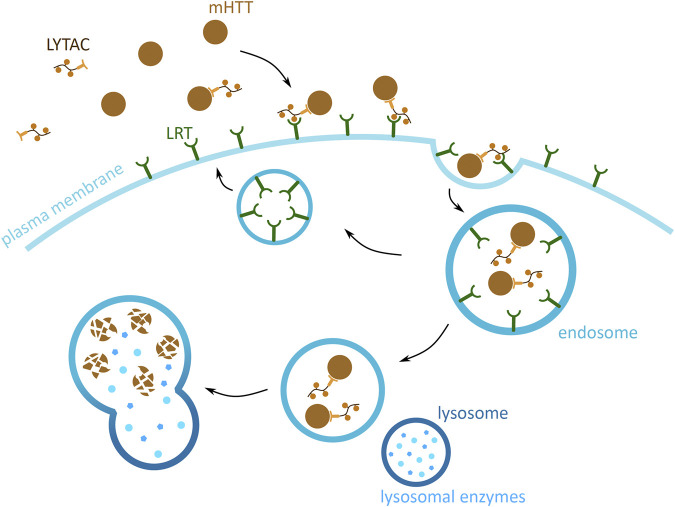
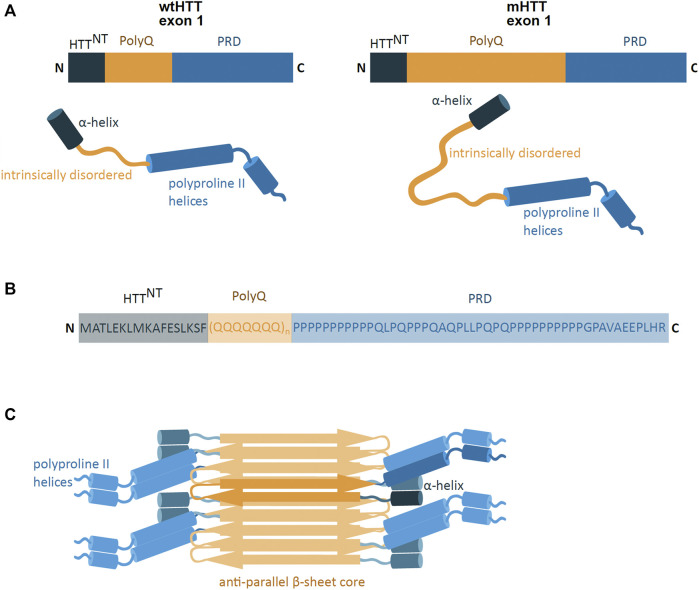
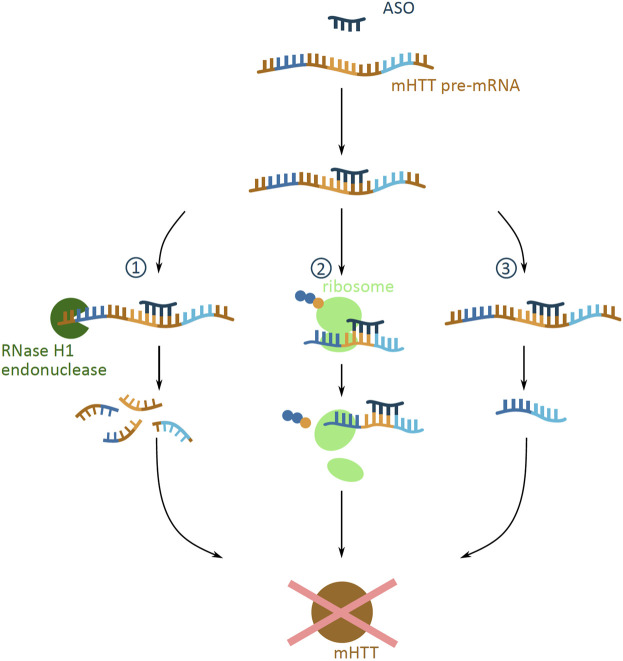
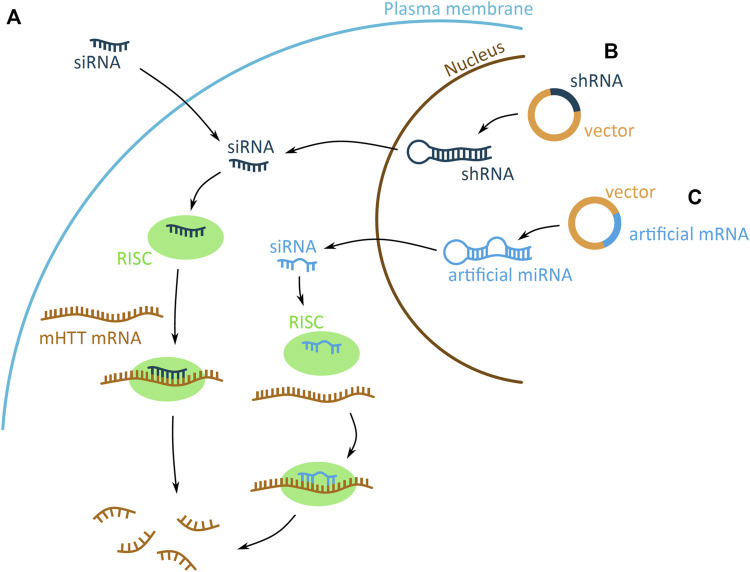
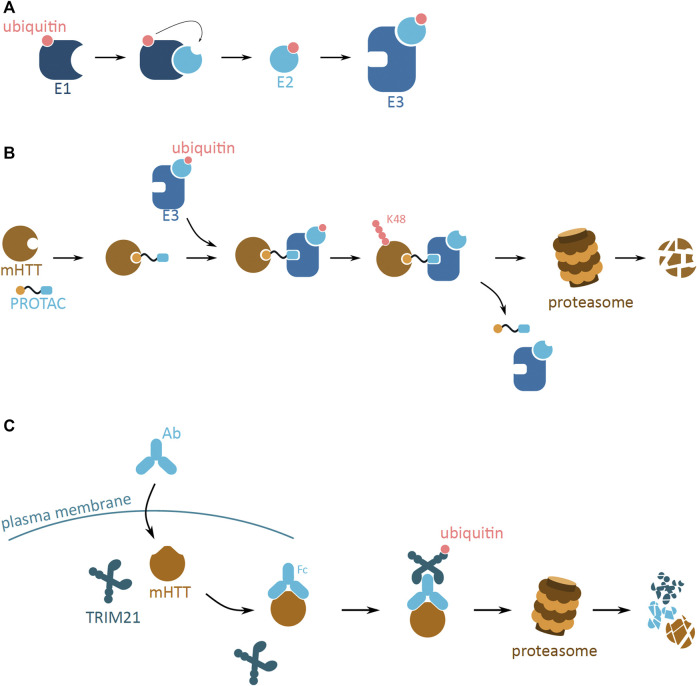
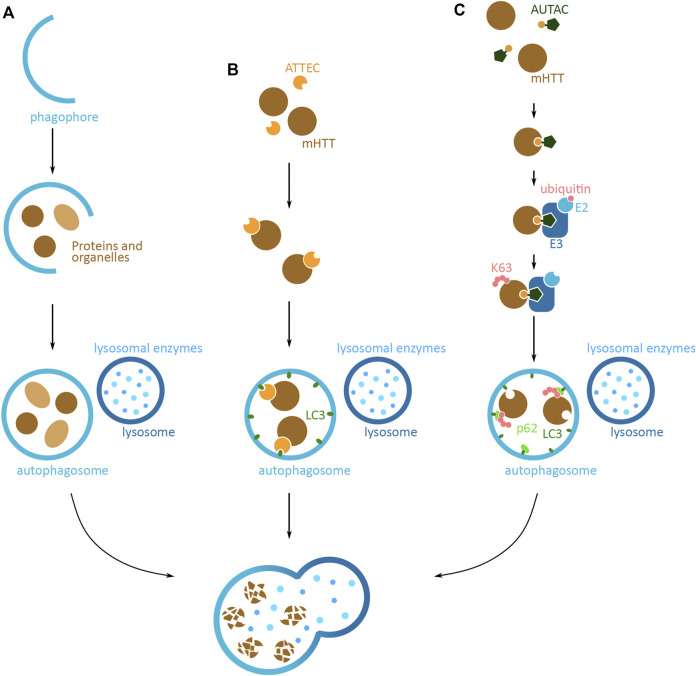
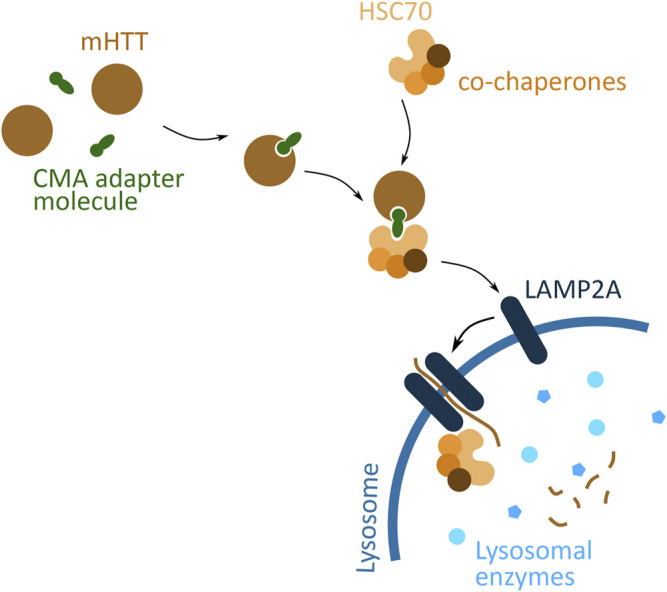
Huntington's disease (HD) is a neurodegenerative disorder caused by the aggregation of the mutant huntingtin (mHTT) protein in nerve cells. mHTT self-aggregates to form soluble oligomers and insoluble fibrils, which interfere in a number of key cellular functions. This leads to cell quiescence and ultimately cell death. There are currently still no treatments available for HD, but approaches targeting the HTT levels offer systematic, mechanism-driven routes towards curing HD and other neurodegenerative diseases. This review summarizes the current state of knowledge of the mRNA targeting approaches such as antisense oligonucleotides and RNAi system; and the novel methods targeting mHTT and aggregates for degradation via the ubiquitin proteasome or the autophagy-lysosomal systems. These methods include the proteolysis-targeting chimera, Trim-Away, autophagosome-tethering compound, autophagy-targeting chimera, lysosome-targeting chimera and approach targeting mHTT for chaperone-mediated autophagy. These molecular strategies provide a knowledge-based approach to target HD and other neurodegenerative diseases at the origin.
亨廷顿舞蹈症(HD)是一种神经退行性疾病,由突变型亨廷顿蛋白(mHTT)在神经细胞中聚集所致。mHTT会自我聚集形成可溶性寡聚体和不溶性纤维,干扰许多关键的细胞功能。这会导致细胞静止,最终导致细胞死亡。目前仍没有针对HD的治疗方法,但针对HTT水平的方法为治愈HD和其他神经退行性疾病提供了系统的、基于机制的途径。本综述总结了mRNA靶向方法(如反义寡核苷酸和RNAi系统)的当前知识状态;以及通过泛素蛋白酶体或自噬-溶酶体系统靶向mHTT及其聚集体进行降解的新方法。这些方法包括蛋白酶解靶向嵌合体、Trim-Away、自噬体连接化合物、自噬靶向嵌合体、溶酶体靶向嵌合体以及靶向mHTT进行伴侣介导自噬的方法。这些分子策略为从源头靶向HD和其他神经退行性疾病提供了基于知识的方法。