Morrison Kerrie A, Heesom Kate J, Edler Karen J, Doutch James, Price Gareth J, Koumanov Francoise, Whitley Paul
Department of Biology and Biochemistry, University of Bath, Bath, United Kingdom.
Department of Chemistry, University of Bath, Bath, United Kingdom.
Front Mol Biosci. 2021 Nov 18;8:780033. doi: 10.3389/fmolb.2021.780033. eCollection 2021.
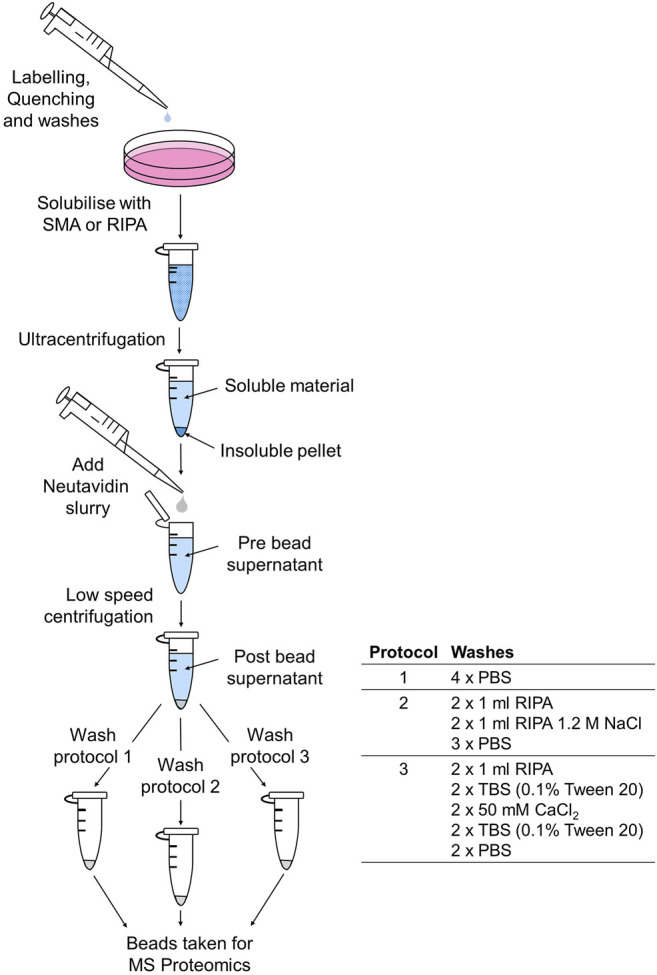
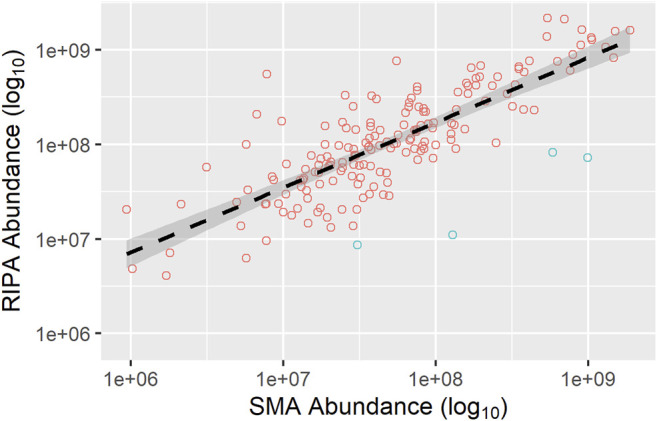
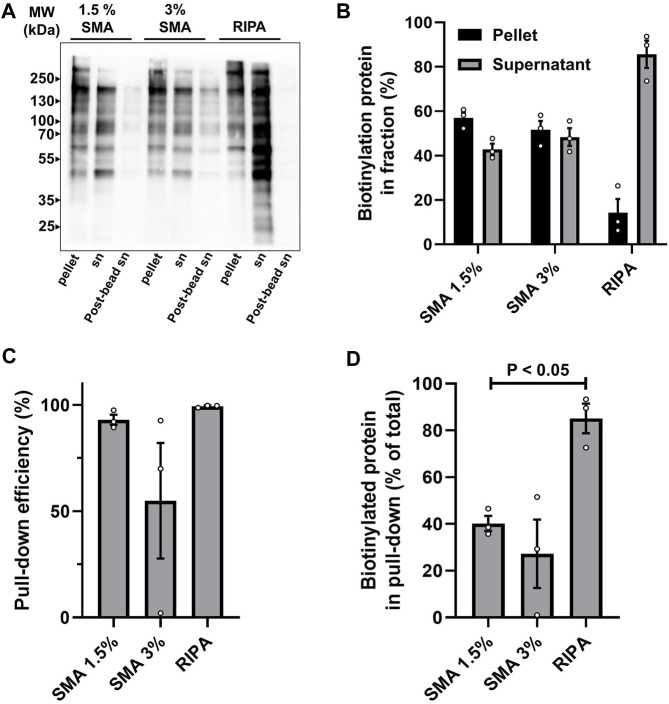
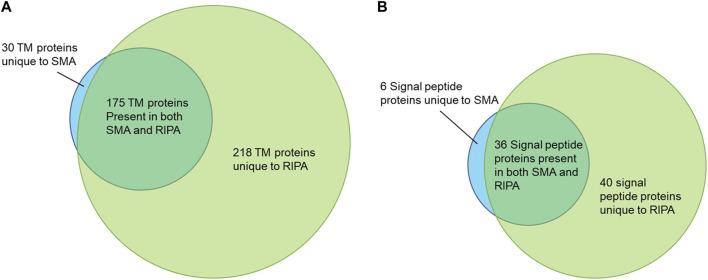
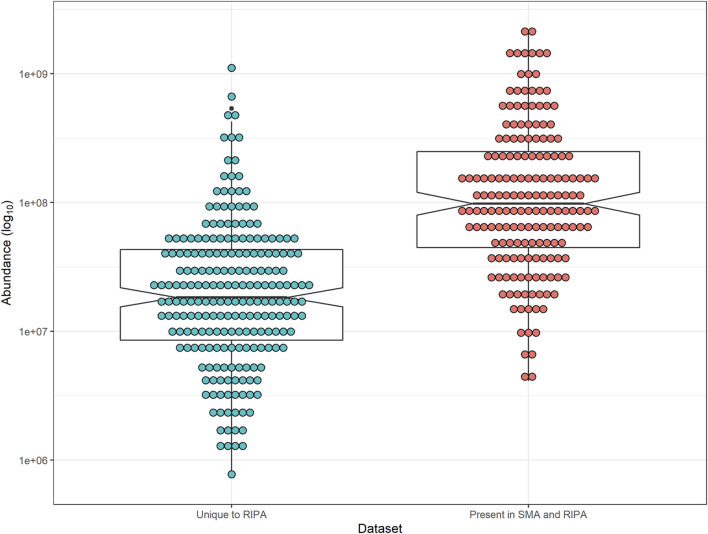
Extraction of membrane proteins from biological membranes has traditionally involved detergents. In the past decade, a new technique has been developed, which uses styrene maleic acid (SMA) copolymers to extract membrane proteins into nanodiscs without the requirement of detergents. SMA nanodiscs are compatible with analytical techniques, such as small-angle scattering, NMR spectroscopy, and DLS, and are therefore an attractive medium for membrane protein characterization. While mass spectrometry has also been reported as a technique compatible with copolymer extraction, most studies have focused on lipidomics, which involves solvent extraction of lipids from nanodiscs prior to mass-spectrometry analysis. In this study, mass spectrometry proteomics was used to investigate whether there are qualitative or quantitative differences in the mammalian plasma membrane proteins extracted with SMA compared to a detergent control. For this, cell surface proteins of 3T3L1 fibroblasts were biotinylated and extracted using either SMA or detergent. Following affinity pull-down of biotinylated proteins with NeutrAvidin beads, samples were analyzed by nanoLC-MS. Here, we report for the first time, a global proteomics protocol for detection of a mammalian cell "SMALPome", membrane proteins incorporated into SMA nanodiscs. Removal of SMA from samples prior to processing of samples for mass spectrometry was a crucial step in the protocol. The reported surface SMALPome of 3T3L1 fibroblasts consists of 205 integral membrane proteins. It is apparent that the detergent extraction method used is, in general, quantitatively more efficient at extracting proteins from the plasma membrane than SMA extraction. However, samples prepared following detergent extraction contained a greater proportion of proteins that were considered to be "non-specific" than in samples prepared from SMA extracts. Tantalizingly, it was also observed that proteins detected uniquely or highly preferentially in pull-downs from SMA extracts were primarily multi-spanning membrane proteins. These observations hint at qualitative differences between SMA and detergent extraction that are worthy of further investigation.
从生物膜中提取膜蛋白传统上需要使用去污剂。在过去十年中,开发了一种新技术,该技术使用苯乙烯马来酸(SMA)共聚物将膜蛋白提取到纳米盘状物中,而无需去污剂。SMA纳米盘状物与诸如小角散射、核磁共振光谱和动态光散射等分析技术兼容,因此是用于膜蛋白表征的有吸引力的介质。虽然也有报道称质谱法是一种与共聚物提取兼容的技术,但大多数研究都集中在脂质组学上,这涉及在质谱分析之前从纳米盘状物中溶剂萃取脂质。在本研究中,使用质谱蛋白质组学来研究与去污剂对照相比,用SMA提取的哺乳动物质膜蛋白在定性或定量上是否存在差异。为此,将3T3L1成纤维细胞的细胞表面蛋白进行生物素化,并用SMA或去污剂进行提取。在用中性抗生物素蛋白磁珠亲和下拉生物素化蛋白后,通过纳升液相色谱-质谱对样品进行分析。在此,我们首次报告了一种用于检测哺乳动物细胞“SMALPome”(即掺入SMA纳米盘状物中的膜蛋白)的全局蛋白质组学方案。在对样品进行质谱处理之前从样品中去除SMA是该方案中的关键步骤。所报道的3T3L1成纤维细胞的表面SMALPome由205种整合膜蛋白组成。显然,一般而言,所使用的去污剂提取方法在从质膜中提取蛋白质方面在定量上比SMA提取更有效。然而,去污剂提取后制备的样品中被认为是“非特异性”的蛋白质比例比SMA提取物制备的样品中更高。有趣的是,还观察到在SMA提取物的下拉实验中独特或高度优先检测到的蛋白质主要是多跨膜蛋白。这些观察结果暗示了SMA和去污剂提取之间的定性差异,值得进一步研究。