Segura-Rodríguez Diego, Bermúdez-Jiménez Francisco José, González-Camacho Lorena, Moreno Escobar Eduardo, García-Orta Rocío, Alcalá-López Juan Emilio, Bautista Pavés Alicia, Oyonarte-Ramírez José Manuel, López-Fernández Silvia, Álvarez Miguel, Tercedor Luis, Jiménez-Jáimez Juan
Cardiology Department, Hospital Universitario San Cecilio, Granada, Spain.
Instituto de Investigación Biosanitaria ibs.GRANADA, Granada, Spain.
Front Cardiovasc Med. 2021 Nov 15;8:748003. doi: 10.3389/fcvm.2021.748003. eCollection 2021.
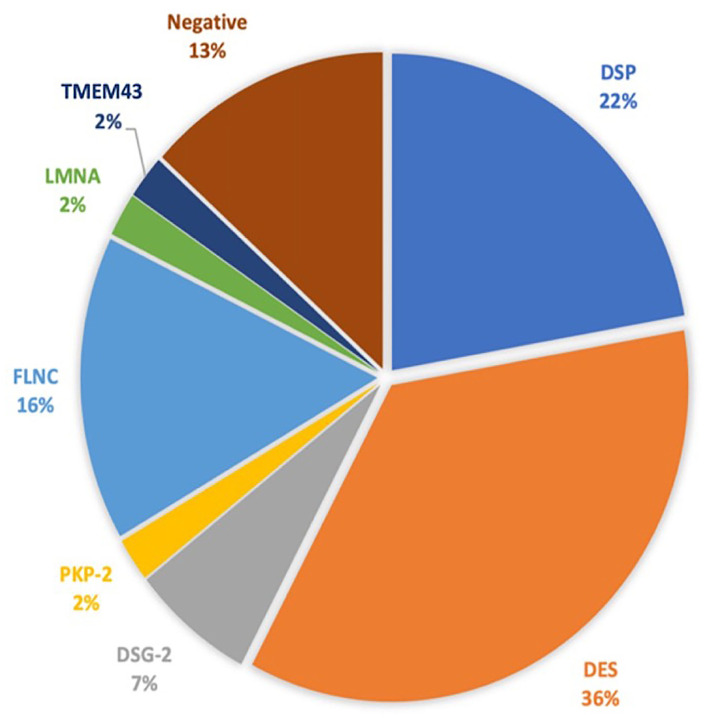
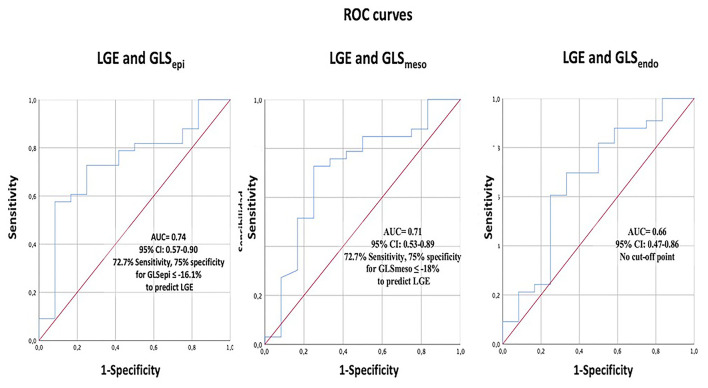
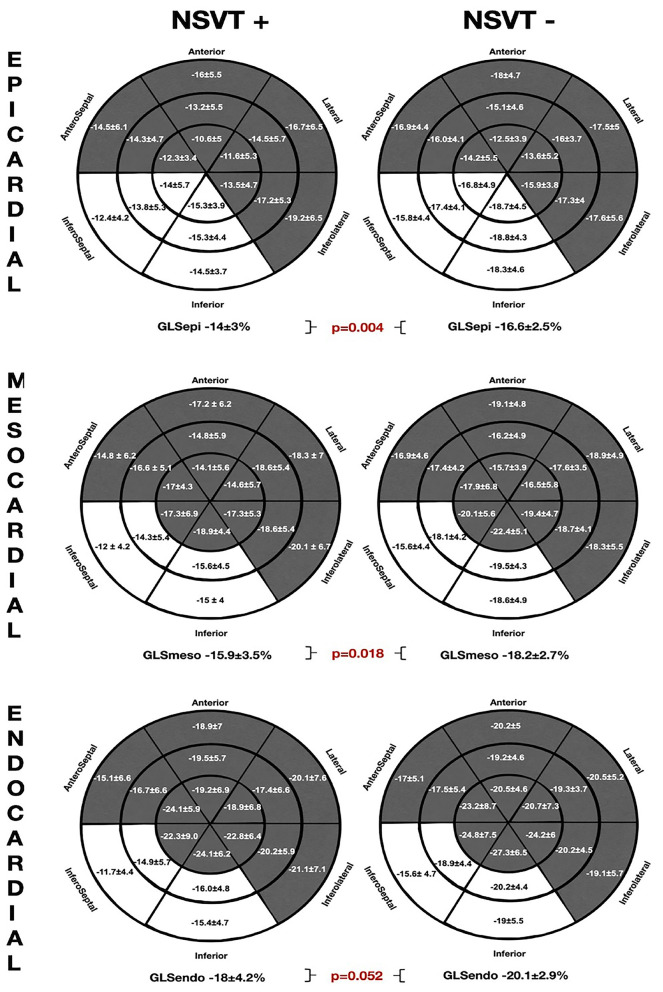
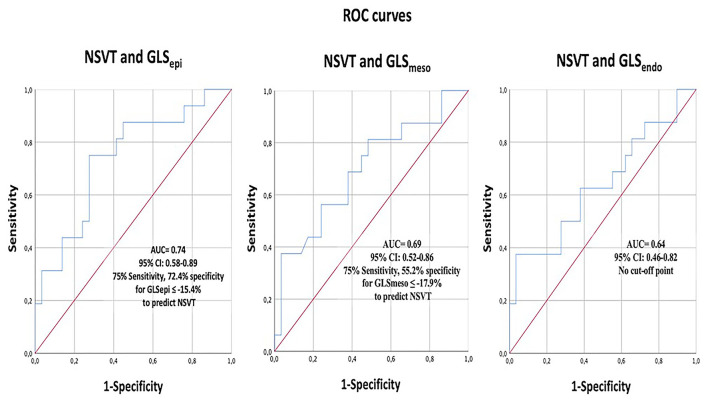
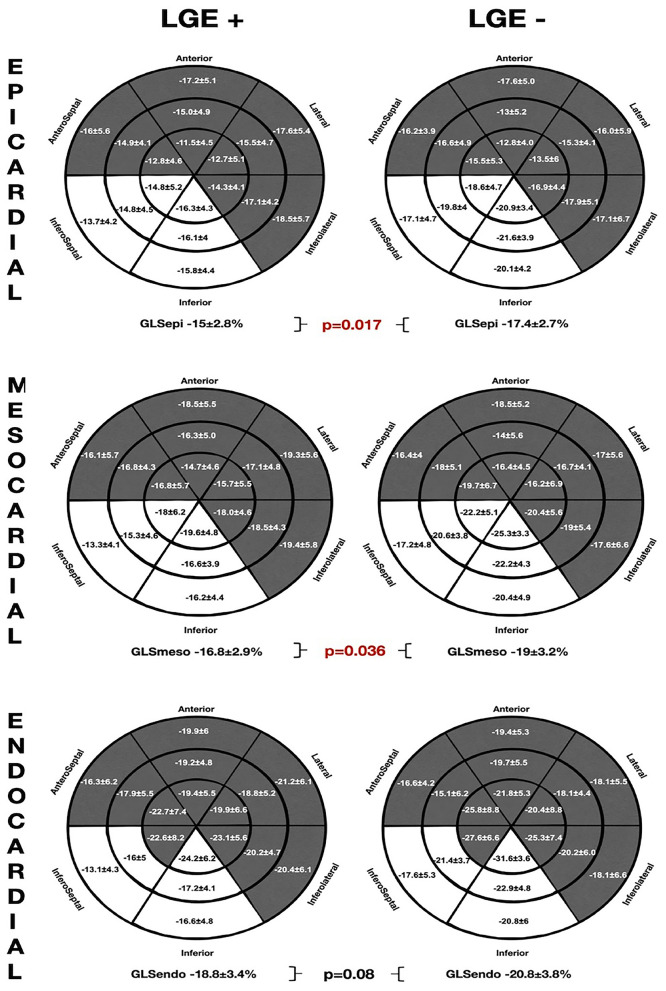
Arrhythmogenic cardiomyopathy (AC) is a life-threatening disease which predispose to malignant arrhythmias and sudden cardiac death (SCD) in the early stages of the disease. Risk stratification relies on the electrical, genetic, and imaging data. Our study aimed to investigate how myocardial deformation parameters may identify the subjects at risk of known predictors of major ventricular arrhythmias. A cohort of 45 subjects with definite or borderline diagnosis of AC was characterized using the advanced transthoracic echocardiography (TTE) and cardiac magnetic resonance (CMR) and divided into the groups according to the potential arrhythmic risk markers, such as non-sustained ventricular tachycardia (NSVT), late gadolinium enhancement (LGE), and genetic status. Layer-specific global longitudinal strain (GLS) by TTE 2D speckle tracking was compared in patients with and without these arrhythmic risk markers. In this study, 23 (51.1%) patients were men with mean age of 43 ± 16 years. Next-generation sequencing identified a potential pathogenic mutation in 39 (86.7%) patients. Thirty-nine patients presented LGE (73.3%), mostly located at the subepicardial-to-mesocardial layers. A layer-specific-GLS analysis showed worse GLS values at the epicardial and mesocardial layers in the subjects with NSVT and LGE. The epicardial GLS values of -15.4 and -16.1% were the best cut-off values for identifying the individuals with NSVT and LGE, respectively, regardless of left ventricular ejection fraction (LVEF). The layer-specific GLS assessment identified the subjects with high-risk arrhythmic features in AC, such as NSVT and LGE. An epicardial GLS may emerge as a potential instrument for detecting the subjects at risk of SCD in AC.
致心律失常性心肌病(AC)是一种危及生命的疾病,在疾病早期易发生恶性心律失常和心源性猝死(SCD)。风险分层依赖于电学、遗传学和影像学数据。我们的研究旨在调查心肌变形参数如何识别有主要室性心律失常已知预测因素风险的受试者。使用先进的经胸超声心动图(TTE)和心脏磁共振成像(CMR)对45例确诊或疑似AC的受试者进行特征分析,并根据潜在的心律失常风险标志物,如非持续性室性心动过速(NSVT)、钆延迟强化(LGE)和基因状态进行分组。比较有和没有这些心律失常风险标志物的患者经TTE二维斑点追踪得到的各层特异性整体纵向应变(GLS)。在本研究中,23例(51.1%)患者为男性,平均年龄43±16岁。下一代测序在39例(86.7%)患者中发现了潜在的致病突变。39例患者出现LGE(73.3%),大多位于心外膜至心肌中层。各层特异性GLS分析显示,有NSVT和LGE的受试者在心外膜和心肌层的GLS值更差。无论左心室射血分数(LVEF)如何,心外膜GLS值-15.4%和-16.1%分别是识别有NSVT和LGE个体的最佳临界值。各层特异性GLS评估识别出了AC中有高危心律失常特征的受试者,如NSVT和LGE。心外膜GLS可能成为检测AC中有SCD风险受试者的潜在工具。