Shellito Adam D, Dworsky Jill Q, Kirkland Patrick J, Rosenthal Ronnie A, Sarkisian Catherine A, Ko Clifford Y, Russell Marcia M
Department of Surgery, Harbor-UCLA Medical Center, Torrance CA.
Department of Surgery, David Geffen School of Medicine at UCLA, Los Angeles, CA and VA Greater Los Angeles Healthcare System, Los Angeles, CA.
Ann Surg Open. 2021 Sep;2(3):e072. doi: 10.1097/AS9.0000000000000072.
The older population is growing and with this growth there is a parallel rise in the operations performed on this vulnerable group. The perioperative pain management strategy for older adults is unique and requires a team-based approach for provision of high-quality surgical care.
Literature search was performed using PubMed in addition to review of relevant protocols and guidelines from geriatric, surgical, and anesthesia societies. Systematic reviews and meta-analyses, randomized trials, observational studies, and society guidelines were summarized in this review.
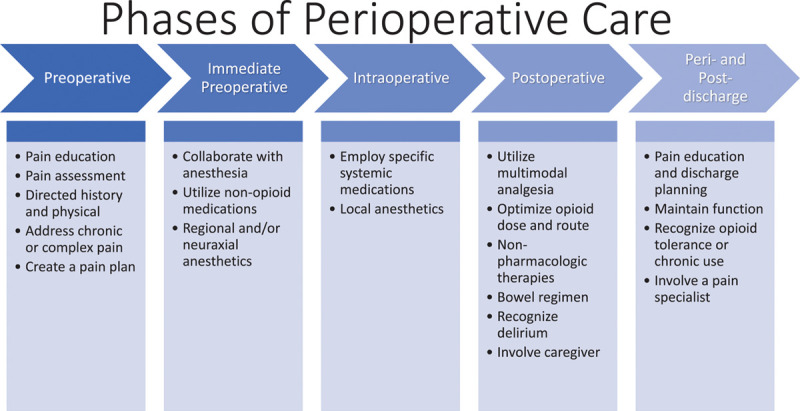
The optimal approach to a pain management strategy for older adults undergoing surgery involves addressing all phases of perioperative care. For example, preoperative assessment of a patient's cognitive function and presence of chronic pain may impact the pain management plan. Consideration should be also given to intraoperative strategies to improve pain control and minimize both the dose and side effects from opioids (e.g. regional anesthetic techniques). Postoperative pain control (e.g. under or over treatment of pain) may impact the development of elderly-specific complications such as postoperative delirium and functional decline. Finally, pain management does not stop after the older adult patient leaves the hospital. Both discharge planning and post-operative clinic follow-up provide important opportunities for collaboration and intervention.
An opioid-sparing pain management strategy for older adults can be accomplished with a comprehensive and collaborative interdisciplinary strategy addressing all phases of perioperative care.
老年人口正在增长,随着这种增长,针对这一弱势群体的手术操作也相应增加。老年人围手术期疼痛管理策略独具特色,需要采用基于团队的方法来提供高质量的外科护理。
除了查阅老年医学、外科学和麻醉学学会的相关协议和指南外,还使用PubMed进行了文献检索。本综述总结了系统评价和荟萃分析、随机试验、观察性研究以及学会指南。
针对接受手术的老年人的疼痛管理策略的最佳方法涉及处理围手术期护理的所有阶段。例如,术前评估患者的认知功能和慢性疼痛的存在情况可能会影响疼痛管理计划。还应考虑术中策略,以改善疼痛控制并尽量减少阿片类药物的剂量和副作用(例如区域麻醉技术)。术后疼痛控制(例如疼痛治疗不足或过度)可能会影响老年患者特有的并发症的发生,如术后谵妄和功能衰退。最后,老年患者出院后疼痛管理并未结束。出院计划和术后门诊随访都为合作与干预提供了重要机会。
通过全面且协作的跨学科策略处理围手术期护理的所有阶段,可以实现针对老年人的阿片类药物节约型疼痛管理策略。