van Barneveld Esther, Lim Arianne, van Hanegem Nehalennia, Vork Lisa, Herrewegh Alexandra, van Poll Mikal, Manders Jessica, van Osch Frits, Spaans Wilbert, van Koeveringe Gommert, Vrijens Desiree, Kruimel Joanna, Bongers Marlies, Leue Carsten
Department of Gynaecology and Obstetrics, Maastricht University Medical Centre+, Maastricht, Netherlands.
Grow School of Oncology and Developmental Biology, Maastricht University, Maastricht, Netherlands.
JMIR Form Res. 2021 Dec 3;5(12):e28782. doi: 10.2196/28782.
Symptoms related to endometriosis have a significant impact on the quality of life, and symptoms often recur. The experience sampling method (ESM), a digital questioning method characterized by randomly repeated momentary assessments, has several advantages over traditionally used measurements, including the ability to assess the temporal relationship between variables such as physical, mental, and social factors.
The aim of this study is to develop an ESM tool for patients with endometriosis to accurately measure symptoms and their course over time, allowing for personalized treatment and adequate monitoring of treatment efficacy in individual patients.
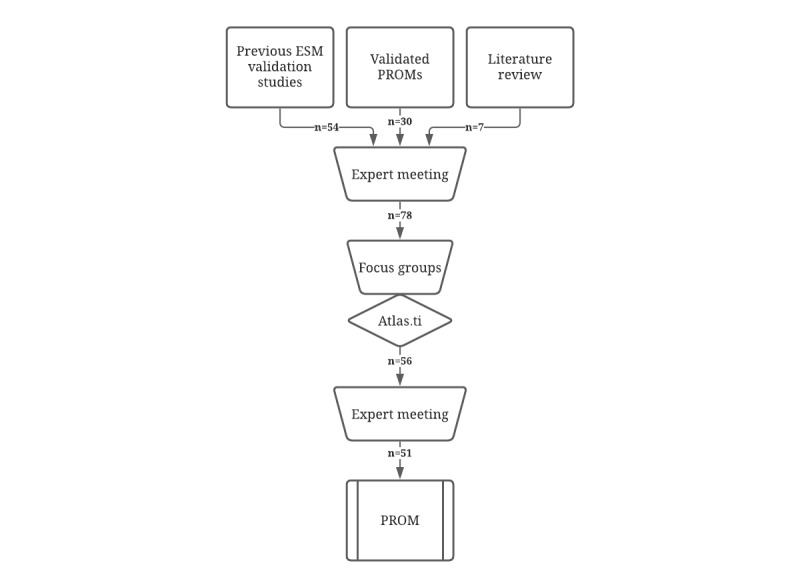
On the basis of international guidelines, items from validated questionnaires were selected through a literature review and during focus groups and multidisciplinary expert meetings. Data analysis was conducted using ATLAS.ti (ATLAS.ti Scientific Software Development GmbH). The feasibility and usability of the newly developed momentary assessment tool were tested for 28 consecutive days in 5 patients with endometriosis-related pain symptoms.
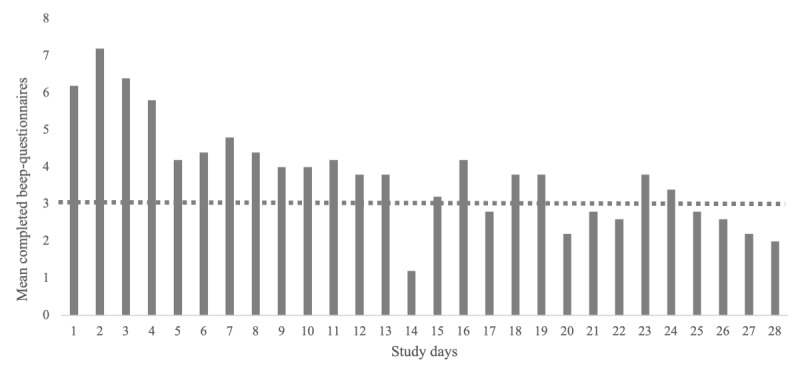
Momentary assessment items contained questions concerning endometriosis symptoms, general somatic symptoms, psychological symptoms, contextual information, and the use of food and medication. A morning questionnaire on sleep and sexuality was included. In a pilot study, the patients considered the tool easy to use but time consuming. The average compliance rate of momentary assessments was 37.8% (106/280), with the highest completion rate during the first week (39/70, 56%). Therefore, it is advisable to use the ESM for a maximum of 7 days.
A new digital tool for endometriosis symptom assessment was developed using the ESM, which may help overcome the limitations of current retrospective questionnaires. After validation and testing, future studies will be planned to evaluate the use of this tool in a clinical setting in order to propose a personalized treatment plan for women with endometriosis.
与子宫内膜异位症相关的症状对生活质量有重大影响,且症状常复发。经验取样法(ESM)是一种以随机重复的即时评估为特征的数字提问方法,与传统测量方法相比有多个优点,包括能够评估身体、心理和社会因素等变量之间的时间关系。
本研究旨在为子宫内膜异位症患者开发一种经验取样法工具,以准确测量症状及其随时间的变化过程,从而实现个性化治疗并对个体患者的治疗效果进行充分监测。
根据国际指南,通过文献综述以及焦点小组和多学科专家会议,从经过验证的问卷中选取条目。使用ATLAS.ti(ATLAS.ti科学软件开发有限公司)进行数据分析。对5名有子宫内膜异位症相关疼痛症状的患者连续28天测试新开发的即时评估工具的可行性和可用性。
即时评估条目包含有关子宫内膜异位症症状、一般躯体症状、心理症状、背景信息以及食物和药物使用情况的问题。还包括一份关于睡眠和性方面的晨间问卷。在一项试点研究中,患者认为该工具易于使用但耗时。即时评估的平均依从率为37.8%(106/280),第一周的完成率最高(39/70,56%)。因此,建议经验取样法最多使用7天。
利用经验取样法开发了一种用于评估子宫内膜异位症症状的新数字工具,这可能有助于克服当前回顾性问卷的局限性。经过验证和测试后,未来将计划开展研究以评估该工具在临床环境中的使用情况,以便为子宫内膜异位症女性提出个性化治疗方案。