Neuroscience Laboratory, Cobrain Center, Yerevan State Medical University named after M. Heratsi, 2 Koryun Str., 0025, Yerevan, Armenia.
Department of Biochemistry, Yerevan State Medical University named after M. Heratsi, Yerevan, Armenia.
Sci Rep. 2021 Dec 6;11(1):23471. doi: 10.1038/s41598-021-02994-6.
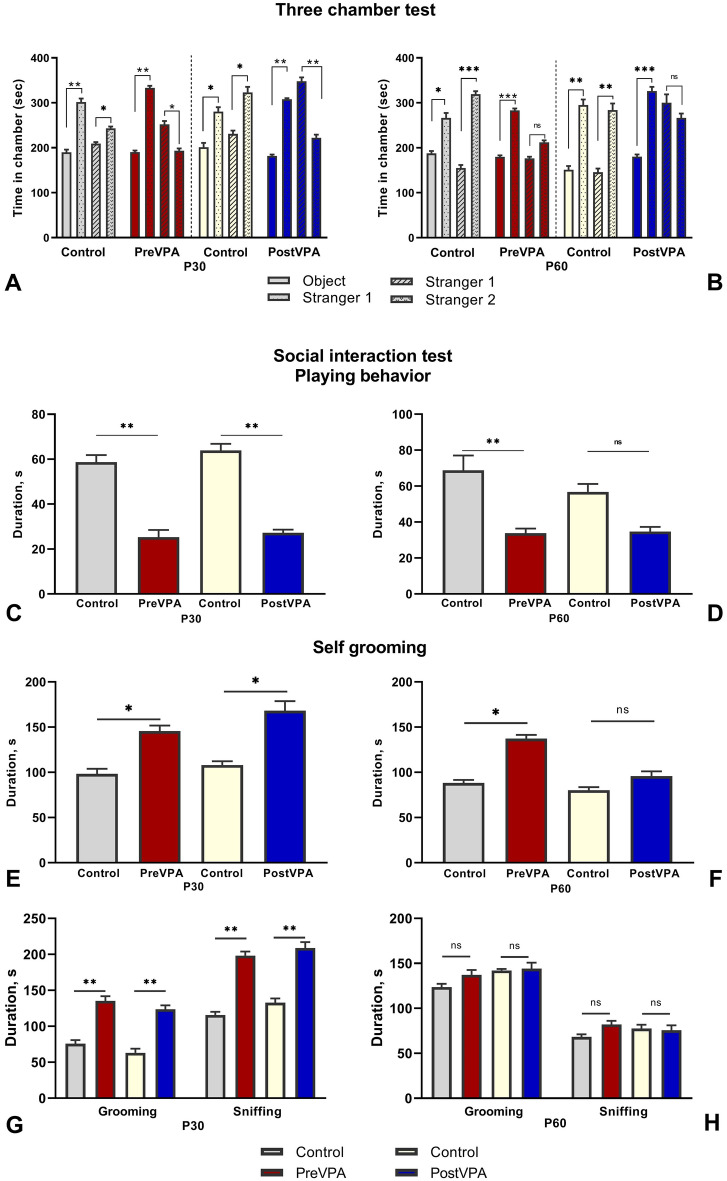
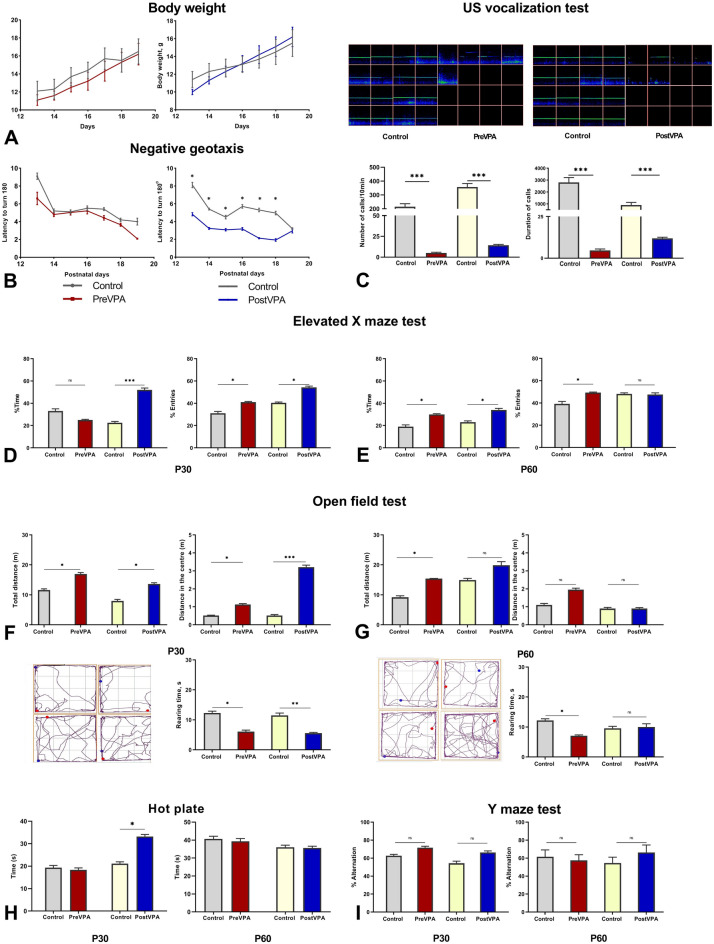
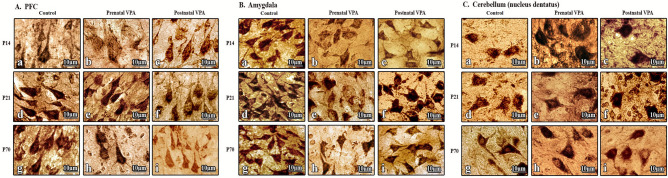
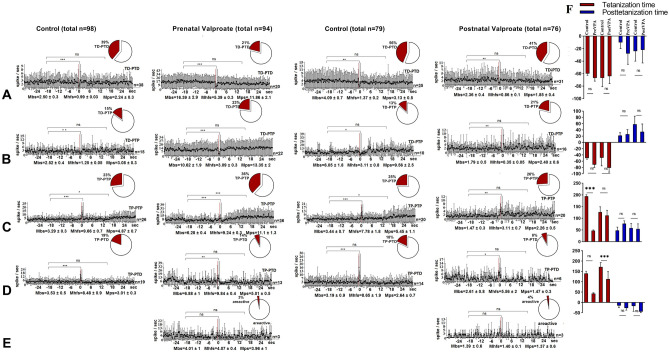
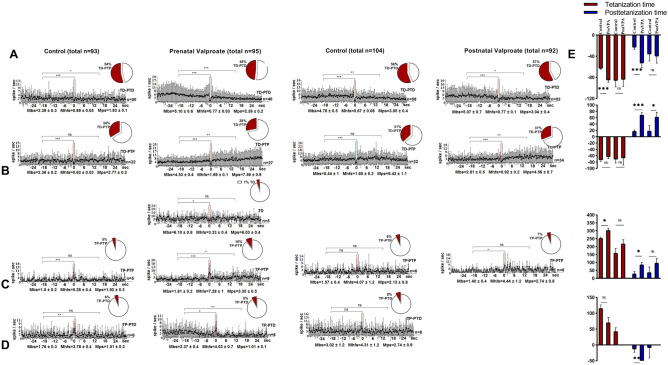
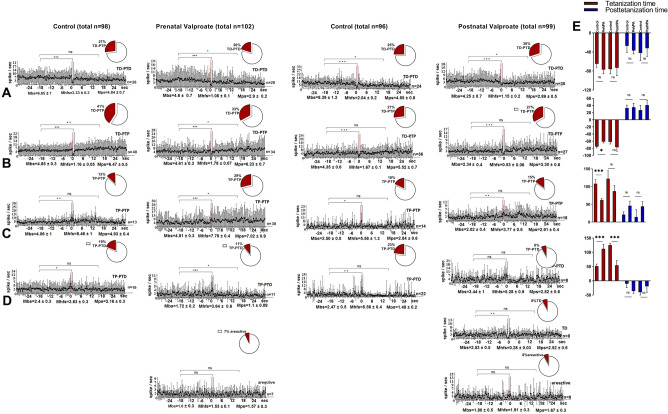
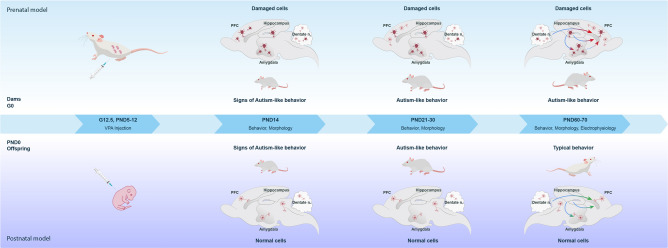
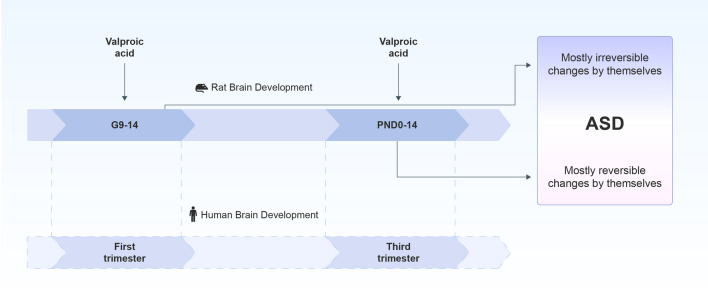
Autism spectrum disorders (ASD) are neurodevelopmental disorders, that are characterized by core symptoms, such as alterations of social communication and restrictive or repetitive behavior. The etiology and pathophysiology of disease is still unknown, however, there is a strong interaction between genetic and environmental factors. An intriguing point in autism research is identification the vulnerable time periods of brain development that lack compensatory homeostatic corrections. Valproic acid (VPA) is an antiepileptic drug with a pronounced teratogenic effect associated with a high risk of ASD, and its administration to rats during the gestation is used for autism modeling. It has been hypothesized that valproate induced damage and functional alterations of autism target structures may occur and evolve during early postnatal life. Here, we used prenatal and postnatal administrations of VPA to investigate the main behavioral features which are associated with autism spectrum disorders core symptoms were tested in early juvenile and adult rats. Neuroanatomical lesion of autism target structures and electrophysiological studies in specific neural circuits. Our results showed that prenatal and early postnatal administration of valproate led to the behavioral alterations that were similar to ASD. Postnatally treated group showed tendency to normalize in adulthood. We found pronounced structural changes in the brain target regions of prenatally VPA-treated groups, and an absence of abnormalities in postnatally VPA-treated groups, which confirmed the different severity of VPA across different stages of brain development. The results of this study clearly show time dependent effect of VPA on neurodevelopment, which might be explained by temporal differences of brain regions' development process. Presumably, postnatal administration of valproate leads to the dysfunction of synaptic networks that is recovered during the lifespan, due to the brain plasticity and compensatory ability of circuit refinement. Therefore, investigations of compensatory homeostatic mechanisms activated after VPA administration and directed to eliminate the defects in postnatal brain, may elucidate strategies to improve the course of disease.
自闭症谱系障碍(ASD)是一种神经发育障碍,其特征是存在核心症状,如社交沟通障碍和限制或重复行为。疾病的病因和发病机制尚不清楚,但遗传和环境因素之间存在很强的相互作用。自闭症研究中的一个有趣点是确定大脑发育的脆弱时期,这些时期缺乏代偿性的体内平衡校正。丙戊酸(VPA)是一种抗癫痫药物,具有明显的致畸作用,与自闭症的高风险相关,其在妊娠期间给大鼠给药用于自闭症建模。据推测,丙戊酸盐引起的自闭症靶结构的损伤和功能改变可能发生并在出生后早期发育。在这里,我们使用 VPA 的产前和产后给药来研究与自闭症谱系障碍核心症状相关的主要行为特征,在早期幼年和成年大鼠中进行测试。自闭症靶结构的神经解剖损伤和特定神经回路的电生理研究。我们的结果表明,产前和早期产后给予丙戊酸钠导致类似于自闭症的行为改变。产后治疗组在成年后有趋于正常化的趋势。我们发现,在产前 VPA 治疗组的大脑靶区存在明显的结构变化,而在产后 VPA 治疗组则不存在异常,这证实了 VPA 在不同的脑发育阶段的严重程度不同。这项研究的结果清楚地表明,VPA 对神经发育的时间依赖性影响,这可以通过大脑区域发育过程的时间差异来解释。推测,产后给予丙戊酸钠会导致突触网络功能障碍,由于大脑的可塑性和回路细化的代偿能力,这种功能障碍会在整个生命过程中得到恢复。因此,研究 VPA 给药后激活的代偿性体内平衡机制,并针对消除产后大脑缺陷的机制,可能阐明改善疾病进程的策略。