Laboratorio de Biopelículas y Microbiología Ambiental, Centro de Biotecnología, Universidad de Concepción, Victor Lamas 1290, P.O. Box: 160 C, Concepción, Chile.
Instituto de Investigaciones Agropecuarias, INIA Remehue. Ruta 5 Norte Km 8-, Osorno, Región de Los Lagos, Chile.
BMC Microbiol. 2021 Dec 7;21(1):335. doi: 10.1186/s12866-021-02393-x.
The native potatoes (Solanum tuberosum subsp. tuberosum L.) grown in Chile (Chiloé) represent a new, unexplored source of endophytes to find potential biological control agents for the prevention of bacterial diseases, like blackleg and soft rot, in potato crops.
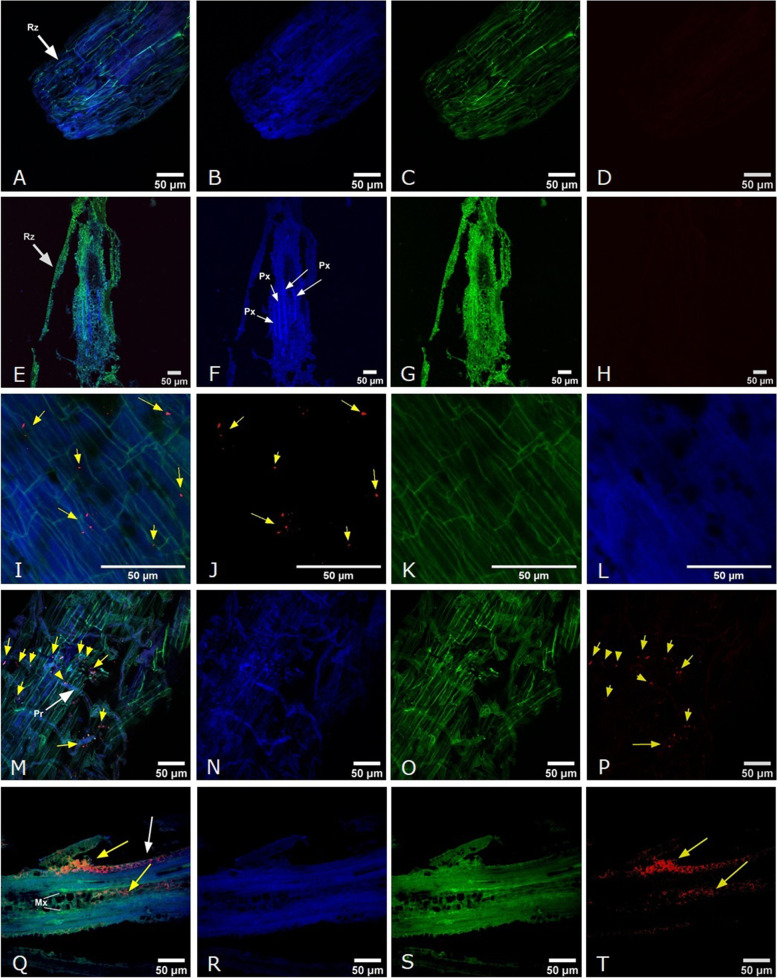
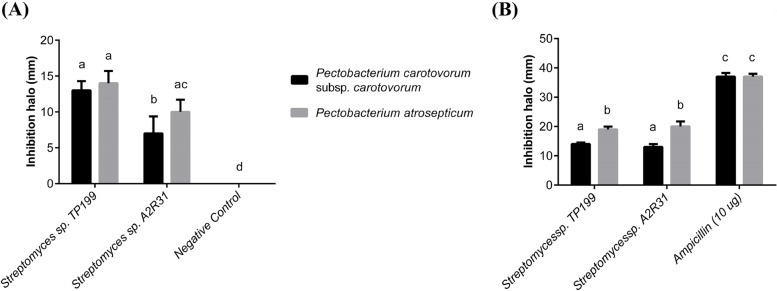
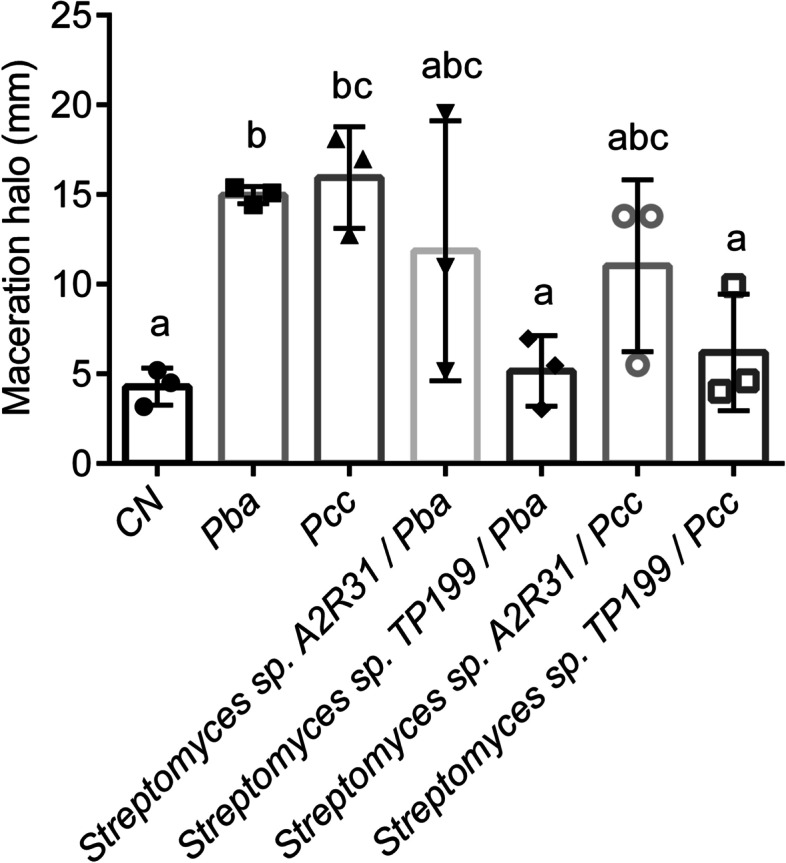
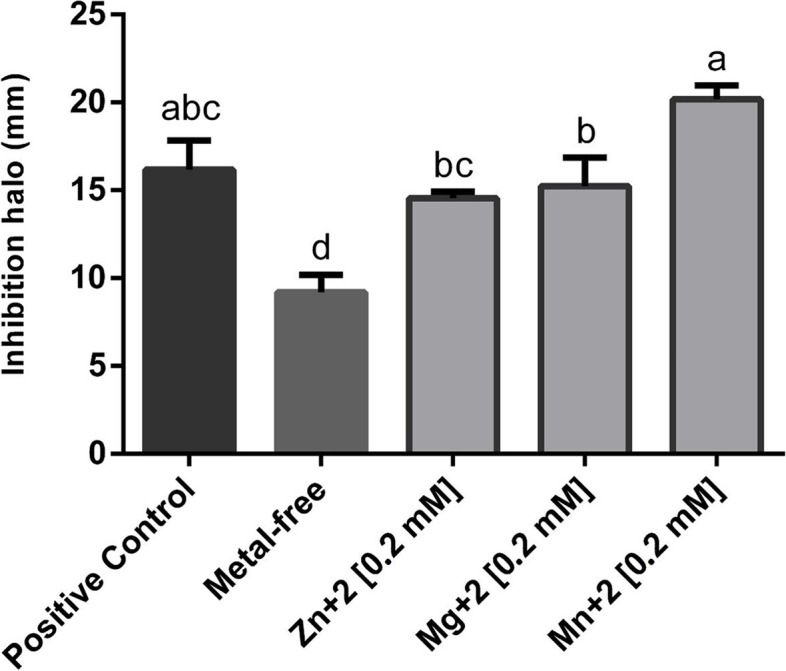
The objective of this study was the selection of endophytic actinobacteria from native potatoes for antagonistic activity against Pectobacterium carotovorum subsp. carotovorum and Pectobacterium atrosepticum, and their potential to suppress tissue maceration symptoms in potato tubers. This potential was determined through the quorum quenching activity using a Chromobacterium violaceaum ATCC 12472 Wild type (WT) bioassay and its colonization behavior of the potato plant root system (S. tuberosum) by means of the Double labeling of oligonucleotide probes for fluorescence in situ hybridization (DOPE-FISH) targeting technique. The results showed that although Streptomyces sp. TP199 and Streptomyces sp. A2R31 were able to inhibit the growth of the pathogens, only the Streptomyces sp. TP199 isolate inhibited Pectobacterium sp. growth and diminished tissue maceration in tubers (p ≤ 0.05). Streptomyces sp. TP199 had metal-dependent acyl homoserine lactones (AHL) quorum quenching activity in vitro and was able to colonize the root endosphere 10 days after inoculation.
We concluded that native potatoes from southern Chile possess endophyte actinobacteria that are potential agents for the disease management of soft rot and blackleg.
智利(奇洛埃)种植的土生马铃薯(Solanum tuberosum subsp. tuberosum L.)是一种新的、尚未开发的内生菌资源,可以寻找潜在的生物防治剂,以预防马铃薯作物的细菌性疾病,如黑胫病和软腐病。
本研究的目的是从土生马铃薯中选择具有拮抗活性的内生放线菌,以对抗果胶杆菌(Pectobacterium carotovorum subsp. carotovorum)和果胶杆菌(Pectobacterium atrosepticum),并确定其在抑制马铃薯块茎组织软化症状方面的潜力。通过使用粘质沙雷氏菌 ATCC 12472 野生型(WT)生物测定法进行群体感应淬灭活性测定,以及通过针对荧光原位杂交(DOPE-FISH)的寡核苷酸探针双重标记技术对马铃薯根系(S. tuberosum)的定殖行为来确定这种潜力。结果表明,虽然链霉菌 sp. TP199 和链霉菌 sp. A2R31 能够抑制病原体的生长,但只有链霉菌 sp. TP199 分离株能够抑制果胶杆菌的生长并减少块茎组织软化(p≤0.05)。链霉菌 sp. TP199 在体外具有金属依赖性酰基高丝氨酸内酯(AHL)群体感应淬灭活性,并能在接种后 10 天内定植根内皮层。
我们得出结论,智利南部的土生马铃薯含有内生放线菌,是软腐病和黑胫病防治的潜在药剂。