Social Determinants of Health Research Center, Research Institute for Health Development, Kurdistan University of Medical Sciences, Sanandaj, Iran.
Department of Epidemiology and Biostatistics, Faculty of Medicine, Kurdistan University of Medical Sciences, Sanandaj, Iran.
BMC Cancer. 2021 Dec 8;21(1):1314. doi: 10.1186/s12885-021-09078-8.
The population-based survival rate is affected by the quality and effectiveness of health care systems. Overall, the survival of prostate cancer (PC) patients has improved over the past two decades worldwide. This study aimed to determine the overall survival rate and correlate it with the prognostic factors in patients with PC diagnosed in Kurdistan province.
In a retrospective cohort study, 410 PC patients registered in Kurdistan province population-based cancer registry from March 2011 to 2018 were recruited. Kaplan-Meier method and log-rank test were used to analyze the overall survival rates of PC patients. A Multivariate Cox regression model was used to determine adjusted hazard ratios for different variables.
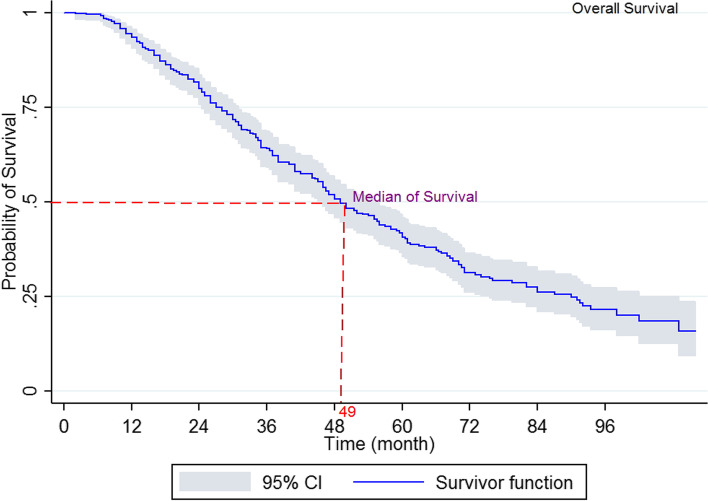
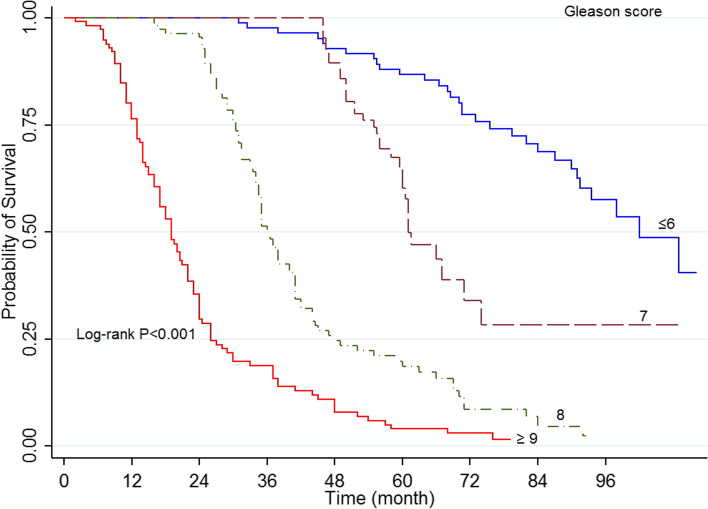
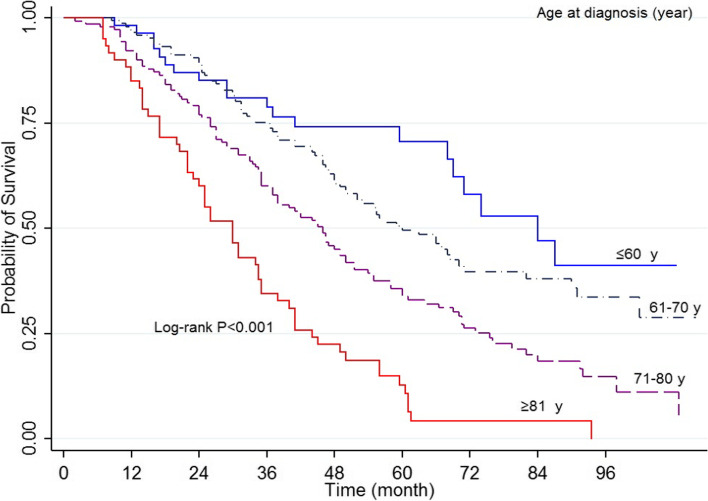
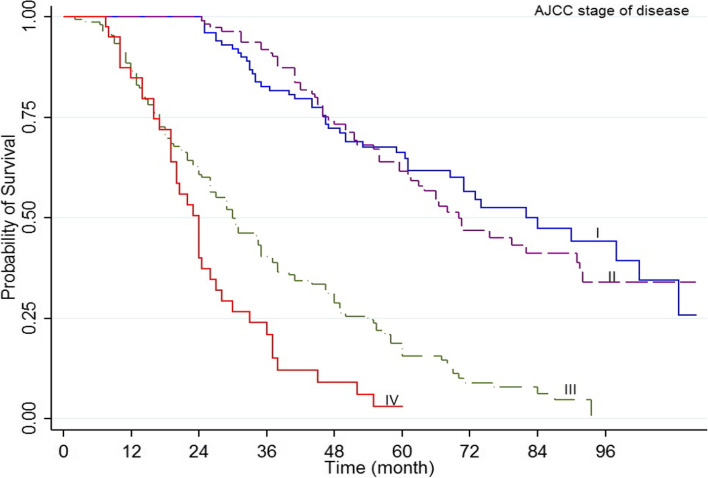
Of 410 patients with PC, 263 (64.1%) died within seven years due to the disease. The 1, 3, and 5 years survival rates were 93, 64.1, and 40.7%, respectively. According to the results of multiple Cox regression, the following factors were significantly related to PC survival: age at diagnosis (≥81-years old) (HR=2.23, 95% CI: 1.23-4.42) and 71-80 years old was (HR=1.26, 95% CI: 1.12-2.31), occupation (employee) (HR=0.42, 95% CI: 0.20-0.87), educational level: academic (HR=0.78, 95% CI: 0.64-0.91), AJCC stage of disease (HR=2.18, 95% CI: 1.9-3.68), Gleason score ≥ 9 (HR=7.12, 95% CI: 5.35-10.28), and Gleason score= 8 (HR=4.16, 95% CI: 2.50-6.93). There was less mortality rate among the patients who had received active care, radical prostatectomy, radiotherapy, combined treatment, and orchiectomy had a lower mortality rate than those who received no treatment (P<0.05).
This study demonstrated that factors such as age at diagnosis, level of education, occupation, AJCC stage of disease, Gleason score, and type of treatments were influential factors in the survival of PC patients in Kurdistan province and needed more attention.
基于人群的生存率受到医疗保健系统的质量和效果的影响。总体而言,在过去的二十年中,全世界前列腺癌(PC)患者的生存率有所提高。本研究旨在确定在库尔德斯坦省诊断出的 PC 患者的总体生存率,并将其与预后因素相关联。
在一项回顾性队列研究中,招募了 2011 年 3 月至 2018 年在库尔德斯坦省人群癌症登记处登记的 410 名 PC 患者。使用 Kaplan-Meier 方法和对数秩检验分析 PC 患者的总体生存率。使用多变量 Cox 回归模型确定不同变量的调整后危险比。
在 410 名 PC 患者中,有 263 名(64.1%)在 7 年内因疾病死亡。1、3 和 5 年的生存率分别为 93、64.1 和 40.7%。根据多 Cox 回归的结果,以下因素与 PC 生存显著相关:诊断时的年龄(≥81 岁)(HR=2.23,95%CI:1.23-4.42)和 71-80 岁(HR=1.26,95%CI:1.12-2.31),职业(雇员)(HR=0.42,95%CI:0.20-0.87),教育程度:学术(HR=0.78,95%CI:0.64-0.91),AJCC 疾病分期(HR=2.18,95%CI:1.9-3.68),Gleason 评分≥9(HR=7.12,95%CI:5.35-10.28)和 Gleason 评分=8(HR=4.16,95%CI:2.50-6.93)。接受积极治疗、根治性前列腺切除术、放疗、联合治疗和睾丸切除术的患者死亡率较低,而未接受治疗的患者死亡率较高(P<0.05)。
本研究表明,诊断时的年龄、教育程度、职业、AJCC 疾病分期、Gleason 评分和治疗类型等因素是影响库尔德斯坦省 PC 患者生存的因素,需要更多关注。