Rasouli Mohammad Aziz, Moradi Ghobad, Roshani Daem, Nikkhoo Bahram, Ghaderi Ebrahim, Ghaytasi Bahman
Student Research Committee Social Determinants of Health Research Center Department of Epidemiology and Biostatistics, Faculty of Medicine Department of Pathology, Faculty of Medicine, Kurdistan University of Medical Sciences, Sanandaj, Iran.
Medicine (Baltimore). 2017 Feb;96(6):e5941. doi: 10.1097/MD.0000000000005941.
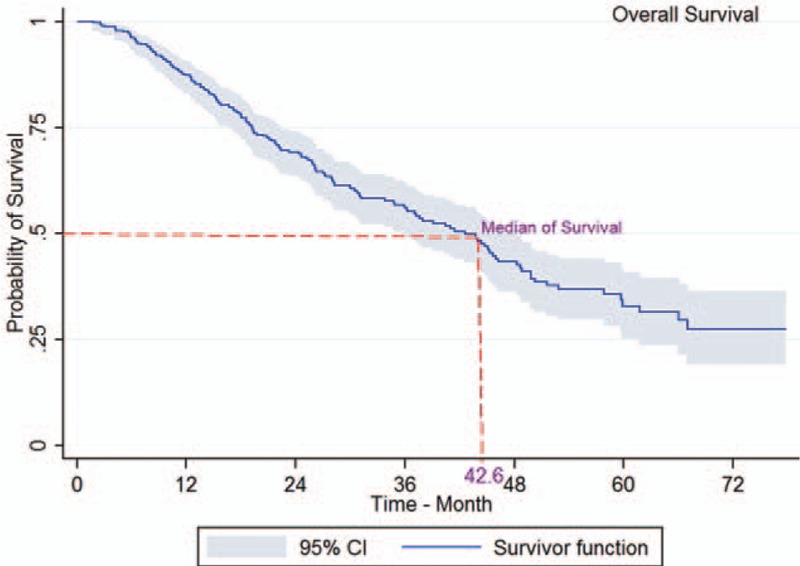
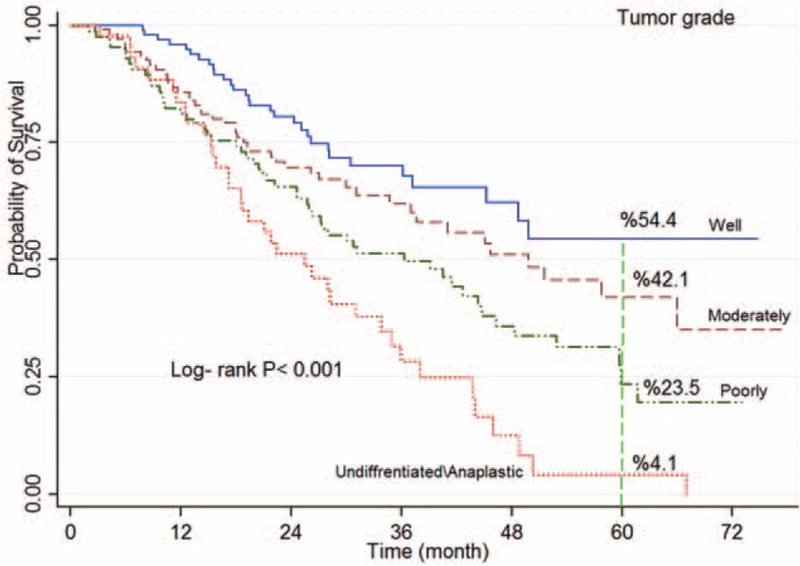
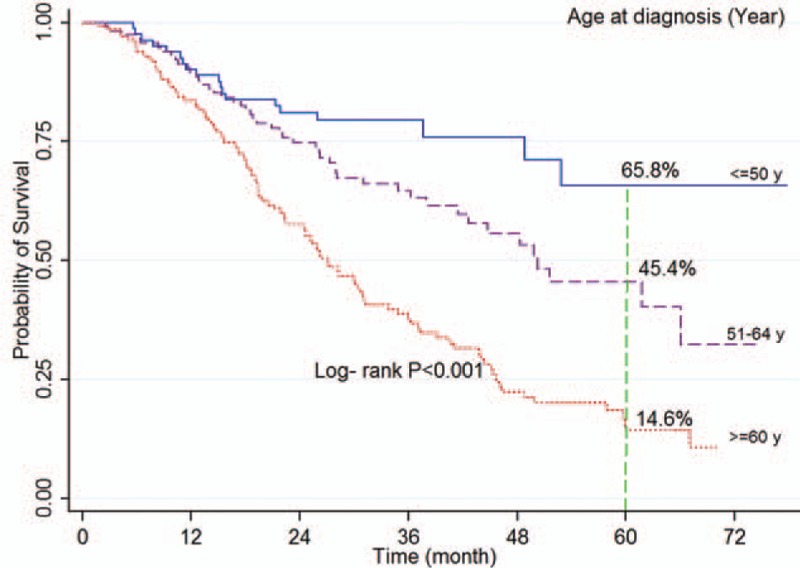
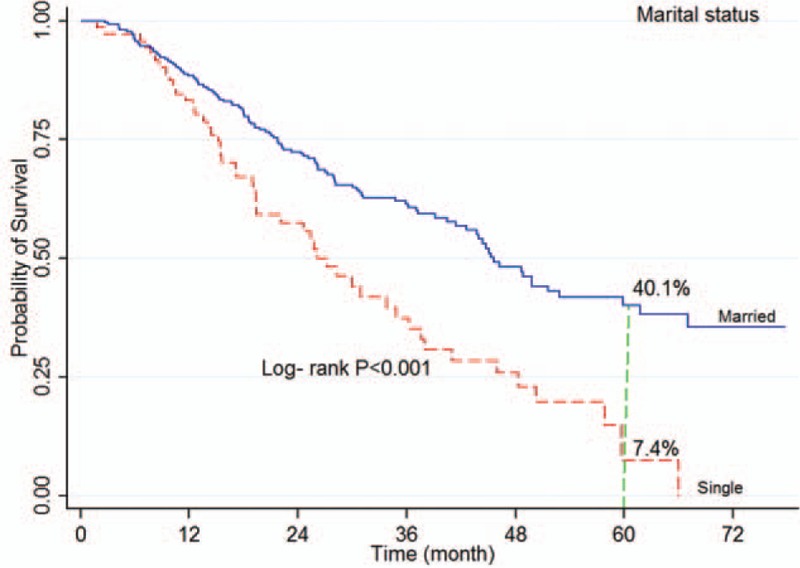
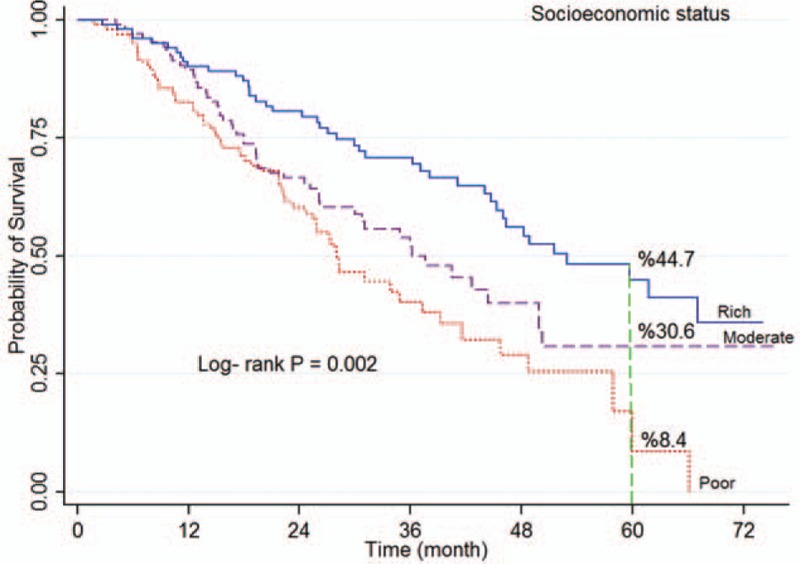
Colorectal cancer (CRC) survival varies at individual and geographically level. This population-based study aimed to evaluating various factors affecting the survival rate of CRC patients in Kurdistan province.In a retrospective cohort study, patients diagnosed as CRC were collected through a population-based study from March 1, 2009 to 2014. The data were collected from Kurdistan's Cancer Registry database. Additional information and missing data were collected reference to patients' homes, medical records, and pathology reports. The CRC survival was calculated from the date of diagnosis to the date of cancer-specific death or the end of follow-up (cutoff date: October 2015). Kaplan-Meier method and log-rank test were used for the univariate analysis of survival in various subgroups. The proportional-hazard model Cox was also used in order to consider the effects of different factors on survival including age at diagnosis, place of residence, marital status, occupation, level of education, smoking, economic status, comorbidity, tumor stage, and tumor grade.A total number of 335 patients affected by CRC were assessed and the results showed that 1- and 5-year survival rate were 87% and 33%, respectively. According to the results of Cox's multivariate analysis, the following factors were significantly related to CRC survival: age at diagnosis (≥65 years old) (HR 2.08, 95% CI: 1.17-3.71), single patients (HR 1.62, 95% CI: 1.10-2.40), job (worker) (HR 2.09, 95% CI: 1.22-3.58), educational level: diploma or below (HR 0.61, 95% CI: 0.39-0.92), wealthy economic status (HR 0.51, 95% CI: 0.31-0.82), tumor grade in poorly differentiated (HR 2.25, 95% CI: 1.37-3.69), and undifferentiated/anaplastic grade (HR 2.90, 95% CI: 1.67-4.98).We found that factors such as low education, inappropriate socioeconomic status, and high tumor grade at the time of disease diagnosis were effective in the poor survival of CRC patients in Kurdistan province; this, which need more attention.
结直肠癌(CRC)患者的生存率在个体和地理层面存在差异。这项基于人群的研究旨在评估影响库尔德斯坦省CRC患者生存率的各种因素。
在一项回顾性队列研究中,通过基于人群的研究收集了2009年3月1日至2014年期间被诊断为CRC的患者。数据来自库尔德斯坦癌症登记数据库。通过参考患者家庭、病历和病理报告收集了额外信息及缺失数据。CRC生存率从诊断日期计算至癌症特异性死亡日期或随访结束日期(截止日期:2015年10月)。采用Kaplan-Meier法和对数秩检验对各亚组的生存情况进行单因素分析。还使用了比例风险模型Cox来考虑不同因素对生存的影响,包括诊断时的年龄、居住地点、婚姻状况、职业、教育水平、吸烟情况、经济状况、合并症、肿瘤分期和肿瘤分级。
共评估了335例CRC患者,结果显示1年和5年生存率分别为87%和33%。根据Cox多因素分析结果,以下因素与CRC生存显著相关:诊断时年龄(≥65岁)(HR 2.08,95%CI:1.17 - 3.71)、单身患者(HR 1.62,95%CI:1.10 - 2.40)、职业(工人)(HR 2.09,95%CI:1.22 - 3.58)、教育水平:文凭及以下(HR 0.61,95%CI:0.39 - 0.92)、富裕的经济状况(HR 0.51,95%CI:0.31 - 0.82)、低分化肿瘤分级(HR 2.25,95%CI:1.37 - 3.69)和未分化/间变分级(HR 2.90,95%CI:1.67 - 4.98)。
我们发现,疾病诊断时教育程度低、社会经济状况不佳和肿瘤分级高这些因素对库尔德斯坦省CRC患者的不良生存有影响;这一点需要更多关注。