Long Yazhou, Bundkirchen Katrin, Gräff Pascal, Krettek Christian, Noack Sandra, Neunaber Claudia
Trauma Department, Hannover Medical School, 30625 Hannover, Germany.
Stem Cells Int. 2021 Nov 28;2021:2612480. doi: 10.1155/2021/2612480. eCollection 2021.
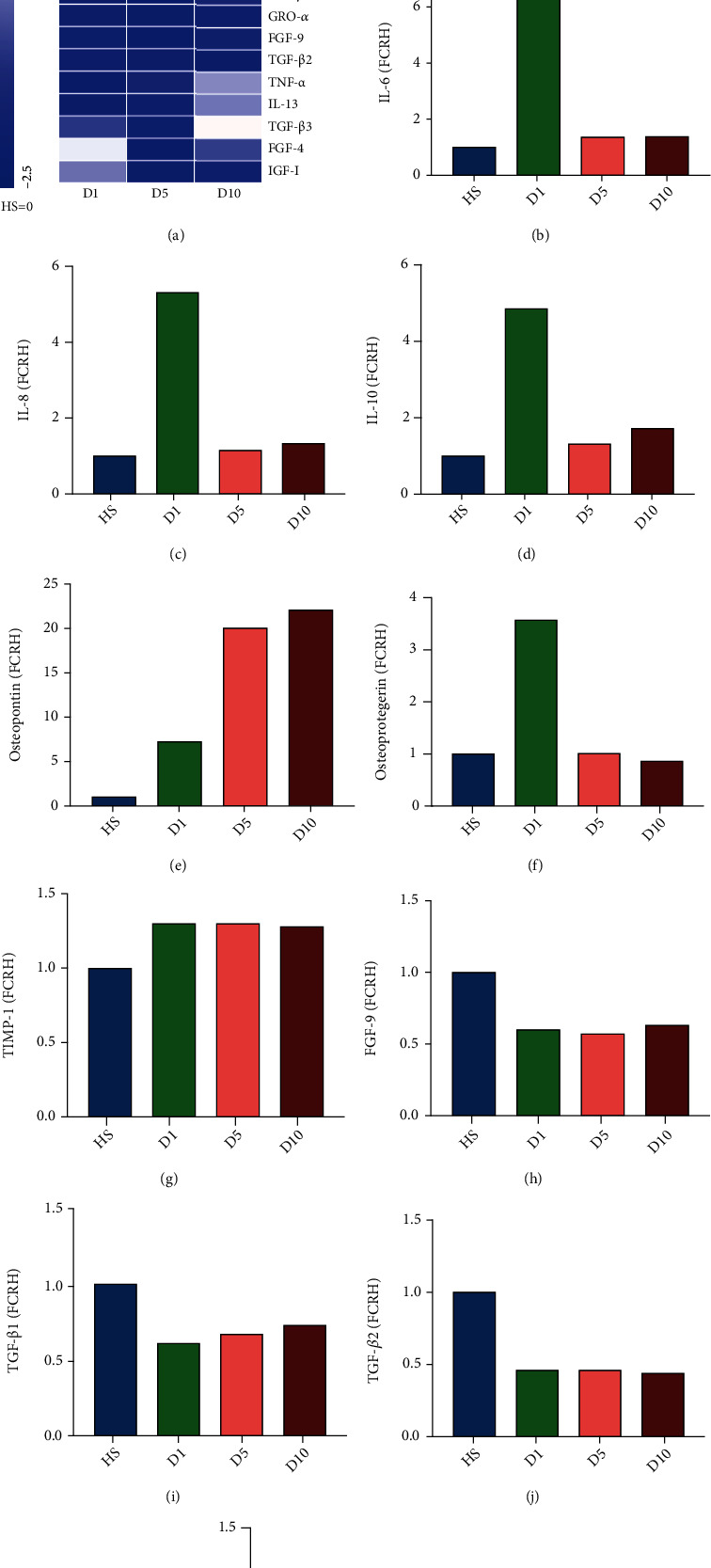
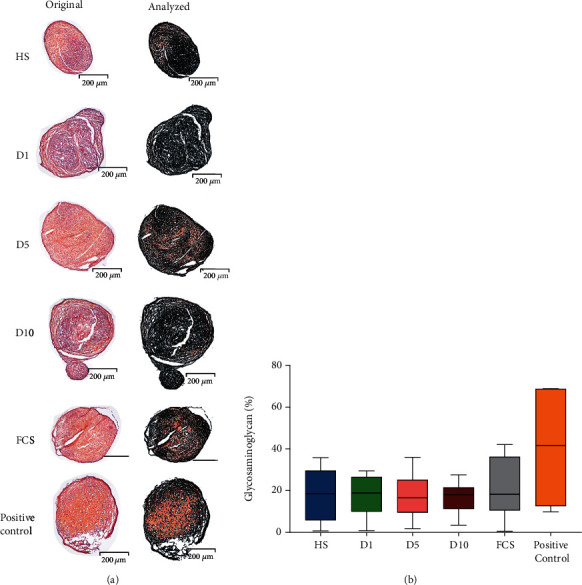
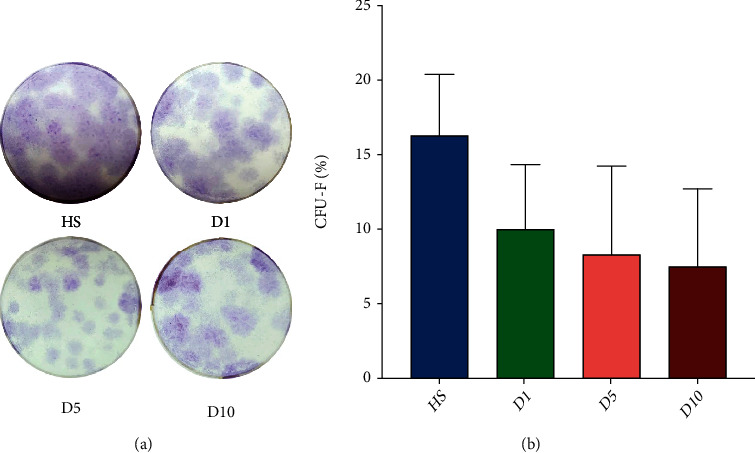
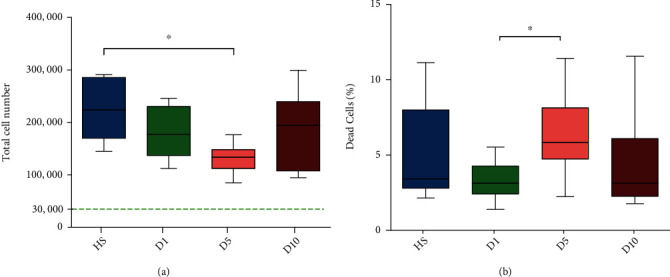
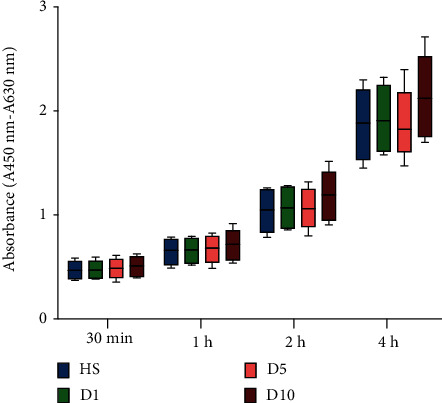
Due to their immunomodulatory and regenerative capacity, human bone marrow-derived mesenchymal stem cells (hBMSCs) are promising in the treatment of patients suffering from polytrauma. However, few studies look at the effects of sera from polytraumatized patients on hBMSCs. The aim of this study was to explore changes in hBMSC properties in response to serum from polytrauma patients taken at different time points after the trauma incident. For this, sera from 84 patients with polytrauma (collected between 2010 and 2020 in our department) were used. In order to test the differential influence on hBMSC, sera from the 1 (D1), 5 (D5), and 10 day (D10) after polytrauma were pooled, respectively. As a control, sera from three healthy donors (HS), matched with respect to age and gender to the polytrauma group, were collected. Furthermore, hBMSCs from four healthy donors were used in the experiments. The pooled sera of HS, D1, D5, and D10 were analyzed by multicytokine array for pro-/anti-inflammatory cytokines. Furthermore, the influence of the different sera on hBMSCs with respect to cell proliferation, colony forming unit-fibroblast (CFU-F) assay, cell viability, cytotoxicity, cell migration, and osteogenic and chondrogenic differentiation was analyzed. The results showed that D5 serum significantly reduced hBMSC cell proliferation capacity compared with HS and increased the proportion of dead cells compared with D1. However, the frequency of CFU-F was not reduced in polytrauma groups compared with HS, as well as the other parameters. The serological effect of polytrauma on hBMSCs was related to the time after trauma. It is disadvantageous to use BMSCs in polytraumatized patients at least until the fifth day after polytrauma as obvious cytological changes could be found at that time point. However, it is promising to use hBMSCs to treat polytrauma after five days, combined with the concept of "Damage Control Orthopedics" (DCO).
由于其免疫调节和再生能力,人骨髓间充质干细胞(hBMSCs)在治疗多发伤患者方面具有广阔前景。然而,很少有研究关注多发伤患者的血清对hBMSCs的影响。本研究的目的是探讨创伤事件后不同时间点采集的多发伤患者血清对hBMSCs特性的影响。为此,使用了84例多发伤患者的血清(2010年至2020年在我科采集)。为了测试对hBMSCs的不同影响,分别收集了多发伤后第1天(D1)、第5天(D5)和第10天(D10)的血清。作为对照,收集了三名年龄和性别与多发伤组匹配的健康供体(HS)的血清。此外,实验中使用了四名健康供体的hBMSCs。通过多细胞因子阵列分析HS、D1、D5和D10的混合血清中的促炎/抗炎细胞因子。此外,还分析了不同血清对hBMSCs在细胞增殖、集落形成单位-成纤维细胞(CFU-F)测定、细胞活力、细胞毒性、细胞迁移以及成骨和成软骨分化方面的影响。结果表明,与HS相比,D5血清显著降低了hBMSCs的细胞增殖能力,与D1相比,死细胞比例增加。然而,与HS相比,多发伤组的CFU-F频率以及其他参数并未降低。多发伤对hBMSCs的血清学影响与创伤后的时间有关。在多发伤患者中至少在创伤后第五天之前使用BMSCs是不利的,因为在那个时间点可以发现明显的细胞学变化。然而,结合“损伤控制骨科”(DCO)的概念,在五天后使用hBMSCs治疗多发伤是有前景的。