Department of Botany, Hazara University Mansehra, Mansehra, KP, Pakistan.
Department of Biotechnology and Genetic Engineering, Hazara University Mansehra, Mansehra, KP, Pakistan.
Sci Rep. 2021 Dec 8;11(1):23575. doi: 10.1038/s41598-021-03032-1.
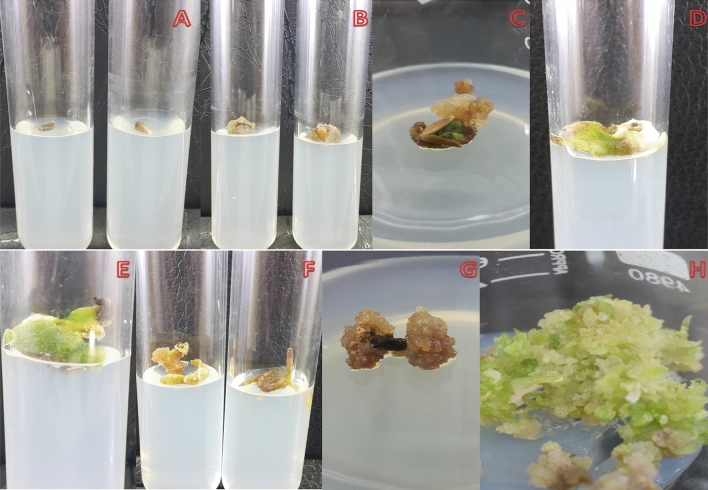
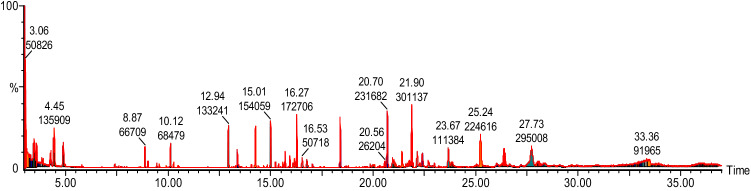
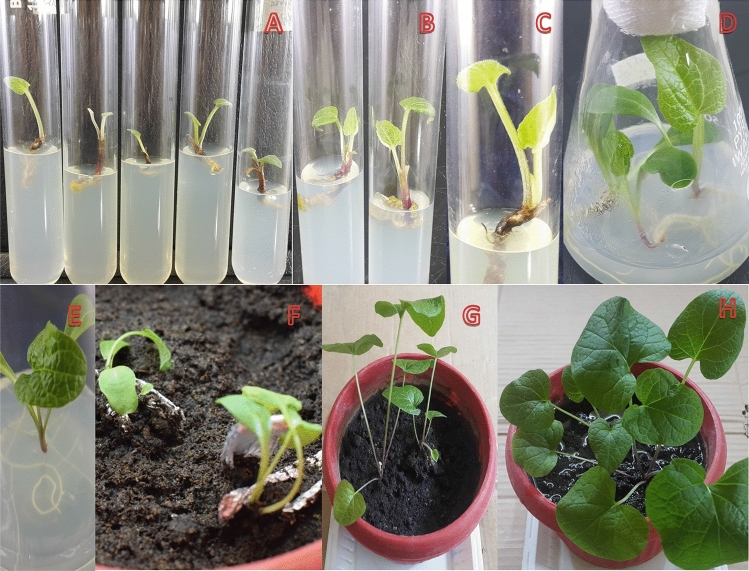
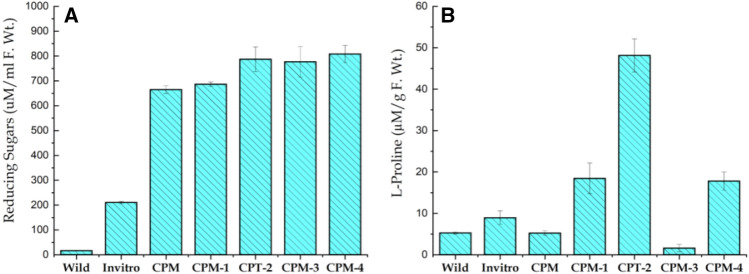
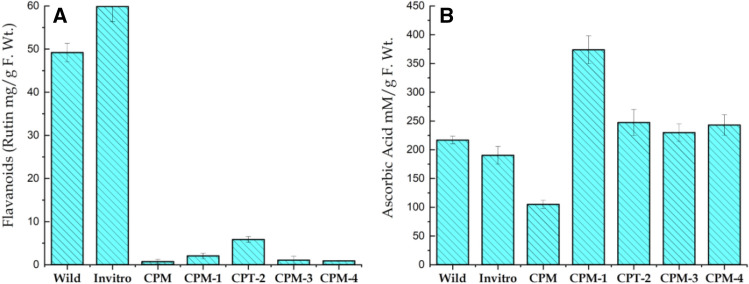
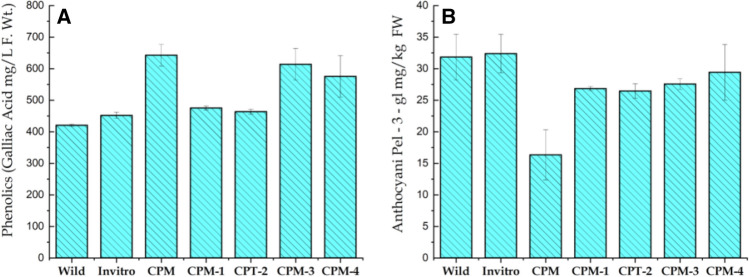
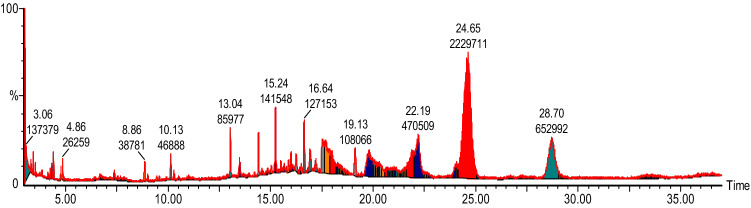
Efficient protocols for callus induction and micro propagation of Saussurea costus (Falc.) Lipsch were developed and phytochemical diversity of wild and in-vitro propagated material was investigated. Brown and red compact callus was formed with frequency of 80-95%, 78-90%, 70-95% and 65-80% from seeds, leaf, petiole and root explants, respectively. MS media supplemented with BAP (2.0 mgL), NAA (1.0 mgL) and GA3 (0.25 mgL) best suited for multiple shoot buds initiation (82%), while maximum shoot length was formed on media with BAP (1.5 mgL), NAA (0.25 mgL) and Kinetin (0.5 mgL). Full strength media with IAA (0.5 mgL) along with IBA (0.5 mgL) resulted in early roots initiation. Similarly, maximum rooting (87.57%) and lateral roots formation (up to 6.76) was recorded on full strength media supplemented with BAP (0.5 mgL), IAA (0.5 mgL) and IBA (0.5 mgL). Survival rate of acclimatized plantlets in autoclaved garden soil, farmyard soil, and sand (2:1:1) was 87%. Phytochemical analysis revealed variations in biochemical contents i.e. maximum sugar (808.32 µM/ml), proline (48.14 mg/g), ascorbic acid (373.801 mM/g) and phenolic compounds (642.72 mgL) were recorded from callus cultured on different stress media. Nonetheless, highest flavenoids (59.892 mg/g) and anthocyanin contents (32.39 mg/kg) were observed in in-vitro propagated plants. GC-MS analysis of the callus ethyl acetate extracts revealed 24 different phytochemicals. The variability in secondary metabolites of both wild and propagated plants/callus is reported for the first time for this species. This study may provide a baseline for the conservation and sustainable utilization of S. costus with implications for isolation of unique and pharmacologically active compounds from callus or regenerated plantlets.
建立了高效的雪莲(Falc.)唇组织诱导和微繁殖方案,并研究了野生和体外繁殖材料的植物化学多样性。从种子、叶片、叶柄和根外植体分别形成了频率为 80-95%、78-90%、70-95%和 65-80%的棕色和红色紧凑愈伤组织。MS 培养基中添加 BAP(2.0 mgL)、NAA(1.0 mgL)和 GA3(0.25 mgL)最适合多芽芽的起始(82%),而在含有 BAP(1.5 mgL)、NAA(0.25 mgL)和激动素(0.5 mgL)的培养基上形成最大的芽长。完全培养基中添加 IAA(0.5 mgL)和 IBA(0.5 mgL)可早期诱导生根。同样,在完全培养基中添加 BAP(0.5 mgL)、IAA(0.5 mgL)和 IBA(0.5 mgL)可最大程度地生根(87.57%)和形成侧根(最多 6.76 个)。在高压灭菌的花园土壤、农家肥和沙(2:1:1)中驯化植物的成活率为 87%。植物化学分析表明,生物化学含量存在差异,即在不同应激培养基上培养的愈伤组织中记录到最大的糖(808.32 µM/ml)、脯氨酸(48.14 mg/g)、抗坏血酸(373.801 mM/g)和酚类化合物(642.72 mgL)。然而,在体外繁殖的植物中观察到最高的类黄酮(59.892 mg/g)和花青素含量(32.39 mg/kg)。愈伤组织乙酸乙酯提取物的 GC-MS 分析显示了 24 种不同的植物化学物质。这是首次报道该物种的野生和繁殖植物/愈伤组织中次生代谢物的变异性。本研究可为保护和可持续利用雪莲提供基础,对从愈伤组织或再生植物中分离独特的和具有药理活性的化合物具有重要意义。