Yunnan Provincial Key Laboratory of Forest Plant Cultivation and Utilization, Yunnan Academy of Forestry and Grassland, Kunming, 650201, China.
Key Laboratory of the State Forestry Administration on Conservation of Rare, Endangered and Endemic Forest Plants, Kunming, 650201, China.
Sci Rep. 2021 Dec 8;11(1):23605. doi: 10.1038/s41598-021-03080-7.
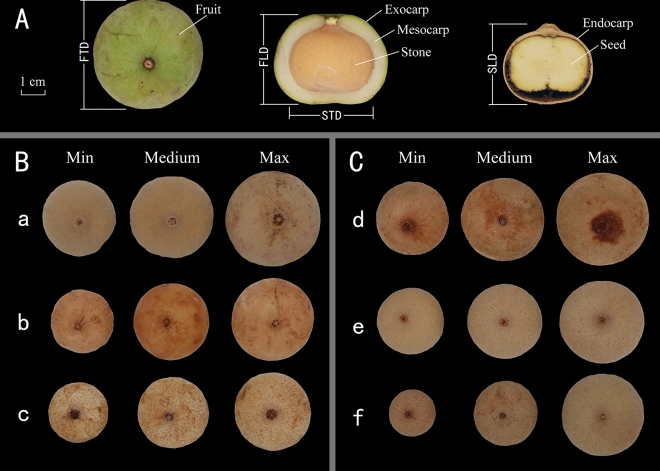
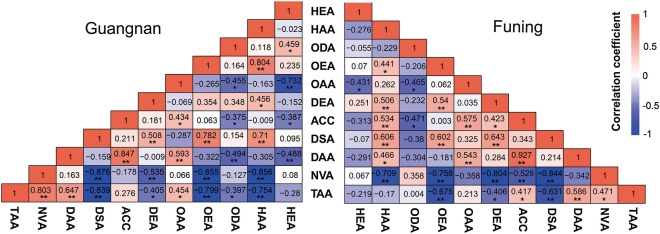
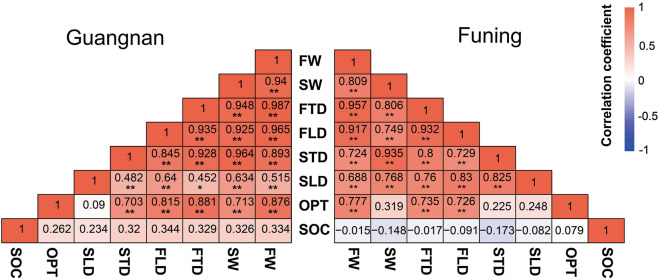
Malania oleifera (Olacaceae), a tree species endemic to Southwest China, has seed oils enriched with nervonic acid and is therefore good source of this chemical. Because of this, there are promising industrial perspective in the artificial cultivation and use of this species. Understanding the variability in the fruit characters among individuals forms the basis or resource prospection. In the current investigation, fifty-three mature fruiting trees were sampled from two locations with divergent climates (Guangnan and Funing). Morphological characterization of fruits (fruit and stone weight, fruit transverse and longitudinal diameter, stone transverse and longitudinal diameter) was conducted, and the concentration of seed oil and its fatty acid composition were also analyzed in all individuals. Differences in all the morphological characters studied were more significant among individual trees than between different geographic localities, even though these had different climates. Eleven fatty acids were identified contributing between 91.39 and 96.34% of the lipids, and the major components were nervonic acid (38.93-47.24%), octadecenoic acid (26.79-32.08%), docosenoic acid (10.94-17.24%). The seed oil content (proportion of oil in seed kernel) and the proportion of nervonic acid were both higher in Funing, which has a higher average climatic temperature than Guangnan. The concentrations of nervonic acid and octadecenoic acid with the low coefficients of variation in the seed oil of M. oleifera were relatively stable in contrast to the other fatty acids. There were significant positive correlations between fruit morphological characters, but the amount of seed oil and the concentrations of its components were not correlated with any morphological character. This study provides an understanding of morphological variation in wild M. oleifera individuals. Wild individuals with excellent fruit traits could be selected and would make promising candidates for commercial cultivation.
油楠(樟科)是中国西南特有的树种,其种子油富含神经酸,是这种化学物质的良好来源。因此,人工栽培和利用该物种具有广阔的工业前景。了解个体间果实特征的变异性是资源勘探的基础。在当前的调查中,从气候差异较大的两个地点(广南和富宁)采集了 53 棵成熟的结果树。对果实(果和核重、果实横径和纵径、核横径和纵径)进行了形态特征描述,并对所有个体的种子油浓度及其脂肪酸组成进行了分析。在所研究的所有形态特征中,个体间的差异大于不同地理位置之间的差异,尽管这些地理位置的气候不同。鉴定出 11 种脂肪酸,占脂质的 91.39%至 96.34%,主要成分为神经酸(38.93%-47.24%)、十八碳烯酸(26.79%-32.08%)、二十二碳烯酸(10.94%-17.24%)。富宁的种子油含量(油仁中油的比例)和神经酸比例均高于广南,平均气候温度较高。与其他脂肪酸相比,油楠种子油中神经酸和十八碳烯酸的浓度变异系数较低,相对稳定。果实形态特征之间存在显著的正相关,但种子油的含量及其成分的浓度与任何形态特征都没有相关性。本研究为野生油楠个体的形态变异提供了一定的认识。具有优良果实特征的野生个体可以被选择,并有望成为商业栽培的候选者。