Wu Chen-Yu, Meng Jing, Merchant Austin, Zhang Yi-Xiang, Li Mu-Wang, Zhou Xu-Guo, Wang Qian
Shanghai First Maternity and Infant Hospital, Tongji University School of Medicine, Shanghai, China.
School of Biotechnology, Jiangsu University of Science and Technology, Zhenjiang, China.
Front Microbiol. 2021 Nov 22;12:723508. doi: 10.3389/fmicb.2021.723508. eCollection 2021.
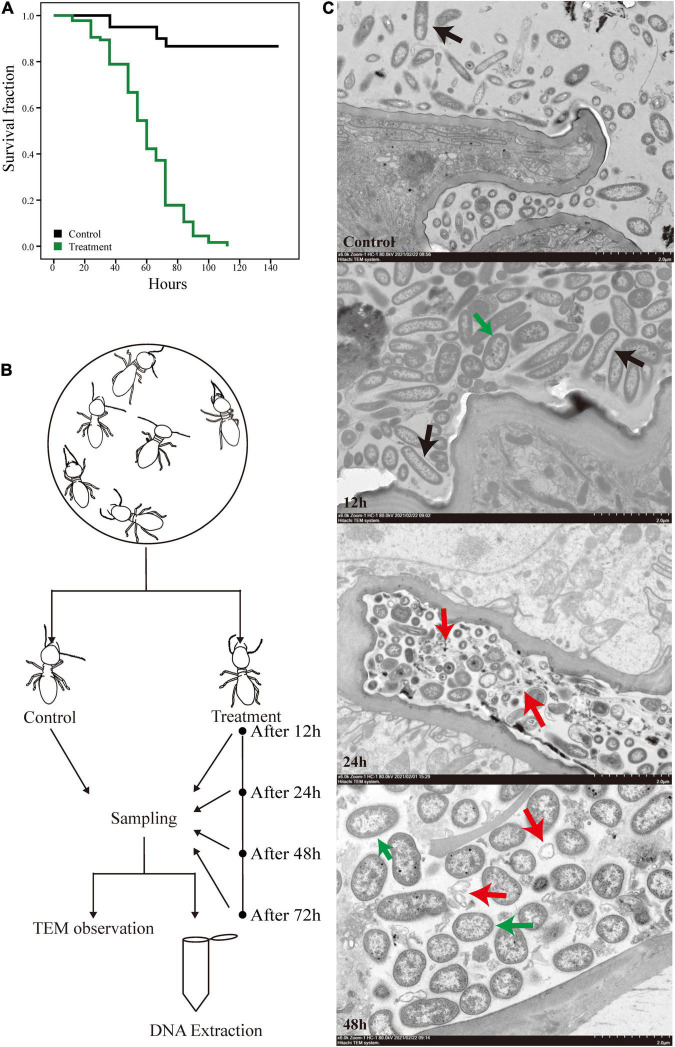
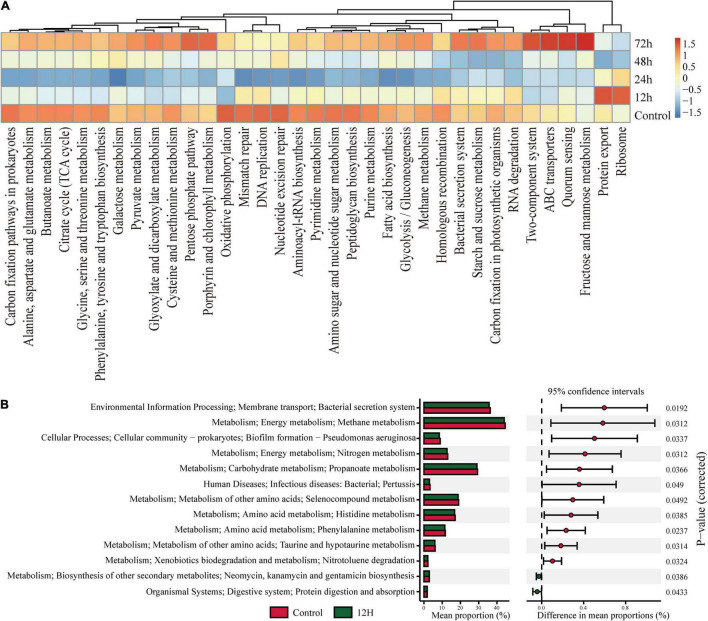
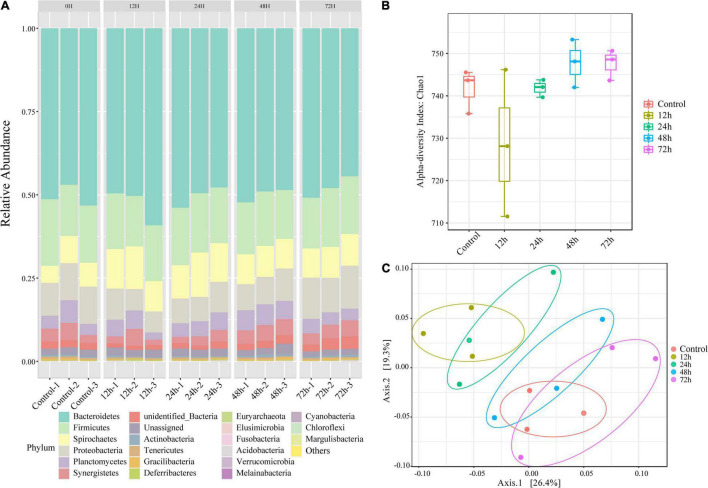
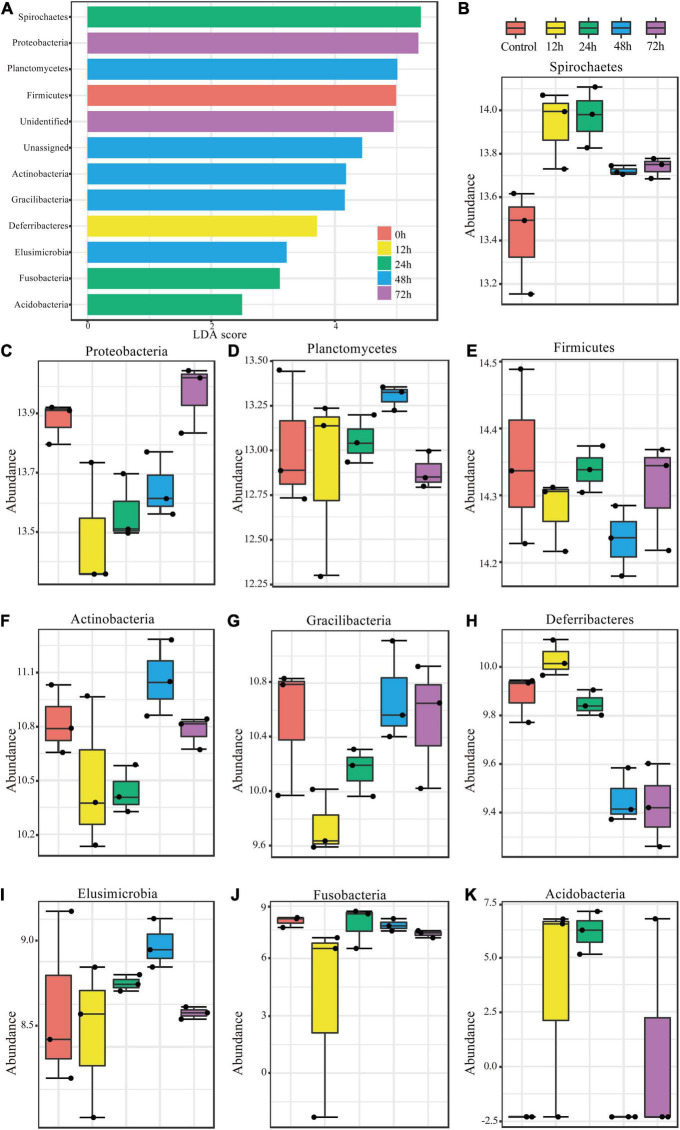
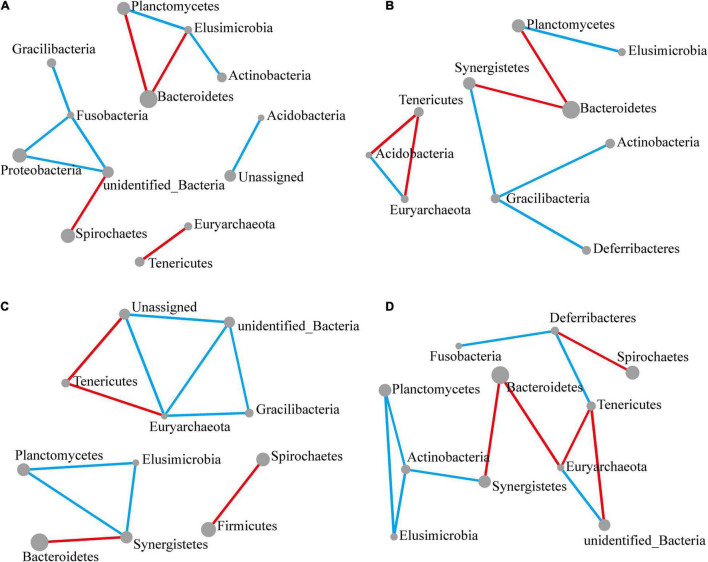
The crosstalk between gut microbiota and host immunity has emerged as one of the research foci of microbiome studies in recent years. The purpose of this study was to determine how gut microbes respond to fungal infection in termites, given their reliance on gut symbionts for food intake as well as maintaining host health. Here, we used , an entomopathogenic fungus, to infect , a fungus-growing termite in the family Termitidae, and documented changes in host gut microbiota a combination of bacterial 16S rDNA sequencing, metagenomic shotgun sequencing, and transmission electron microscopy. Our analyses found that when challenged with , the termite gut showed reduced microbial diversity within the first 12 h of fungal infection and then recovered and even surpassed pre-infection flora levels. These combined results shed light on the role of gut flora in maintaining homeostasis and immune homeostasis in the host, and the impact of gut flora dysbiosis on host susceptibility to infection.
近年来,肠道微生物群与宿主免疫之间的相互作用已成为微生物组研究的焦点之一。鉴于白蚁依赖肠道共生菌获取食物并维持宿主健康,本研究旨在确定肠道微生物如何应对白蚁的真菌感染。在这里,我们使用一种昆虫病原真菌感染白蚁科中一种培菌白蚁,通过细菌16S rDNA测序、宏基因组鸟枪法测序和透射电子显微镜相结合的方法,记录宿主肠道微生物群的变化。我们的分析发现,当受到感染时,白蚁肠道在真菌感染的前12小时内微生物多样性降低,然后恢复,甚至超过感染前的菌群水平。这些综合结果揭示了肠道菌群在维持宿主内环境稳态和免疫稳态中的作用,以及肠道菌群失调对宿主感染易感性的影响。