Department of Respiratory and Critical Care Medicine, Second Affiliated Hospital of Harbin Medical University, Harbin, China.
Medical Research Center, Beijing Chao-Yang Hospital, Capital Medical University, Beijing, China.
Front Immunol. 2021 Nov 22;12:762594. doi: 10.3389/fimmu.2021.762594. eCollection 2021.
Idiopathic pulmonary fibrosis (IPF) has high mortality worldwide. The CD247 molecule (CD247, as known as T-cell surface glycoprotein CD3 zeta chain) has been reported as a susceptibility locus in systemic sclerosis, but its correlation with IPF remains unclear.
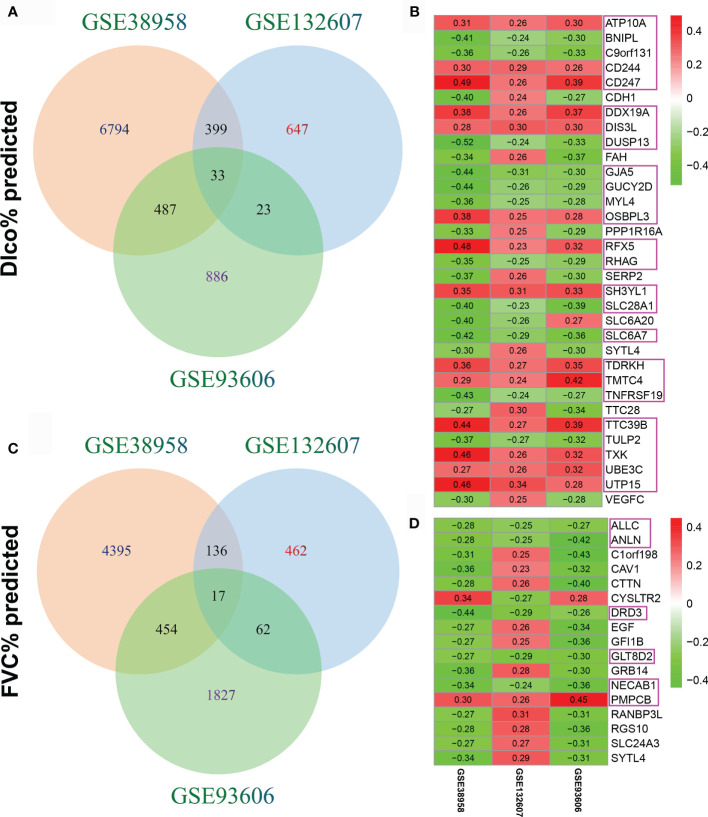
Datasets were acquired by researching the Gene Expression Omnibus (GEO). CD247 was identified as the hub gene associated with percent predicted diffusion capacity of the lung for carbon monoxide (Dlco% predicted) and prognosis according to Pearson correlation, logistic regression, and survival analysis.
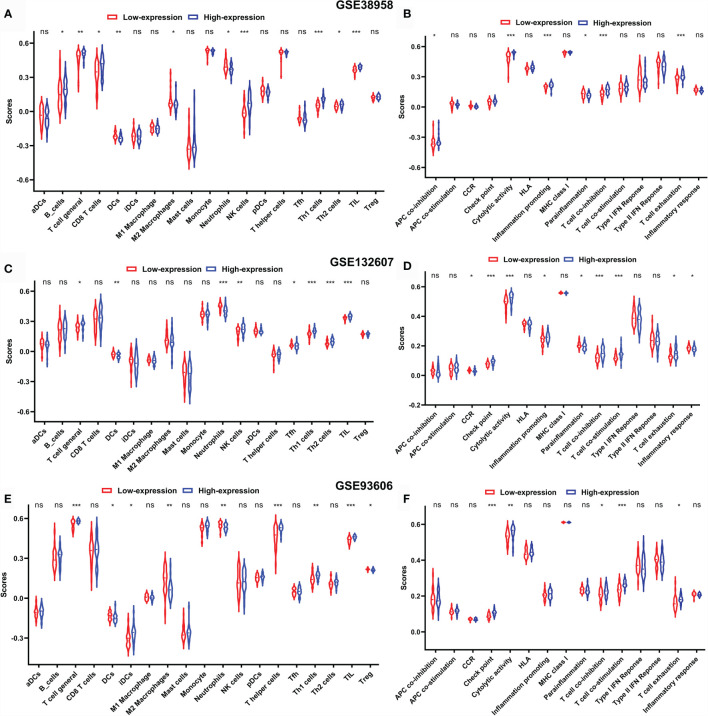
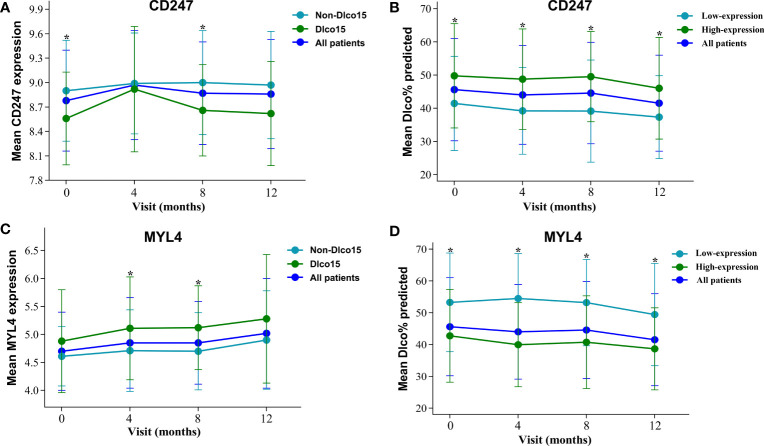
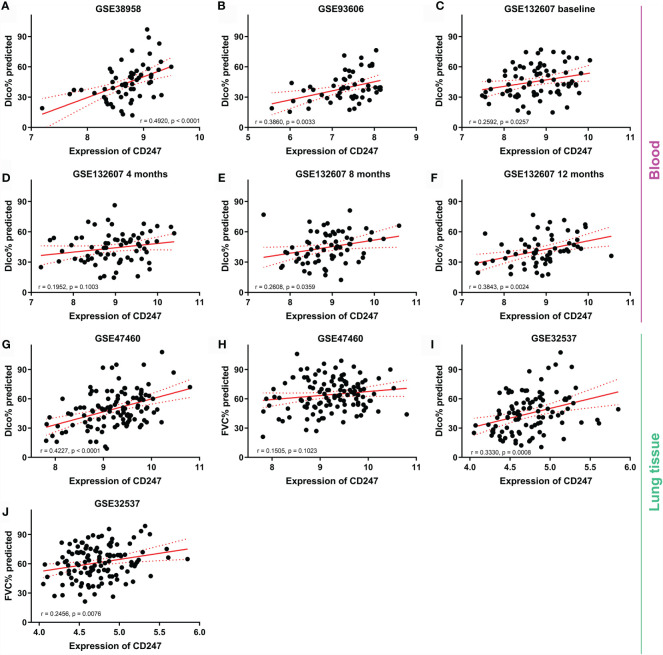
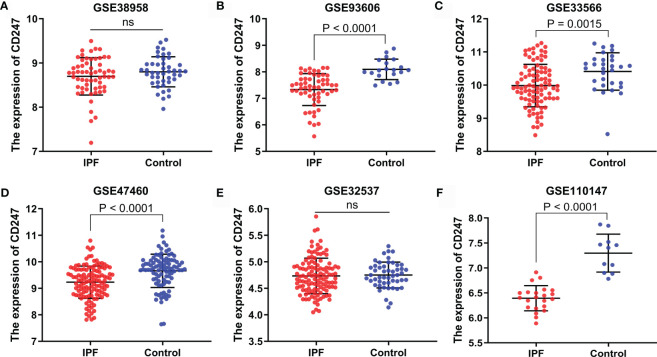
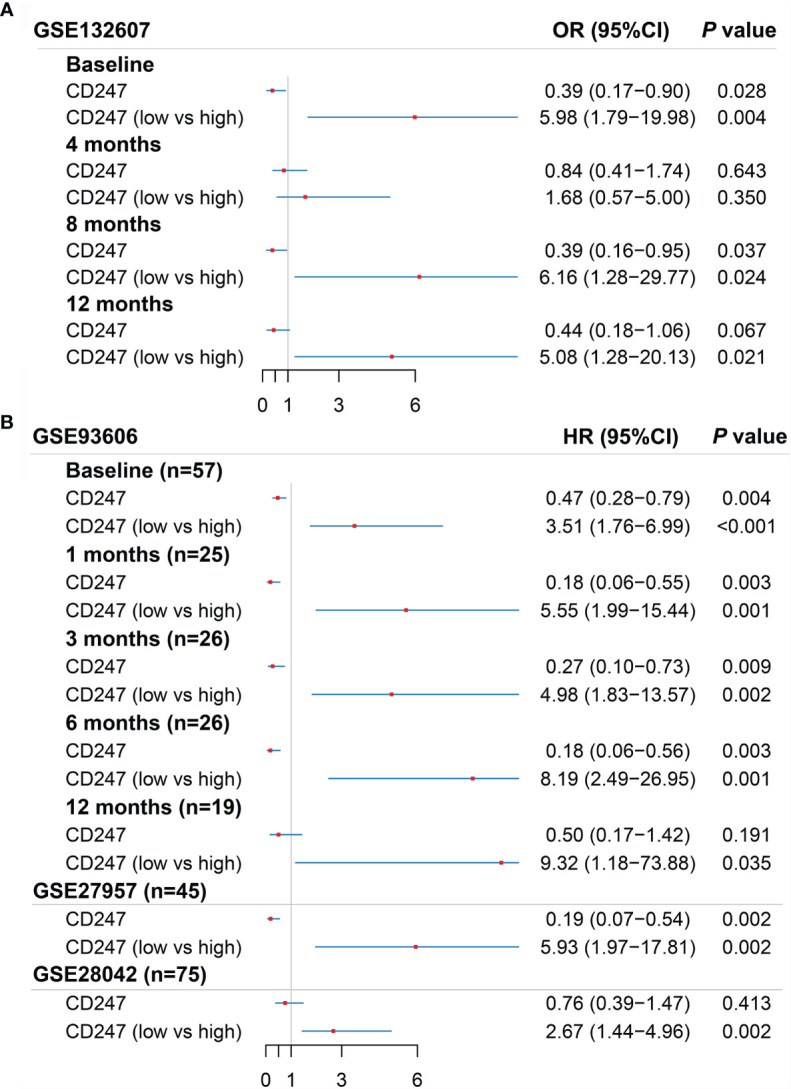
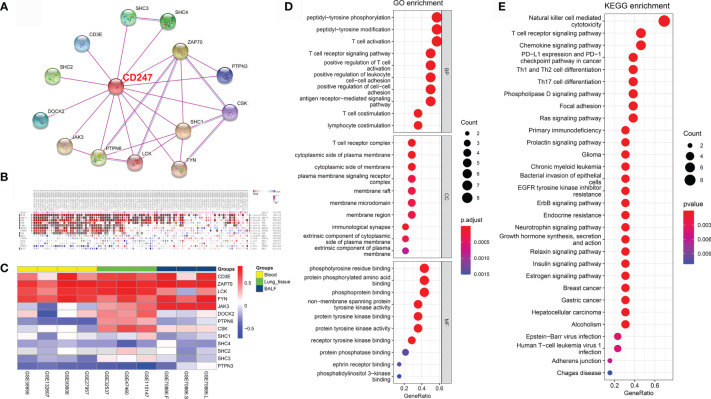
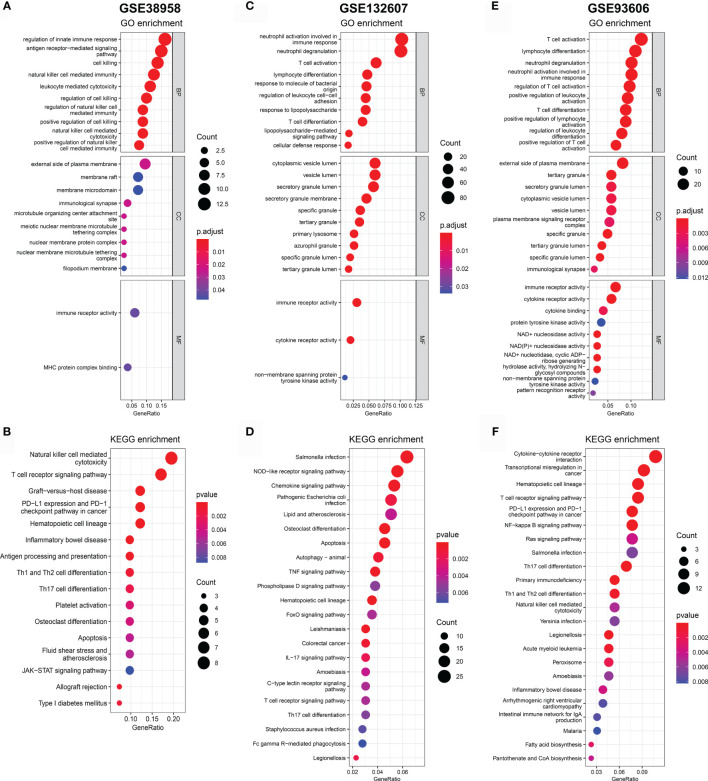
CD247 is significantly downregulated in patients with IPF compared with controls in both blood and lung tissue samples. Moreover, CD247 is significantly positively associated with Dlco% predicted in blood and lung tissue samples. Patients with low-expression CD247 had shorter transplant-free survival (TFS) time and more composite end-point events (CEP, death, or decline in FVC >10% over a 6-month period) compared with patients with high-expression CD247 (blood). Moreover, in the follow-up 1st, 3rd, 6th, and 12th months, low expression of CD247 was still the risk factor of CEP in the GSE93606 dataset (blood). Thirteen genes were found to interact with CD247 according to the protein-protein interaction network, and the 14 genes including CD247 were associated with the functions of T cells and natural killer (NK) cells such as PD-L1 expression and PD-1 checkpoint pathway and NK cell-mediated cytotoxicity. Furthermore, we also found that a low expression of CD247 might be associated with a lower activity of TIL (tumor-infiltrating lymphocytes), checkpoint, and cytolytic activity and a higher activity of macrophages and neutrophils.
These results imply that CD247 may be a potential T cell-derived disease severity and prognostic biomarker for IPF.
特发性肺纤维化(IPF)在全球范围内死亡率较高。CD247 分子(CD247,也称为 T 细胞表面糖蛋白 CD3 ζ 链)已被报道为系统性硬化症的易感基因座,但与 IPF 的相关性尚不清楚。
通过研究基因表达综合数据库(GEO)获取数据集。根据 Pearson 相关性、逻辑回归和生存分析,CD247 被确定为与预测的一氧化碳弥散量(Dlco% predicted)和预后相关的关键基因。
与对照组相比,IPF 患者的血液和肺组织样本中 CD247 表达显著下调。此外,CD247 与血液和肺组织样本中的 Dlco% predicted 呈显著正相关。与高表达 CD247 的患者相比,低表达 CD247 的患者的无移植生存(TFS)时间更短,复合终点事件(CEP,死亡或 FVC 在 6 个月内下降超过 10%)更多(血液)。此外,在 GSE93606 数据集的随访第 1、3、6 和 12 个月,低表达 CD247 仍然是 CEP 的危险因素(血液)。根据蛋白质-蛋白质相互作用网络,发现有 13 个基因与 CD247 相互作用,包括 CD247 在内的 14 个基因与 T 细胞和自然杀伤(NK)细胞的功能相关,如 PD-L1 表达和 PD-1 检查点途径以及 NK 细胞介导的细胞毒性。此外,我们还发现 CD247 的低表达可能与 TIL(肿瘤浸润淋巴细胞)、检查点和细胞毒性活性较低以及巨噬细胞和中性粒细胞活性较高有关。
这些结果表明,CD247 可能是 IPF 潜在的 T 细胞来源的疾病严重程度和预后生物标志物。