Department of Endocrinology, The First Affiliated Hospital of Xi'an Jiaotong University, Xi'an, 710061, People's Republic of China.
Department of Endocrinology, Xi'an Central Hospital, Xi'an, 710003, People's Republic of China.
J Exp Clin Cancer Res. 2021 Dec 9;40(1):387. doi: 10.1186/s13046-021-02195-z.
Mannose, a natural hexose existing in daily food, has been demonstrated to preferentially inhibit the progression of tumors with low expression of phosphate mannose isomerase (PMI). However, its function in thyroid cancer still remains elusive.
MTT, colony formation and flow cytometry assays were performed to determine the response of thyroid cancer cells to mannose. Meanwhile, mouse models of subcutaneous xenograft and primary papillary thyroid cancer were established to determine in vivo anti-tumor activity of mannose. The underlying mechanism of mannose selectively killing thyroid cancer cells was clarified by a series of molecular and biochemical experiments.
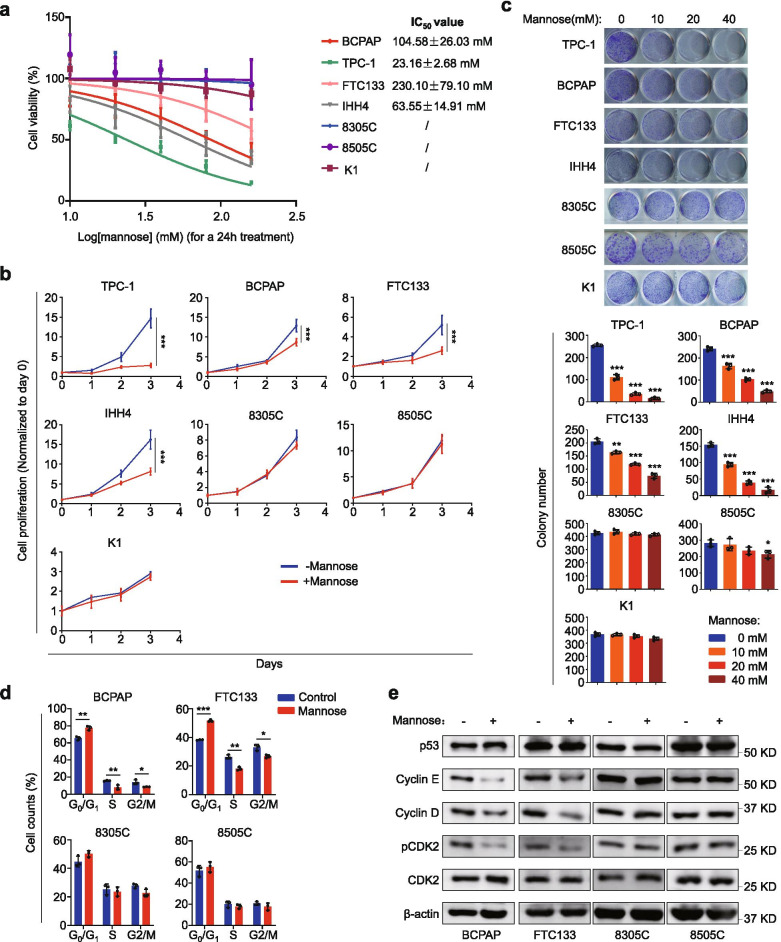
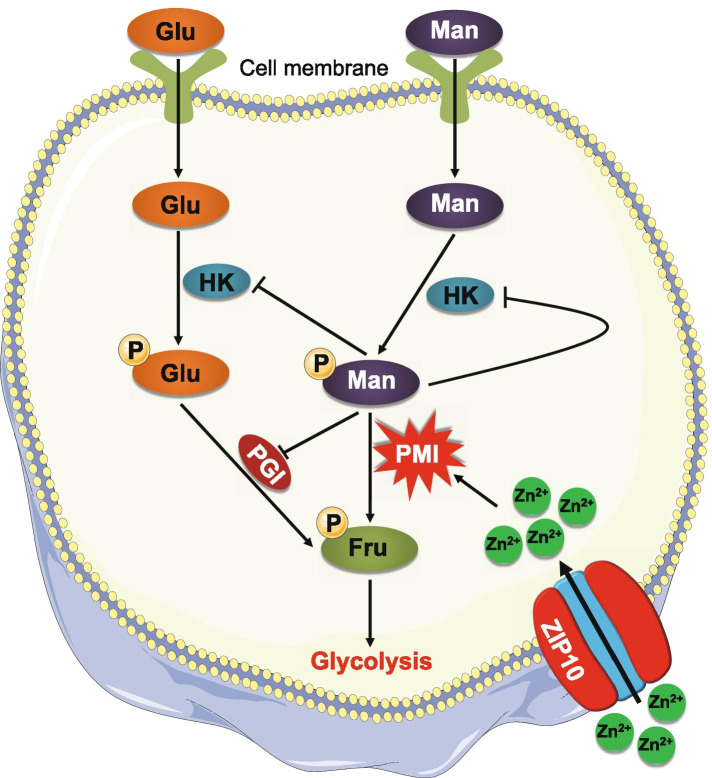
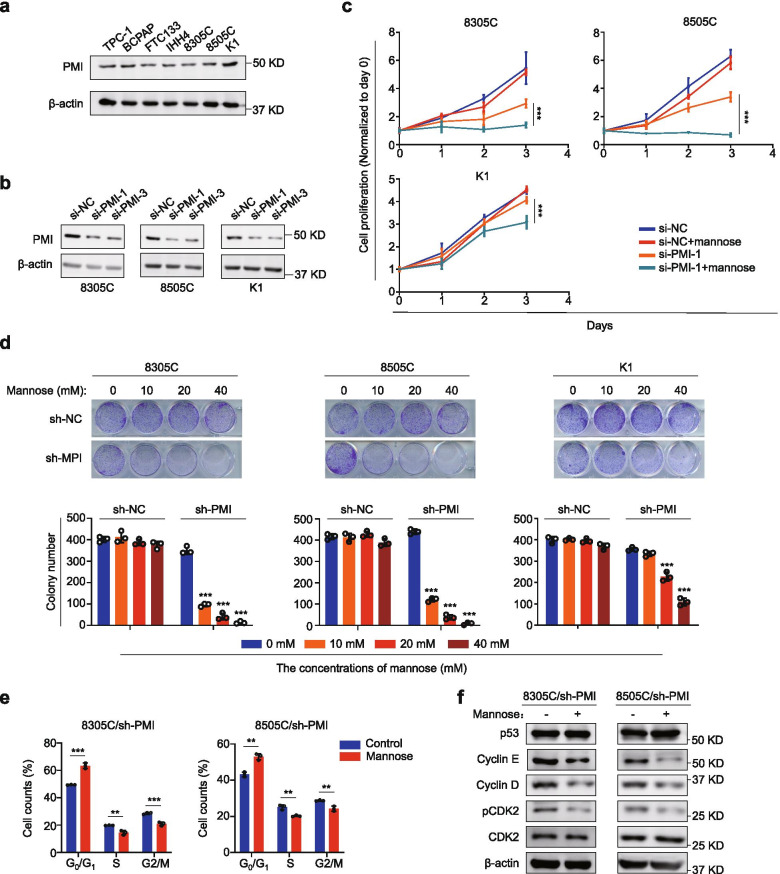
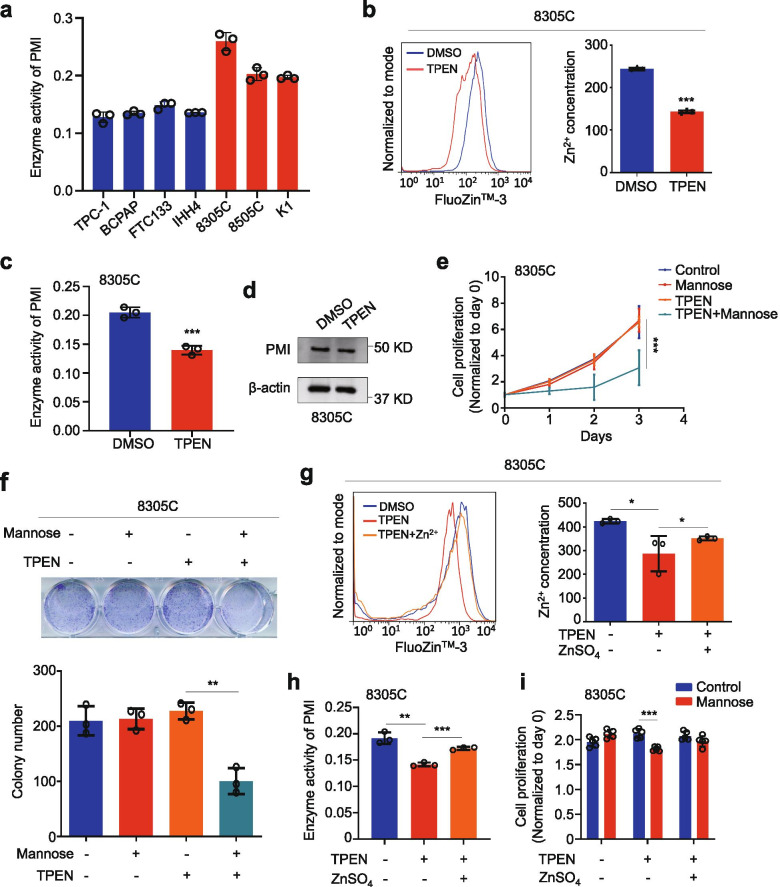
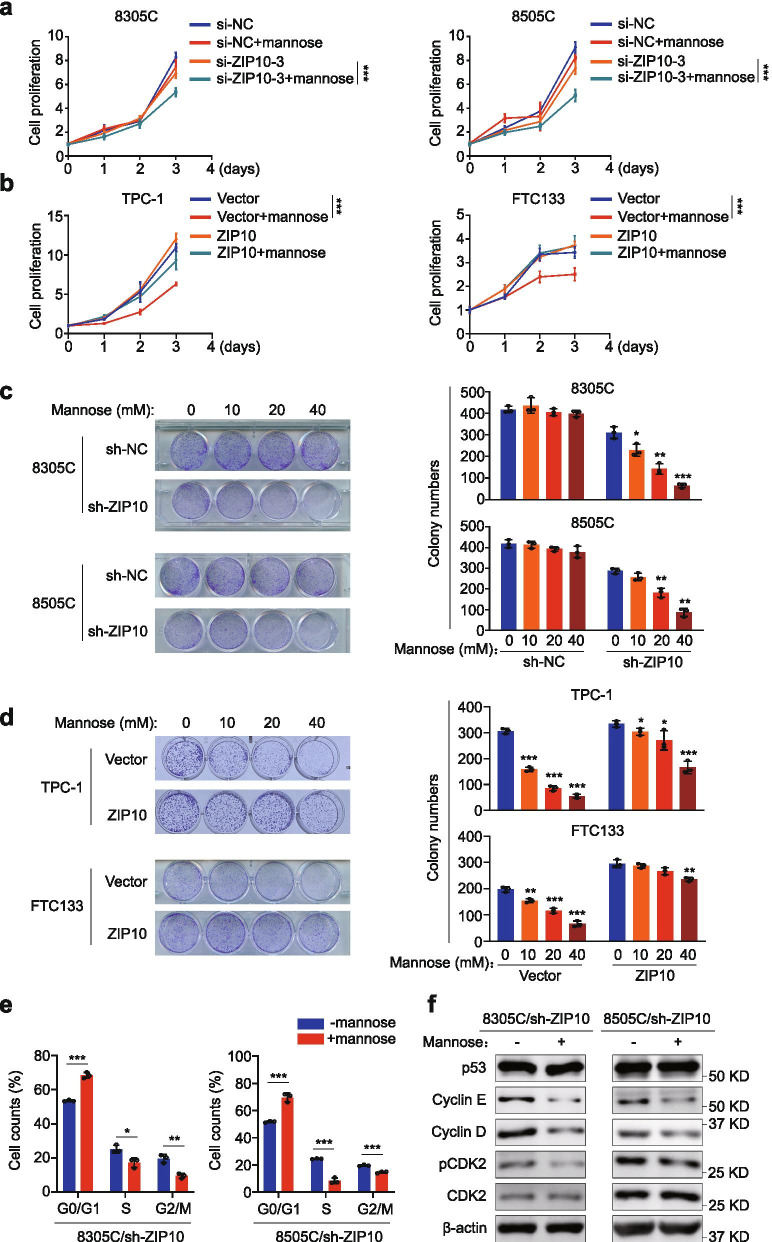
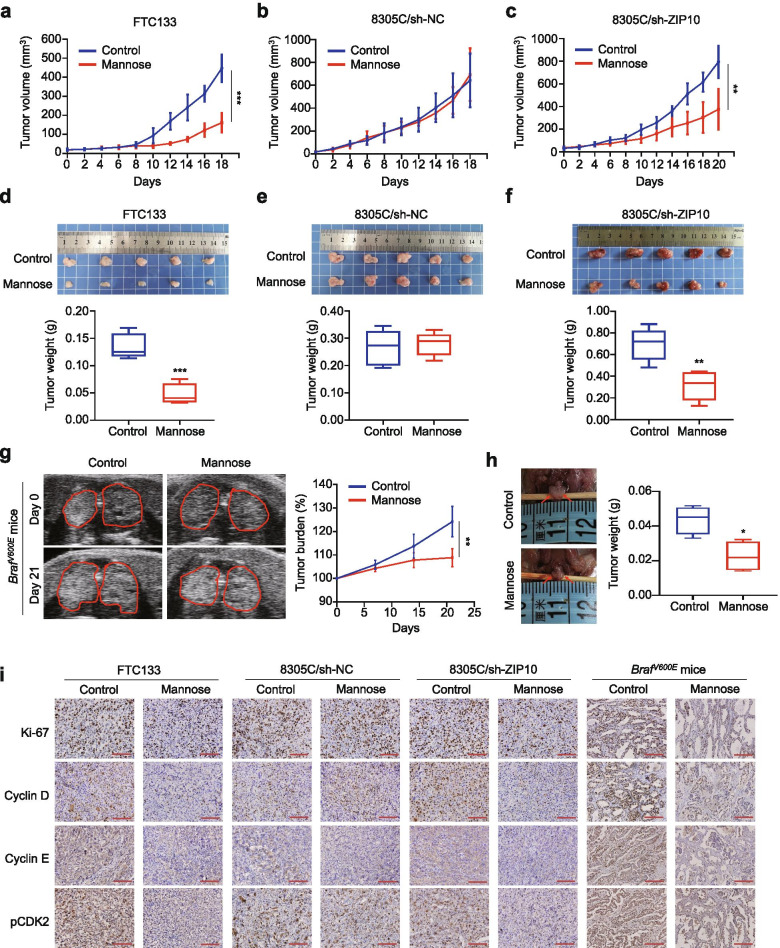
Our data demonstrated that mannose selectively suppressed the growth of thyroid cancer cells, and found that enzyme activity of PMI rather than its protein expression was negatively associated with the response of thyroid cancer cells to mannose. Besides, our data showed that zinc ion (Zn) chelator TPEN clearly increased the response of mannose-insensitive cells to mannose by inhibiting enzyme activity of PMI, while Zn supplement could effectively reverse this effect. Further studies found that the expression of zinc transport protein ZIP10, which transport Zn from extracellular area into cells, was negatively related to the response of thyroid cancer cells to mannose. Knocking down ZIP10 in mannose-insensitive cells significantly inhibited in vitro and in vivo growth of these cells by decreasing intracellular Zn concentration and enzyme activity of PMI. Moreover, ectopic expression of ZIP10 in mannose-sensitive cells decrease their cellular response to mannose. Mechanistically, mannose exerted its anti-tumor effect by inhibiting cellular glycolysis; however, this effect was highly dependent on expression status of ZIP10.
The present study demonstrate that mannose selectively kills thyroid cancer cells dependent on enzyme activity of PMI rather than its expression, and provide a mechanistic rationale for exploring clinical use of mannose in thyroid cancer therapy.
甘露糖是一种存在于日常食物中的天然己糖,已被证明优先抑制磷酸甘露糖异构酶(PMI)低表达的肿瘤进展。然而,它在甲状腺癌中的作用仍然难以捉摸。
MTT、集落形成和流式细胞术实验用于确定甘露糖对甲状腺癌细胞的反应。同时,建立了甲状腺癌皮下异种移植和原发性甲状腺癌的小鼠模型,以确定甘露糖的体内抗肿瘤活性。通过一系列分子和生化实验阐明了甘露糖选择性杀伤甲状腺癌细胞的潜在机制。
我们的数据表明甘露糖选择性地抑制了甲状腺癌细胞的生长,并发现 PMI 的酶活性而不是其蛋白表达与甲状腺癌细胞对甘露糖的反应呈负相关。此外,我们的数据表明锌离子(Zn)螯合剂 TPEN 通过抑制 PMI 的酶活性,明显增加了甘露糖不敏感细胞对甘露糖的反应,而 Zn 补充可以有效逆转这种作用。进一步的研究发现,锌转运蛋白 ZIP10 的表达与甲状腺癌细胞对甘露糖的反应呈负相关,ZIP10 将 Zn 从细胞外区域转运到细胞内。在甘露糖不敏感细胞中敲低 ZIP10 可通过降低细胞内 Zn 浓度和 PMI 的酶活性,显著抑制这些细胞的体外和体内生长。此外,在甘露糖敏感细胞中外源表达 ZIP10 会降低它们对甘露糖的细胞反应。从机制上讲,甘露糖通过抑制细胞糖酵解发挥其抗肿瘤作用;然而,这种作用高度依赖于 ZIP10 的表达状态。
本研究表明,甘露糖选择性地杀死甲状腺癌细胞依赖于 PMI 的酶活性而不是其表达,并为探索甘露糖在甲状腺癌治疗中的临床应用提供了机制依据。