Zhang Xinyue, Saltman Richard
Department of Health Policy and Management, Rollins School of Public Health, Emory University, Atlanta, GA, United States.
JMIR Med Inform. 2022 Jan 11;10(1):e31837. doi: 10.2196/31837.
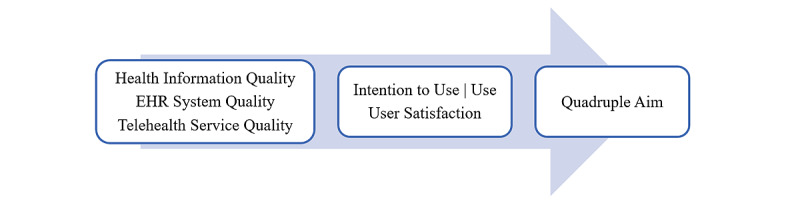
This paper aims to develop a telehealth success model and discusses three critical components: (1) health information quality, (2) electronic health record system quality, and (3) telehealth service quality to ensure effective telehealth service delivery, reduce professional burnout, and enhance access to care. The paper applied a policy analysis method and discussed telehealth applications in rural health, mental health, and veterans health services. The results pointed out the fact that, although telehealth paired with semantic/organizational interoperability facilitates value-based and team-based care, challenges remain to enhance user (both patients and clinicians) experience and satisfaction. The conclusion indicates that approaches at systemic and physician levels are needed to reduce disparities in health technology adoption and improve access to telehealth care.
本文旨在开发一个远程医疗成功模型,并讨论三个关键组成部分:(1)健康信息质量,(2)电子健康记录系统质量,以及(3)远程医疗服务质量,以确保有效的远程医疗服务提供,减少职业倦怠,并增加医疗服务的可及性。本文应用了政策分析方法,并讨论了远程医疗在农村卫生、心理健康和退伍军人卫生服务中的应用。结果指出,尽管远程医疗与语义/组织互操作性相结合有助于基于价值和团队的医疗,但在提高用户(患者和临床医生)体验和满意度方面仍存在挑战。结论表明,需要在系统和医生层面采取措施,以减少卫生技术采用方面的差距,并改善远程医疗服务的可及性。