Department of Anatomy, Faculty of Medicine and Surgery, University of Malta, Msida, Malta.
University College London, MRC Clinical Trials and Methodology Unit, London, England.
Public Health. 2022 Jan;202:52-57. doi: 10.1016/j.puhe.2021.03.025. Epub 2021 Apr 21.
The COVID-19 pandemic has spread throughout the world, including Cyprus, Iceland and Malta. Considering the small population sizes of these three island countries, it was anticipated that COVID-19 would be adequately contained and mortality would be low. This study aims to compare and contrast COVID-19 mortality with mortality from all causes and common non-communicable diseases (NCDs) over 8 months between these three islands.
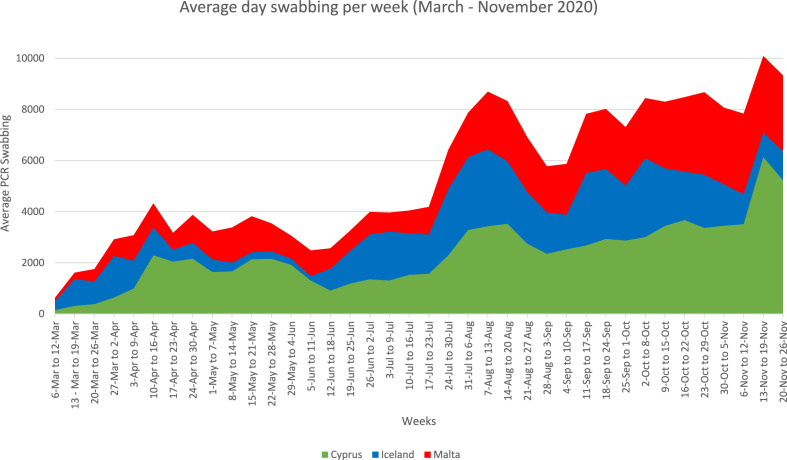
Data were obtained from the Ministry of Health websites and COVID dashboards from Cyprus, Iceland and Malta. The case-to-fatality ratio (CFR) and years of life lost (YLLs) were calculated. Comparisons were made between the reported cases, deaths, CFR, YLLs, swabbing rates, restrictions and mitigation measures.
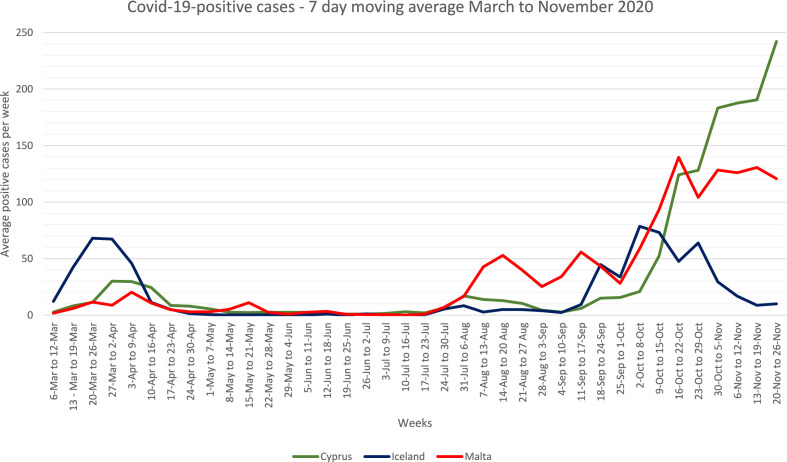
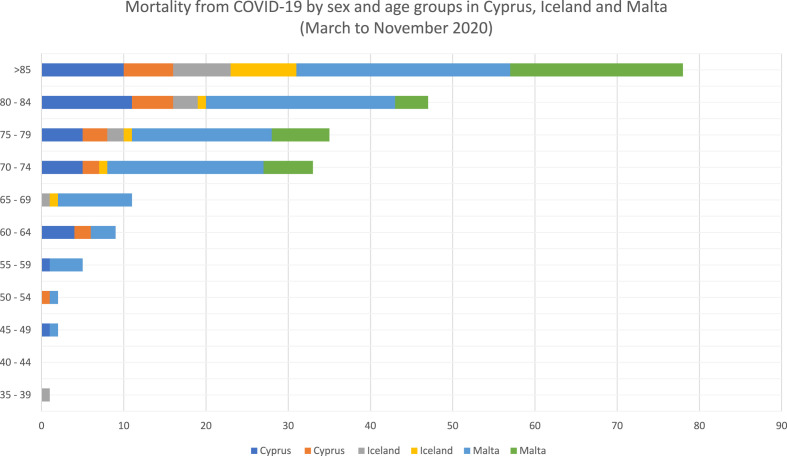
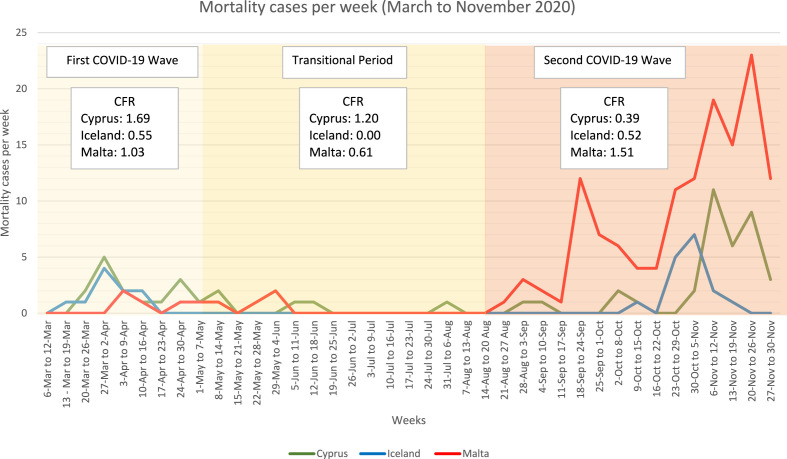
Low COVID-19 case numbers and mortality rates were observed during the first wave and transition period in Cyprus, Iceland and Malta. The second wave saw a drastic increase in the number of confirmed cases and mortality rates, especially for Malta, with high CFR and YLLs. Similar restrictions and measures were evident across the three island countries. Results show that COVID-19 mortality was generally lower than mortality from NCDs.
The study highlights that small geographical and population size, along with similar restrictive measures, did not appear to have an advantage against the spread and mortality rate of COVID-19, especially during the second wave. Population density, an ageing population and social behaviours may play a role in the burden of COVID-19. It is recommended that a country-specific syndemic approach is used to deal with the local COVID-19 spread based on the population's characteristics, behaviours and the presence of other pre-existing epidemics.
新冠疫情已在全球范围内传播,包括塞浦路斯、冰岛和马耳他。考虑到这三个岛国的人口规模较小,预计新冠疫情将得到有效控制,死亡率也将较低。本研究旨在比较和对比这三个岛屿在 8 个月内,新冠死亡率与全因死亡率和常见非传染性疾病(NCD)死亡率。
数据来自塞浦路斯、冰岛和马耳他卫生部网站和新冠数据面板。计算病例病死率(CFR)和生命损失年数(YLLs)。对报告病例、死亡、CFR、YLLs、拭子检测率、限制和缓解措施进行比较。
在塞浦路斯、冰岛和马耳他,第一波和过渡期观察到新冠病例数量和死亡率较低。第二波确诊病例和死亡率急剧上升,尤其是马耳他,CFR 和 YLLs 较高。这三个岛国的限制和措施相似。结果表明,新冠死亡率通常低于 NCD 死亡率。
本研究表明,地理和人口规模较小,以及类似的限制措施,似乎并没有在新冠疫情的传播和死亡率方面占据优势,尤其是在第二波疫情期间。人口密度、人口老龄化和社会行为可能在新冠疫情负担中发挥作用。建议根据人口特征、行为和其他现有传染病的存在,采用针对特定国家的综合征方法来应对当地新冠疫情的传播。