Flynn Darren, Moloney Eoin, Bhattarai Nawaraj, Scott Jason, Breckons Matthew, Avery Leah, Moy Naomi
School of Health and Life Sciences, Centuria Building, Teesside University, Tees Valley, TS1 3BA, United Kingdom.
Health Economics and Evidence Synthesis (HEES) Group, Population Health Sciences Institute, Newcastle University, Baddiley-Clark Building, Newcastle upon Tyne, NE2 4AX, United Kingdom.
Health Policy Technol. 2020 Dec;9(4):673-691. doi: 10.1016/j.hlpt.2020.08.003. Epub 2020 Aug 27.
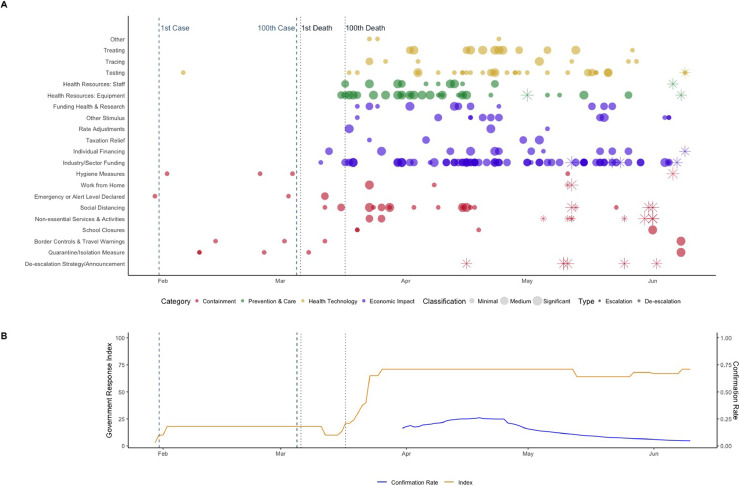
To describe epidemiological data on cases of COVID-19 and the spread of Severe Acute Respiratory Syndrome Coronavirus 2 in the United Kingdom (UK), and the subsequent policy and technological response to the pandemic, including impact on healthcare, business and the economy.
Epidemiological, business and economic data were extracted from official government sources covering the period 31st January to 13th August 2020; healthcare system data up to end of June 2019.
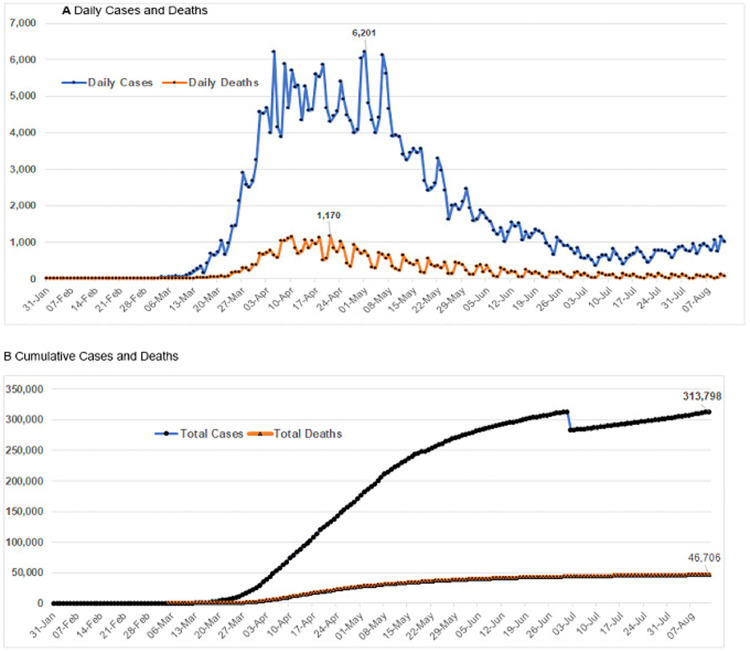
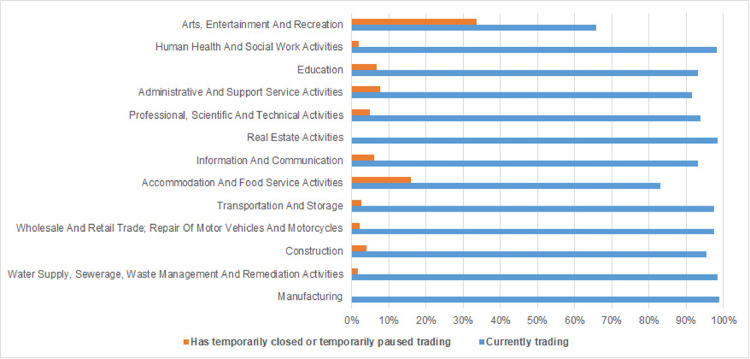
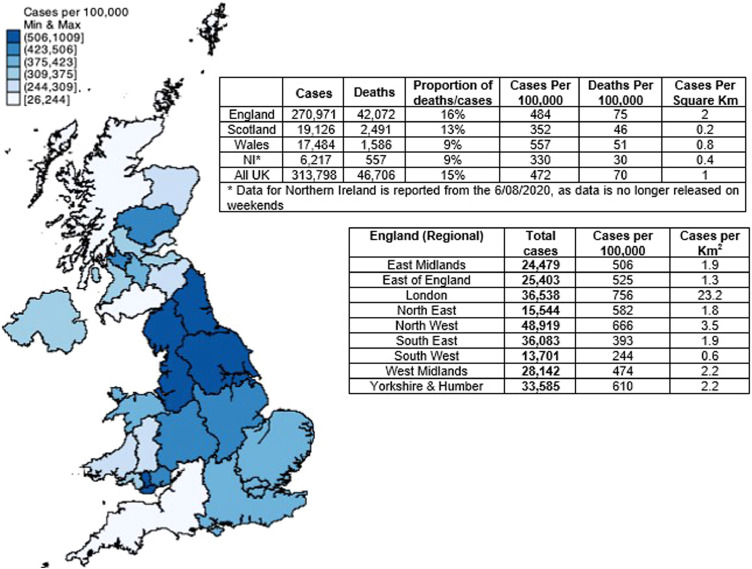
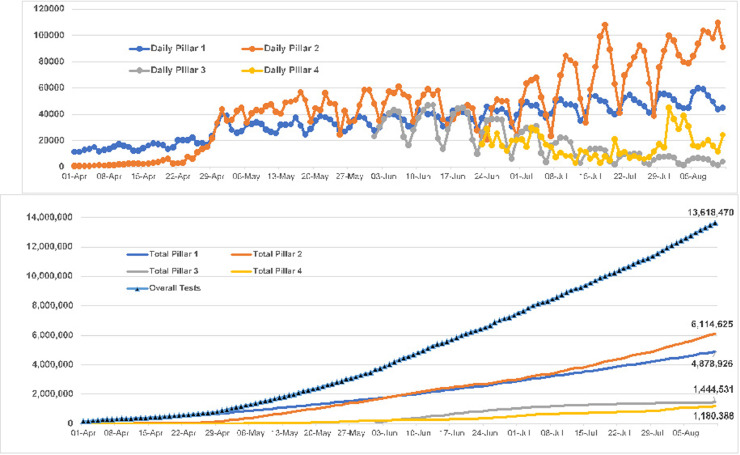
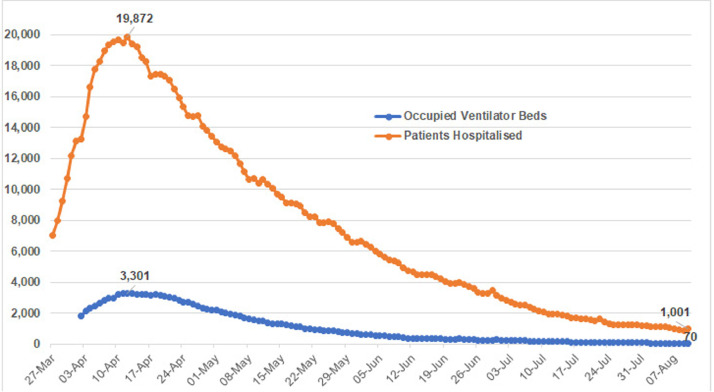
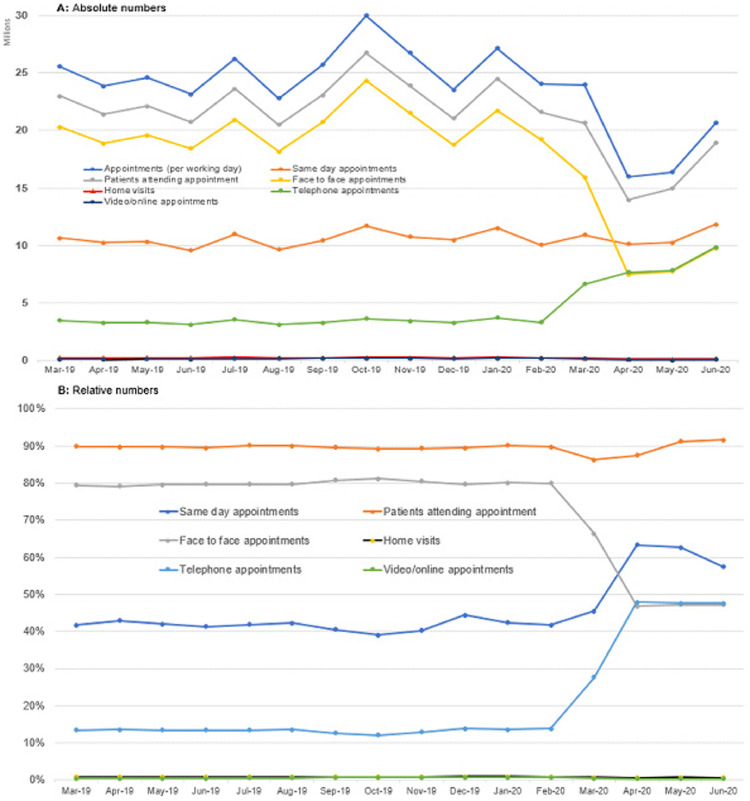
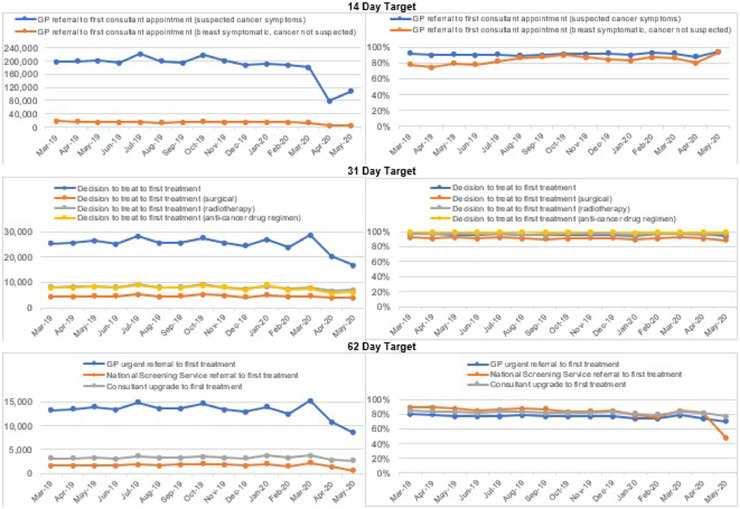
UK-wide COVID-19 cases and deaths were 313,798 and 46,706 respectively (472 cases and 70 deaths per 100,000 population) by 12th August. There were regional variations in England, with London and North West (756 and 666 cases per 100,000 population respectively) disproportionately affected compared with other regions. As of 11th August, 13,618,470 tests had been conducted in the UK. Increased risk of mortality was associated with age (≥60 years), gender (male) and BAME groups. Since onset of the pandemic, emergency department attendance, primary care utilisation and cancer referrals and inpatient/outpatient referrals have declined; emergency ambulance and NHS111 calls increased. Business sectors most impacted are the arts, entertainment and recreation, followed by accommodation and food services. Government interventions aimed at curtailing the business and economic impact have been implemented, but applications for state benefits have increased.
The impact of COVID-19 on the UK population, health system and economy has been profound. More data are needed to implement the optimal policy and technological responses to preventing further spikes in COVID-19 cases, and to inform strategic planning to manage future pandemics.
描述英国新冠病毒病(COVID-19)病例的流行病学数据以及严重急性呼吸综合征冠状病毒2(SARS-CoV-2)的传播情况,以及随后针对该疫情的政策和技术应对措施,包括对医疗保健、商业和经济的影响。
从政府官方来源提取了2020年1月31日至8月13日期间的流行病学、商业和经济数据;以及截至2019年6月底的医疗系统数据。
截至8月12日,全英国的COVID-19病例和死亡人数分别为313,798例和46,706例(每10万人中有472例病例和70例死亡)。英格兰存在地区差异,伦敦和西北部地区(每10万人中分别有756例和666例病例)与其他地区相比受影响程度过高。截至8月11日,英国已进行了13,618,470次检测。死亡风险增加与年龄(≥60岁)、性别(男性)和少数族裔群体有关。自疫情爆发以来,急诊就诊、初级医疗服务利用、癌症转诊以及住院/门诊转诊数量均有所下降;紧急救护车和NHS111呼叫量增加。受影响最大的商业部门是艺术、娱乐和休闲业,其次是住宿和餐饮服务业。政府已实施旨在减少商业和经济影响的干预措施,但国家福利申请有所增加。
COVID-19对英国人口、卫生系统和经济产生了深远影响。需要更多数据来实施最佳政策和技术应对措施,以防止COVID-19病例进一步激增,并为管理未来疫情的战略规划提供信息。