The Plant Molecular and Cellular Biology Laboratory, The Salk Institute for Biological Studies, La Jolla, California 92037, USA.
Department of Informatics, J. Craig Venter Institute, La Jolla, California 92037, USA.
Plant Physiol. 2022 Feb 4;188(2):879-897. doi: 10.1093/plphys/kiab564.
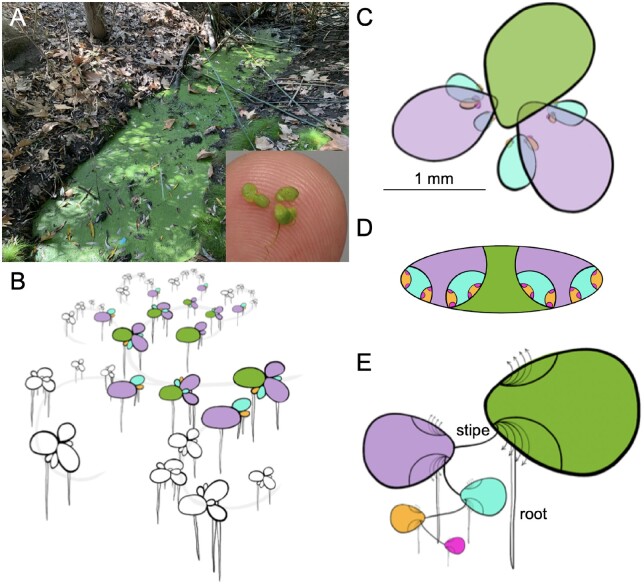
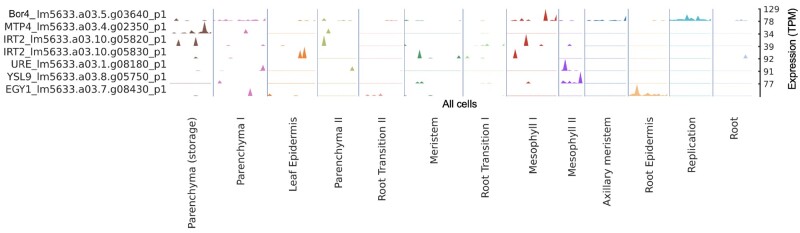
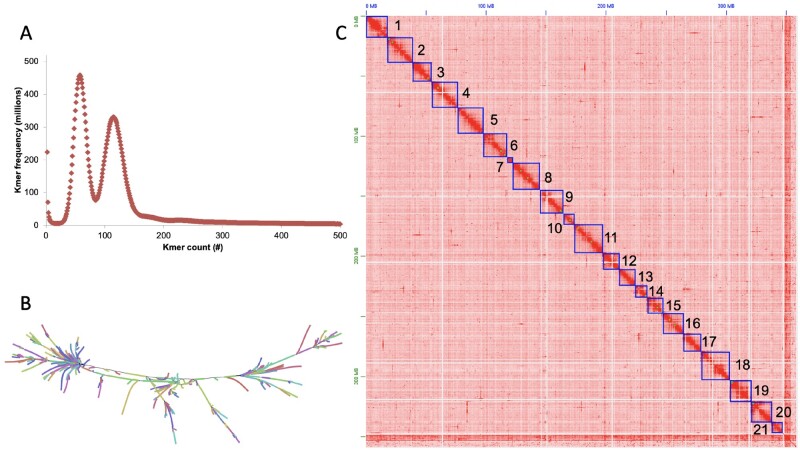
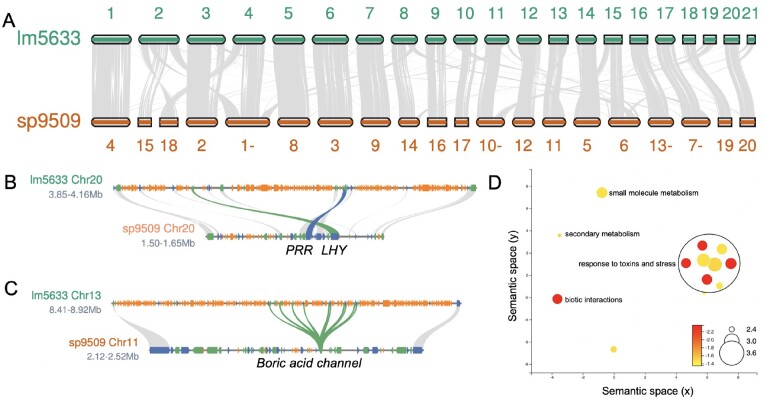
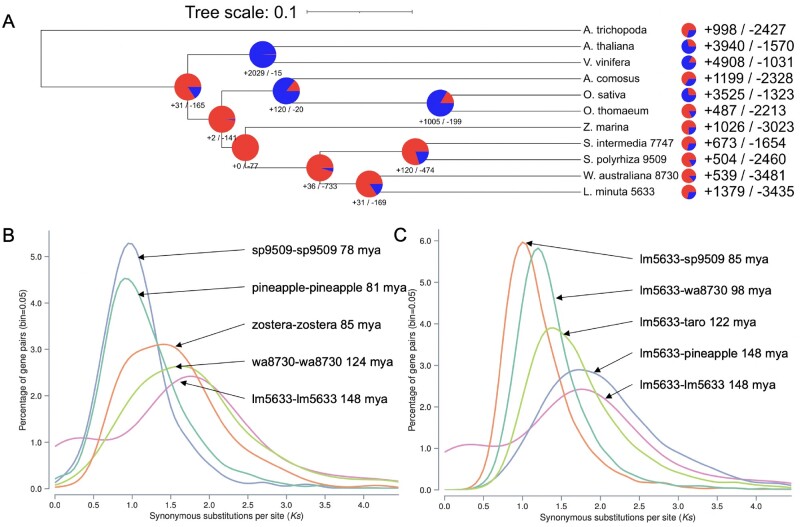
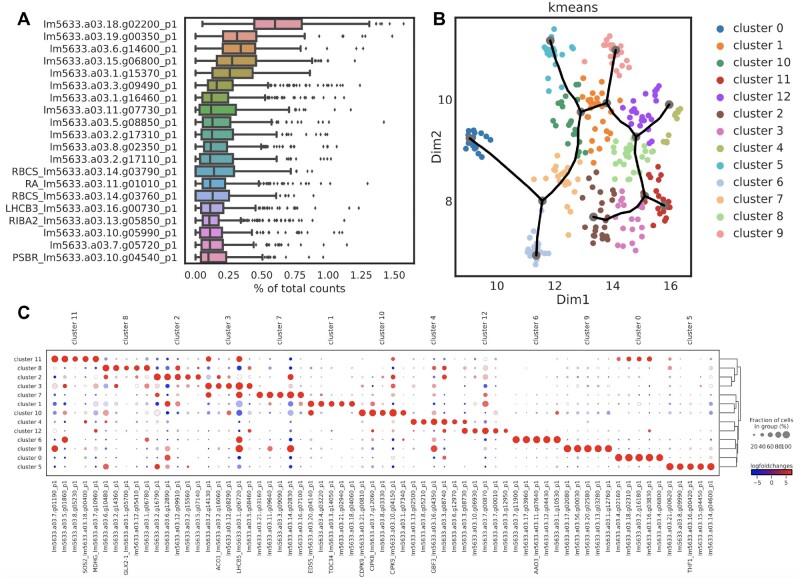
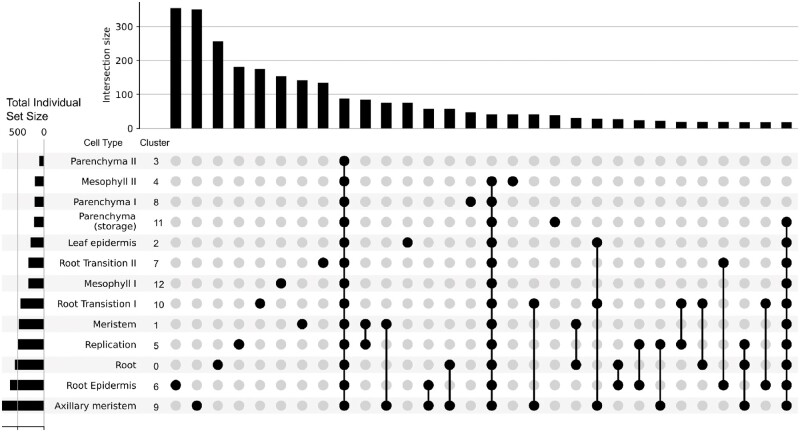
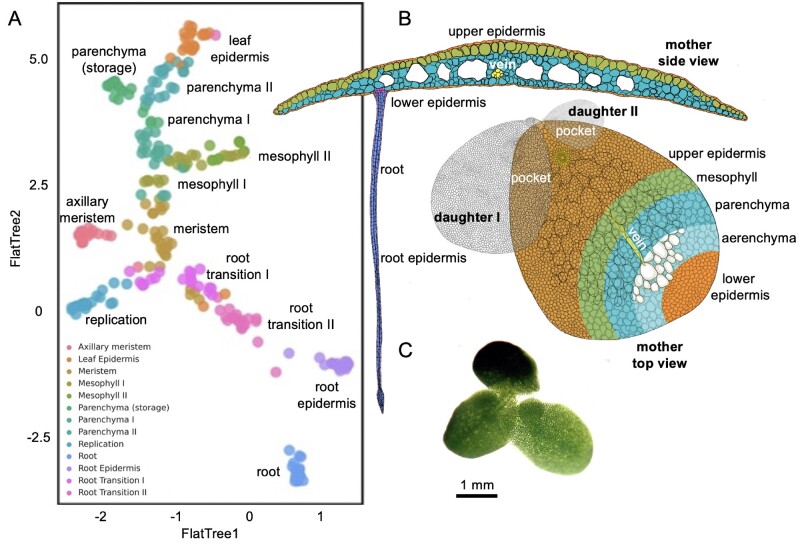
The ability to trace every cell in some model organisms has led to the fundamental understanding of development and cellular function. However, in plants the complexity of cell number, organ size, and developmental time makes this a challenge even in the diminutive model plant Arabidopsis (Arabidopsis thaliana). Duckweed, basal nongrass aquatic monocots, provide an opportunity to follow every cell of an entire plant due to their small size, reduced body plan, and fast clonal growth habit. Here we present a chromosome-resolved genome for the highly invasive Lesser Duckweed (Lemna minuta) and generate a preliminary cell atlas leveraging low cell coverage single-nuclei sequencing. We resolved the 360 megabase genome into 21 chromosomes, revealing a core nonredundant gene set with only the ancient tau whole-genome duplication shared with all monocots, and paralog expansion as a result of tandem duplications related to phytoremediation. Leveraging SMARTseq2 single-nuclei sequencing, which provided higher gene coverage yet lower cell count, we profiled 269 nuclei covering 36.9% (8,457) of the L. minuta transcriptome. Since molecular validation was not possible in this nonmodel plant, we leveraged gene orthology with model organism single-cell expression datasets, gene ontology, and cell trajectory analysis to define putative cell types. We found that the tissue that we computationally defined as mesophyll expressed high levels of elemental transport genes consistent with this tissue playing a role in L. minuta wastewater detoxification. The L. minuta genome and preliminary cell map provide a paradigm to decipher developmental genes and pathways for an entire plant.
追踪某些模式生物中的每个细胞的能力使我们对发育和细胞功能有了基本的了解。然而,在植物中,细胞数量、器官大小和发育时间的复杂性使得即使在微小的模式植物拟南芥(Arabidopsis thaliana)中也难以实现这一目标。浮萍,基底非禾本科水生单子叶植物,由于其体型小、身体结构简单和快速的无性繁殖生长习性,为我们提供了一个追踪整个植物中每个细胞的机会。在这里,我们为高度入侵性的小浮萍(Lemna minuta)提供了一个染色体分辨率的基因组,并利用低细胞覆盖率的单核测序生成了一个初步的细胞图谱。我们将 360 兆碱基的基因组解析为 21 条染色体,揭示了一个核心非冗余基因集,其中仅与所有单子叶植物共享古老的 tau 全基因组复制,以及由于与植物修复相关的串联重复而导致的基因重复扩张。利用 SMARTseq2 单核测序,该方法提供了更高的基因覆盖率和更低的细胞计数,我们对 269 个核进行了分析,覆盖了 L. minuta 转录组的 36.9%(8,457)。由于在这个非模式植物中不可能进行分子验证,我们利用与模式生物单细胞表达数据集、基因本体和细胞轨迹分析的基因同源性来定义假定的细胞类型。我们发现,我们在计算上定义为叶肉的组织表达高水平的元素转运基因,这与该组织在 L. minuta 废水解毒中发挥作用一致。L. minuta 基因组和初步的细胞图谱为解析整个植物的发育基因和途径提供了范例。