
一项针对挪威 GATA2 缺陷的全国性研究——大多数患者已接受 allo-HSCT。
A Nationwide Study of GATA2 Deficiency in Norway-the Majority of Patients Have Undergone Allo-HSCT.
机构信息
Section of Clinical Immunology and Infectious Diseases, Department of Rheumatology, Dermatology and Infectious Diseases, Oslo University Hospital, Rikshospitalet, Oslo, Norway.
Research Institute of Internal Medicine, Division of Surgery, Inflammatory Diseases and Transplantation, Oslo University Hospital, Rikshospitalet, Oslo, Norway.
出版信息
J Clin Immunol. 2022 Feb;42(2):404-420. doi: 10.1007/s10875-021-01189-y. Epub 2021 Dec 10.
PURPOSE
GATA2 deficiency is a rare primary immunodeficiency that has become increasingly recognized due to improved molecular diagnostics and clinical awareness. The only cure for GATA2 deficiency is allogeneic hematopoietic stem cell transplantation (allo-HSCT). The inconsistency of genotype-phenotype correlations makes the decision regarding "who and when" to transplant challenging. Despite considerable morbidity and mortality, the reported proportion of patients with GATA2 deficiency that has undergone allo-HSCT is low (~ 35%). The purpose of this study was to explore if detailed clinical, genetic, and bone marrow characteristics could predict end-point outcome, i.e., death and allo-HSCT.
METHODS
All medical genetics departments in Norway were contacted to identify GATA2 deficient individuals. Clinical information, genetic variants, treatment, and outcome were subsequently retrieved from the patients' medical records.
RESULTS
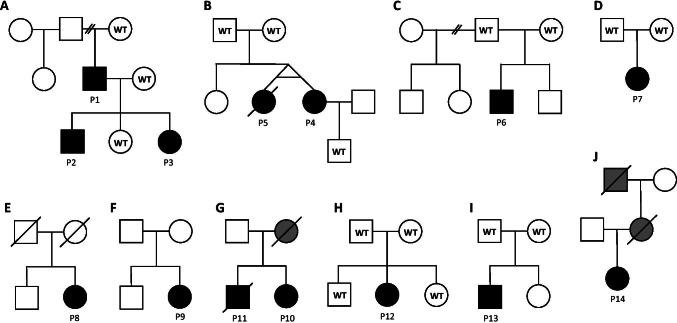
Between 2013 and 2020, we identified 10 index cases or probands, four additional symptomatic patients, and no asymptomatic patients with germline GATA2 variants. These patients had a diverse clinical phenotype dominated by cytopenia (13/14), myeloid neoplasia (10/14), warts (8/14), and hearing loss (7/14). No valid genotype-phenotype correlations were found in our data set, and the phenotypes varied also within families. We found that 11/14 patients (79%), with known GATA2 deficiency, had already undergone allo-HSCT. In addition, one patient is awaiting allo-HSCT. The indications to perform allo-HSCT were myeloid neoplasia, disseminated viral infection, severe obliterating bronchiolitis, and/or HPV-associated in situ carcinoma. Two patients died, 8 months and 7 years after allo-HSCT, respectively.
CONCLUSION
Our main conclusion is that the majority of patients with symptomatic GATA2 deficiency will need allo-HSCT, and a close surveillance of these patients is important to find the "optimal window" for allo-HSCT. We advocate a more offensive approach to allo-HSCT than previously described.
目的
GATA2 缺陷是一种罕见的原发性免疫缺陷病,由于分子诊断和临床意识的提高,其认识度不断提高。GATA2 缺陷的唯一治愈方法是同种异体造血干细胞移植(allo-HSCT)。由于基因型-表型相关性不一致,使得“谁和何时”进行移植的决策具有挑战性。尽管发病率和死亡率相当高,但报告的接受 allo-HSCT 的 GATA2 缺陷患者比例较低(约 35%)。本研究旨在探讨详细的临床、遗传和骨髓特征是否可以预测终点结局,即死亡和 allo-HSCT。
方法
联系挪威所有医学遗传学部门,以确定 GATA2 缺乏的个体。随后从患者的病历中检索临床信息、遗传变异、治疗和结局。
结果
在 2013 年至 2020 年期间,我们确定了 10 名索引病例或先证者、4 名额外的有症状患者和无无症状患者的种系 GATA2 变异。这些患者的临床表现多种多样,以血细胞减少症(13/14)、骨髓增生异常(10/14)、疣(8/14)和听力损失(7/14)为主。在我们的数据集中未发现有效的基因型-表型相关性,并且表型在家族内也存在差异。我们发现,14 名已知 GATA2 缺陷患者中有 11 名(79%)已经接受了 allo-HSCT。此外,还有 1 名患者正在等待 allo-HSCT。进行 allo-HSCT 的指征是骨髓增生异常、弥漫性病毒感染、严重闭塞性细支气管炎和/或 HPV 相关原位癌。两名患者分别在 allo-HSCT 后 8 个月和 7 年后死亡。
结论
我们的主要结论是,大多数有症状的 GATA2 缺陷患者将需要 allo-HSCT,对这些患者进行密切监测对于找到 allo-HSCT 的“最佳窗口”非常重要。我们主张采取比以前描述的更具攻击性的 allo-HSCT 方法。
 Zotero 插件