Orthodontic Office, Belruptstrasse, Bregenz, Austria.
Department of Orthodontics, Universitat International de Catalunya (UIC), Barcelona, Spain.
Head Face Med. 2021 Dec 11;17(1):50. doi: 10.1186/s13005-021-00301-2.
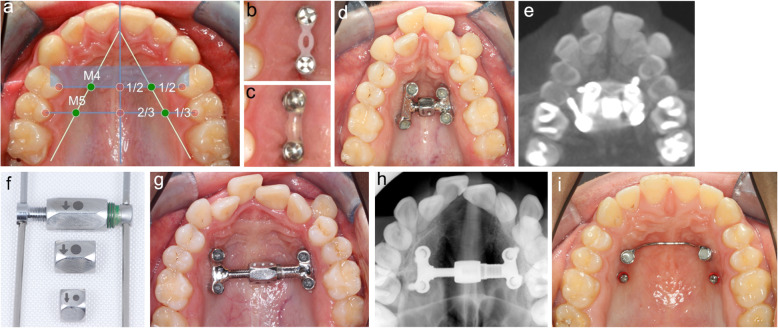
Bone-borne miniscrew assisted palatal expansion (MAPE) is a common technique to improve maxillary transverse deficiency in young adolescents. Adult patients usually present a challenge, as they often require additional surgical assisted maxillary expansion (SARPE). There is still no clear statement about non-surgical expansion in adult patients using this technique. The aim of this study was to evaluate the success and complication rate of non-surgical palatal expansion in adults utilizing MAPE with a novel force-controlled polycyclic expansion protocol (FCPC).
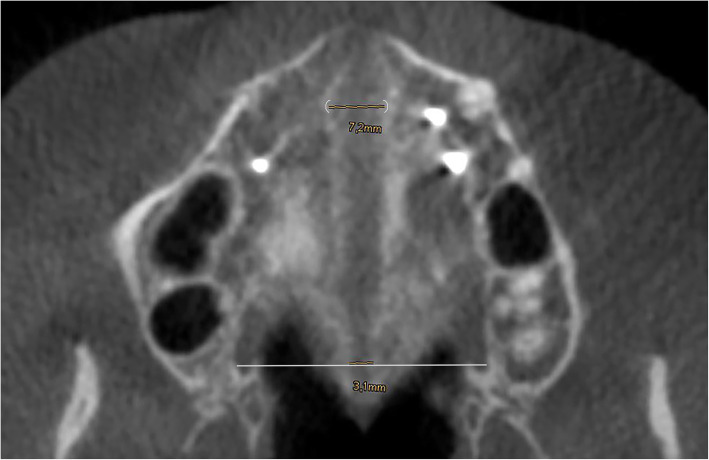
This consecutive study consisted of 33 adult patients with an average age of 29.1 ± 10.2 years (min. 18 years, max. 58 years), including one dropout patient. First, four miniscrews were inserted and after 12-weeks latency, the expander was placed and the FCPC protocol was applied (MAPE group). In case of missing expansion, a SARPE was performed (SARPE group). After maximum expansion, a cone beam CT was made and widening of the midpalatal suture was measured. The outcome variables were successful non-surgical expansion and, with sample size power above 80%, the odds of failed non-surgical expansion and associated complications were evaluated. The primary predictor variable was age. Statistical analysis was performed using R (Version 3.1) to calculate power, to construct various models for measuring the odds of requiring surgical intervention/complications, and others.
Successful non-surgical expansion was achieved in 27 patients (84.4%), ranging from 18 to 49 years. Mean age differed significantly between both groups (26.8 ± 8.2 years vs. 41.3 ± 9.9 years; p < 0.001). Mean expansion at the anterior and posterior palate for the MAPE group was 5.4 ± 1.5 mm and 2.5 ± 1.1 mm, respectively. Among these subjects' complications were observed in 18.5%. Age significantly increased the odds of complications (p = 0.019).
Consecutive cohort study, Review Board No. EK-2-2014/0016.
骨内微型螺钉辅助腭扩张(MAPE)是一种常见的技术,用于改善年轻青少年的上颌横向不足。成年患者通常具有挑战性,因为他们通常需要额外的手术辅助上颌扩张(SARPE)。目前尚不清楚使用该技术在成年患者中进行非手术扩张的效果。本研究的目的是评估使用新型力控制多环扩张方案(FCPC)的 MAPE 技术对成人进行非手术腭扩张的成功率和并发症发生率。
这是一项连续研究,共纳入 33 名平均年龄 29.1±10.2 岁(最小 18 岁,最大 58 岁)的成年患者,其中 1 名患者失访。首先,插入四颗微型螺钉,12 周潜伏期后,放置扩张器并应用 FCPC 方案(MAPE 组)。如果扩张不足,则进行 SARPE(SARPE 组)。最大扩张后,进行锥形束 CT 检查,并测量中隔腭缝的宽度。主要观察指标为非手术扩张的成功率,并且根据样本量计算出成功率大于 80%的情况下,非手术扩张失败和相关并发症的可能性。主要预测变量为年龄。使用 R(版本 3.1)进行统计分析,以计算成功率,构建各种模型以测量需要手术干预/并发症的可能性,以及其他模型。
27 名(84.4%)患者达到了非手术扩张成功,年龄为 18 至 49 岁。两组间的平均年龄差异具有统计学意义(26.8±8.2 岁比 41.3±9.9 岁;p<0.001)。MAPE 组在前腭和后腭的平均扩张量分别为 5.4±1.5mm 和 2.5±1.1mm。这些患者中,并发症发生率为 18.5%。年龄显著增加了并发症的可能性(p=0.019)。
连续队列研究,伦理委员会编号 EK-2-2014/0016。