Phyto-Technologies and Plant Invasion Lab, Department of Environmental Science, School of Earth Sciences and Natural Resources Management, Mizoram University, Aizawl, Mizoram, India.
Aarhus University, Department of Bioscience, Arctic Research Centre (ARC), Frederiksborgvej 399, PO Box 358, DK-4000 Roskilde, Denmark.
J Hazard Mater. 2022 Apr 5;427:127903. doi: 10.1016/j.jhazmat.2021.127903. Epub 2021 Nov 27.
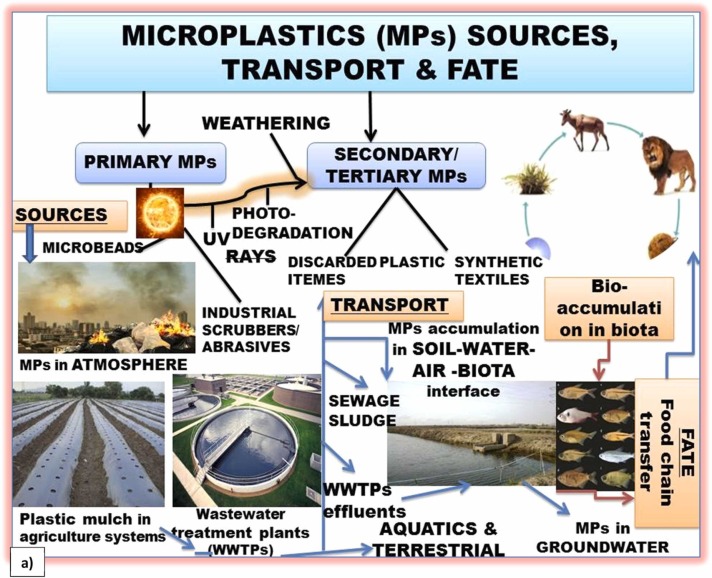
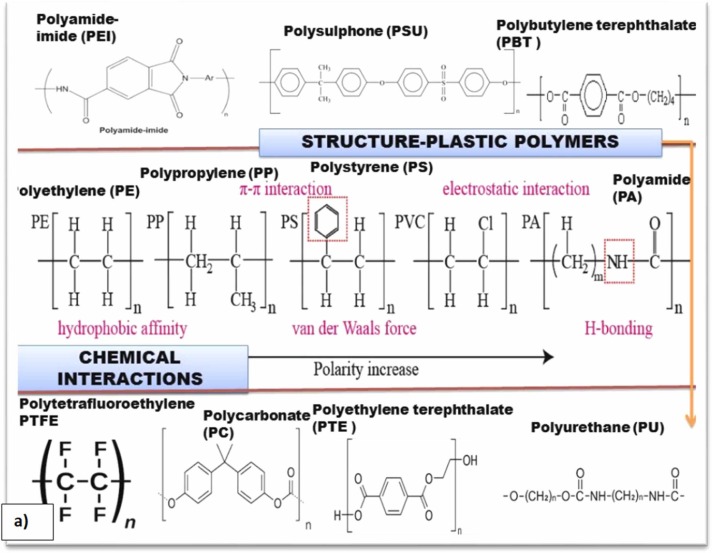
Increases in plastic-related pollution and their weathering can be a serious threat to environmental sustainability and human health, especially during the present COVID-19 (SARS-CoV-2 coronavirus) pandemic. Planetary risks of plastic waste disposed from diverse sources are exacerbated by the weathering-driven alterations in their physical-chemical attributes and presence of hazardous pollutants mediated through adsorption. Besides, plastic polymers act as vectors of toxic chemical contaminants and pathogenic microbes through sorption onto the 'plastisphere' (i.e., plastic-microbe/biofilm-environment interface). In this review, the effects of weathering-driven alterations on the plastisphere are addressed in relation to the fate/cycling of environmental contaminants along with the sorption/desorption dynamics of micro-/nano-scale plastic (MPs/NPs) polymers for emerging contaminants (e.g., endocrine-disrupting chemicals (EDCs), polycyclic aromatic hydrocarbons (PAHs), polychlorinated biphenyls (PCBs), pharmaceuticals and personal care products (PPCPs), and certain heavy metals). The weathering processes, pathways, and mechanisms governing the adsorption of specific environmental pollutants on MPs/NPs surface are thus evaluated in relation to the physicochemical alterations based on several kinetic and isotherm studies. Consequently, the detailed evaluation on the role of the complex associations between weathering and physicochemical properties of plastics should help us gain a better knowledge with respect to the transport, behavior, fate, and toxicological chemistry of plastics along with the proper tactics for their sustainable remediation.
塑料相关污染的增加及其风化可能对环境可持续性和人类健康构成严重威胁,尤其是在当前 COVID-19(SARS-CoV-2 冠状病毒)大流行期间。各种来源产生的塑料废物的行星风险因风化引起的物理化学特性的改变以及通过吸附介导的危险污染物的存在而加剧。此外,塑料聚合物通过吸附到“塑料球层”(即塑料-微生物/生物膜-环境界面)而成为有毒化学污染物和致病微生物的载体。在这篇综述中,我们讨论了风化驱动的变化对塑料球层的影响,以及与环境污染物的命运/循环有关的问题,同时还讨论了微/纳米级塑料 (MPs/NPs) 聚合物对新兴污染物(例如,内分泌干扰化学品 (EDCs)、多环芳烃 (PAHs)、多氯联苯 (PCBs)、药品和个人护理产品 (PPCPs) 以及某些重金属)的吸附/解吸动力学。因此,根据几种动力学和等温线研究,我们评估了控制特定环境污染物在 MPs/NPs 表面吸附的风化过程、途径和机制,以与物理化学变化有关。因此,详细评估风化和塑料物理化学特性之间复杂关联的作用,应该有助于我们更好地了解塑料的迁移、行为、命运和毒理学化学,以及采取适当的策略来实现其可持续修复。