Plastic Surgery Department, Affiliated Hospital of Xuzhou Medical University, Xuzhou City, Jiangsu Province, China.
Plastic Surgery Department, Affiliated Hospital of Xuzhou Medical University, Huaihai Xi Lu, Quanshan District, Xuzhou, Jiangsu Province, China.
Bioengineered. 2022 Jan;13(1):27-37. doi: 10.1080/21655979.2021.1997077.
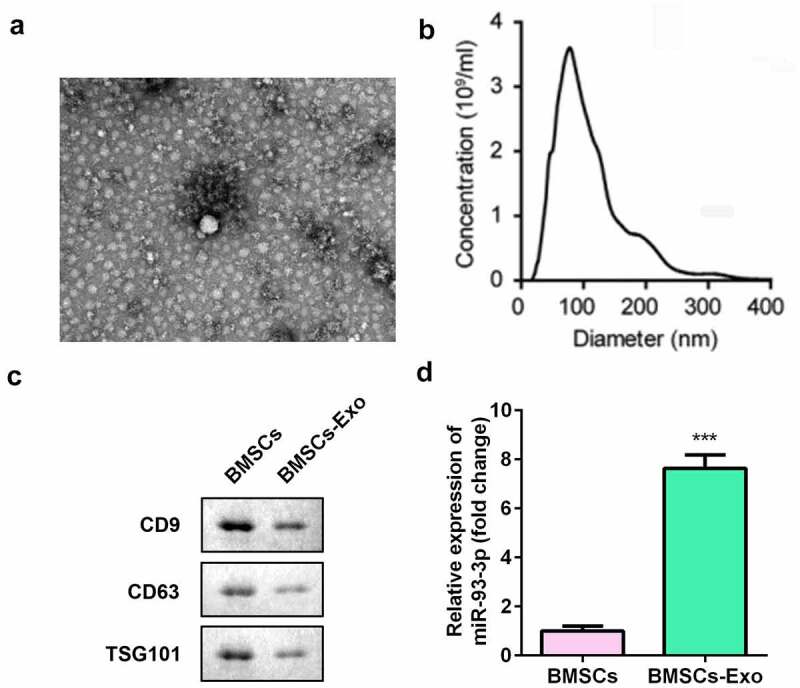
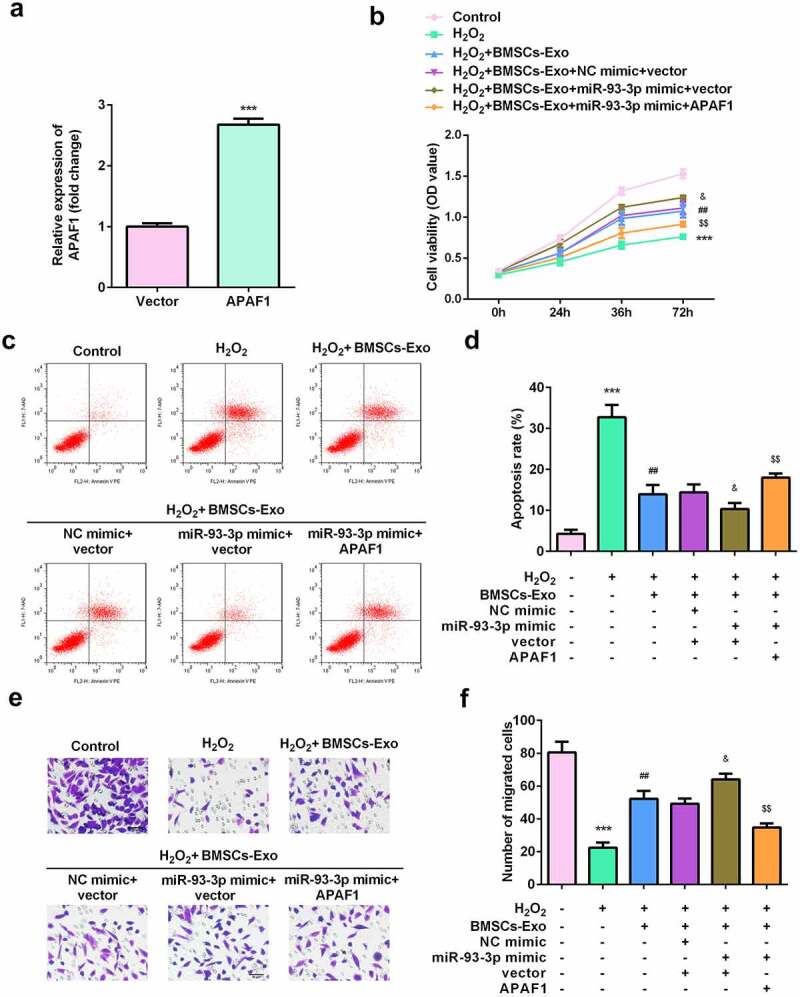
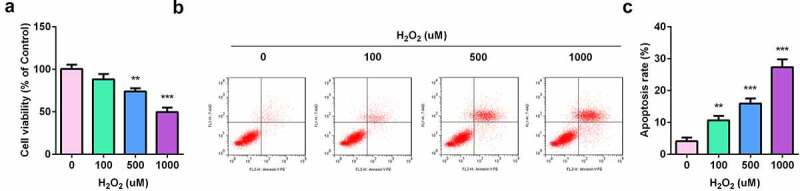
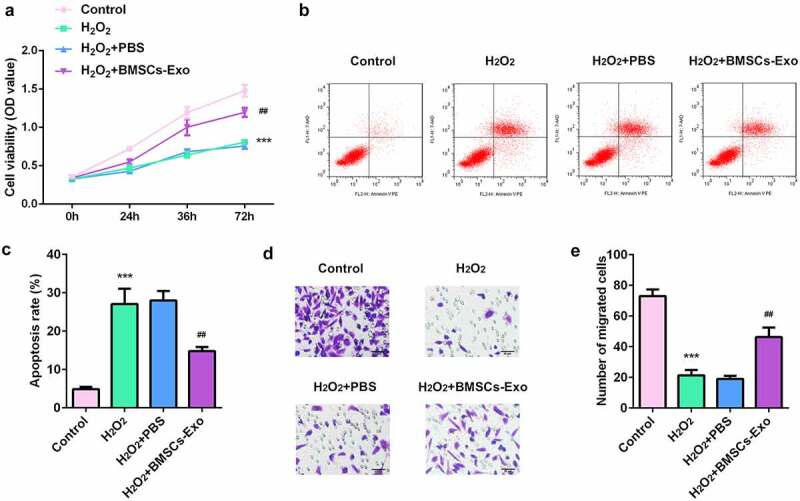
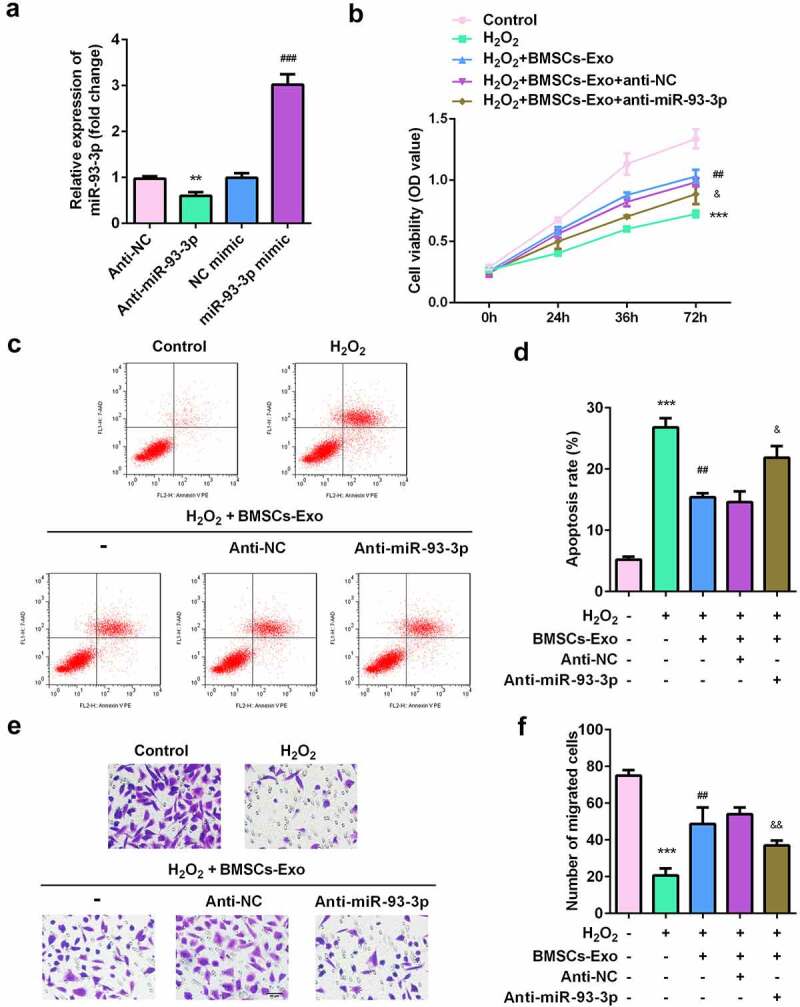
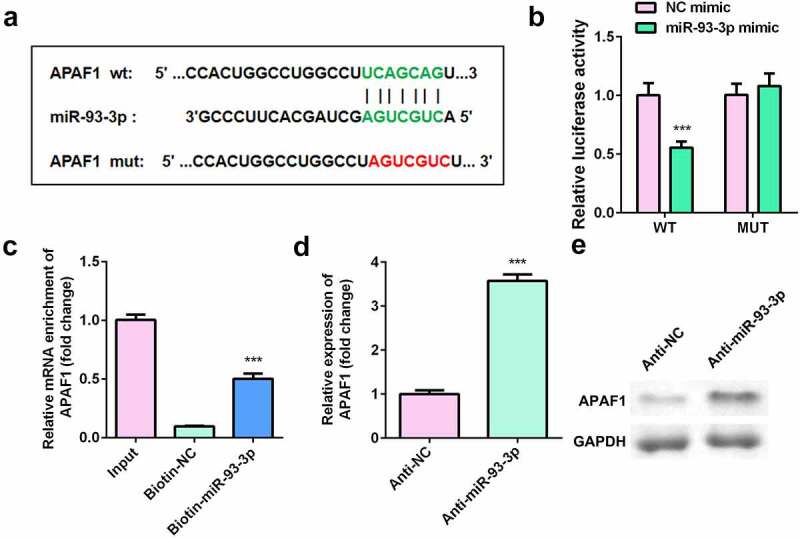
Wounds are soft tissue injuries, which are difficult to heal and can easily lead to other skin diseases. Bone marrow mesenchymal stem cells (BMSCs) and the secreted exosomes play a key role in skin wound healing. This study aims to clarify the effects and mechanisms of exosomes derived from BMSCs in wound healing. Exosomes were extracted from the supernatant of the BMSCs. The expression of the micro-RNA miR-93-3p was determined by qRT-PCR analysis. HaCaT cells were exposed to hydrogen peroxide (HO) to establish a skin lesion model. MTT, flow cytometry, and transwell assays were conducted to determine cellular functions. The binding relationship between miR-93-3p and apoptotic peptidase activating factor 1 (APAF1) was measured using a dual luciferase reporter gene assay. The results showed that BMSC-derived exosomes or BMSC-exos promoted proliferation and migration and suppressed apoptosis in HaCaT cells damaged by HO. However, the depletion of miR-93-3p in BMSC-exos antagonized the effects of BMSC-exos on HaCaT cells. In addition, APAF1 was identified as a target of miR-93-3p. Overexpression of APAF1 induced the dysfunction of HaCaT cells. Collectively, the results indicate that BMSC-derived exosomes promote skin wound healing via the miR-93-3p/APAF1 axis. This finding may help establish a new therapeutic strategy for skin wound healing.
伤口是软组织损伤,难以愈合,容易引发其他皮肤疾病。骨髓间充质干细胞(BMSCs)及其分泌的外泌体在皮肤伤口愈合中起着关键作用。本研究旨在阐明 BMSC 来源的外泌体在伤口愈合中的作用和机制。从 BMSCs 的上清液中提取外泌体。通过 qRT-PCR 分析确定 micro-RNA miR-93-3p 的表达。用过氧化氢(HO)处理 HaCaT 细胞建立皮肤损伤模型。通过 MTT、流式细胞术和 Transwell 测定法测定细胞功能。通过双荧光素酶报告基因测定法测定 miR-93-3p 与凋亡蛋白酶激活因子 1(APAF1)之间的结合关系。结果表明,BMSC 来源的外泌体或 BMSC-exos 促进了 HO 损伤的 HaCaT 细胞的增殖和迁移,并抑制了其凋亡。然而,BMSC-exos 中 miR-93-3p 的耗竭拮抗了 BMSC-exos 对 HaCaT 细胞的作用。此外,APAF1 被鉴定为 miR-93-3p 的靶标。APAF1 的过表达诱导了 HaCaT 细胞的功能障碍。总之,这些结果表明 BMSC 来源的外泌体通过 miR-93-3p/APAF1 轴促进皮肤伤口愈合。这一发现可能有助于为皮肤伤口愈合建立新的治疗策略。