Department of Otorhinolaryngology-Head and Neck Surgery, International Thyroid Surgery Center, Kaohsiung Medical University Hospital, Kaohsiung Medical University, Kaohsiung, Taiwan.
Department of Otolaryngology-Head and Neck Surgery, Kaohsiung Municipal Siaogang Hospital, Kaohsiung Medical University, Kaohsiung, Taiwan.
Front Endocrinol (Lausanne). 2021 Nov 24;12:793431. doi: 10.3389/fendo.2021.793431. eCollection 2021.
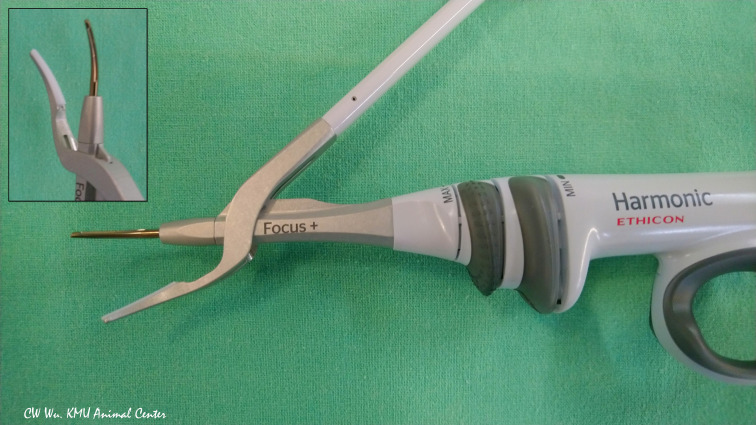
Technological advances in thyroid surgery have rapidly increased in recent decades. Specifically, recently developed energy-based devices (EBDs) enable simultaneous dissection and sealing tissue. EBDs have many advantages in thyroid surgery, such as reduced blood loss, lower rate of post-operative hypocalcemia, and shorter operation time. However, the rate of recurrent laryngeal nerve (RLN) injury during EBD use has shown statistically inconsistent. EBDs generate high temperature that can cause iatrogenic thermal injury to the RLN by direct or indirect thermal spread. This article reviews relevant medical literatures of conventional electrocauteries and different mechanisms of current EBDs, and compares two safety parameters: safe distance and cooling time. In general, conventional electrocautery generates higher temperature and wider thermal spread range, but when applying EBDs near the RLN adequate activation distance and cooling time are still required to avoid inadvertent thermal injury. To improve voice outcomes in the quality-of-life era, surgeons should observe safety parameters and follow the standard procedures when using EBDs near the RLN in thyroid surgery.
近几十年来,甲状腺手术中的技术进步迅速增加。具体来说,最近开发的能量型设备 (EBD) 能够同时进行解剖和密封组织。EBD 在甲状腺手术中有许多优点,例如减少出血量、降低术后低钙血症的发生率和缩短手术时间。然而,在 EBD 使用过程中喉返神经 (RLN) 损伤的发生率显示出统计学上的不一致。EBD 会产生高温,通过直接或间接的热传递对 RLN 造成医源性热损伤。本文回顾了传统电烙术和当前 EBD 不同机制的相关医学文献,并比较了两个安全参数:安全距离和冷却时间。一般来说,传统电烙术产生的温度更高,热传递范围更广,但在 RLN 附近应用 EBD 时,仍需要足够的激活距离和冷却时间,以避免意外的热损伤。为了在生活质量时代改善嗓音结果,外科医生在甲状腺手术中 RLN 附近使用 EBD 时应观察安全参数并遵循标准程序。