Cohen Philip R
Dermatology, University of California, Davis Medical Center, Sacramento, USA.
Cureus. 2021 Nov 6;13(11):e19312. doi: 10.7759/cureus.19312. eCollection 2021 Nov.
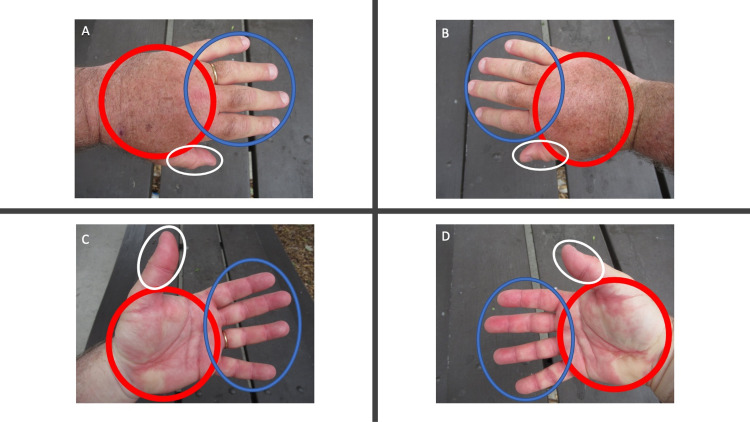
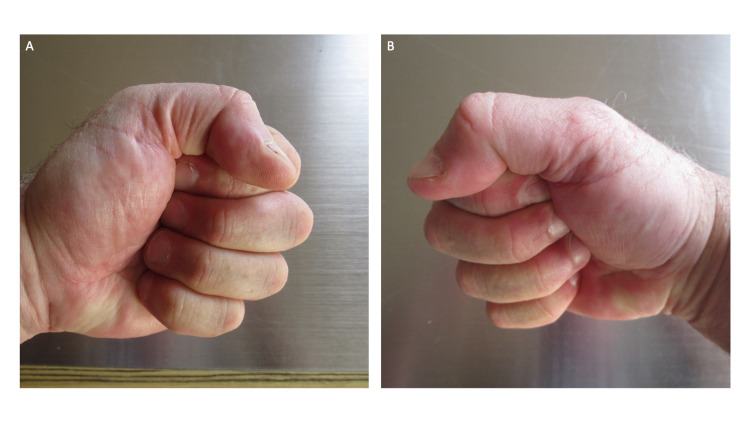
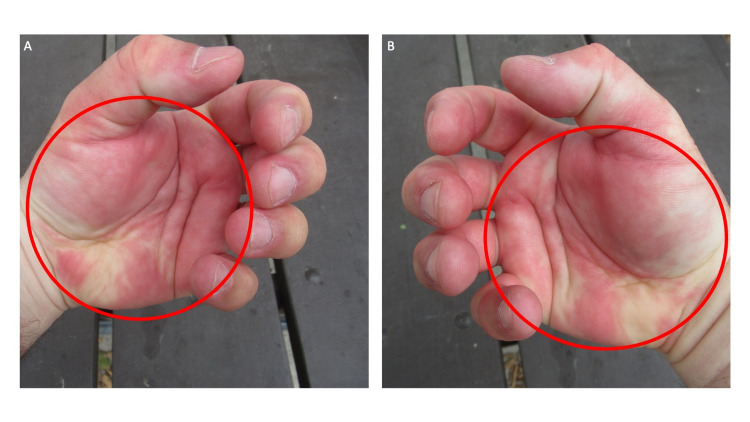
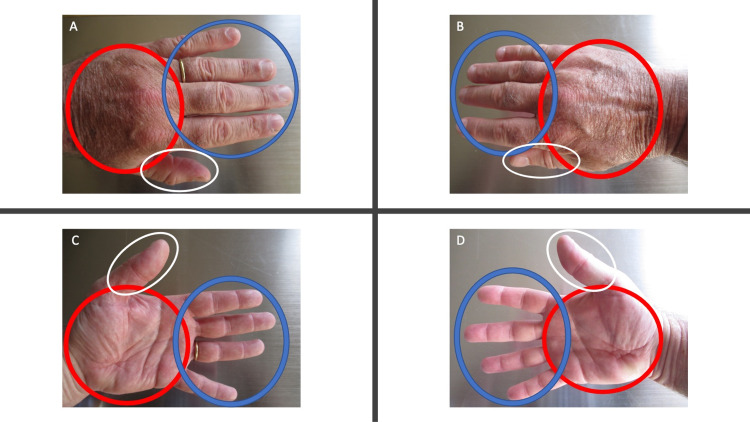
Post ambulatory swollen hands (POTASH) is a rarely described etiology for hand swelling; to the best of my knowledge, it has only been reported in the medical literature a decade ago in a prospective study evaluating its development in walkers who were either dog owners (who walked or did not walk their dogs) in comparison to non-dog owners. In addition to swelling after initiating ambulation by participating in an activity such as hiking, running, or walking, there are also several other causes of swollen hands; a positive fist sign has only been described in a limited number of conditions observed in individuals with hand swelling. A fist is created when there is clenching of the fingers and the fingertips are in direct contact with the palm of the hand with the thumb lying on top of the fingers between the proximal and distal interphalangeal joints. A positive fist sign is demonstrated by the inability to clench the fingers tightly into a fist; indeed, it is a common--yet not frequently reported--manifestation observed in individuals with a swollen hand. In contrast, a negative fist sign occurs when the patient can form a fist of tightly clenched fingers. The author, a 62-year-old physician and long-distance runner since high school, developed recurrent episodes of POTASH beginning five years ago. He noticed asymptomatic, bilateral, and symmetric swelling of his dorsal and palmar hands--with a positive fist sign--beginning after approximately one hour of running; the degree of swelling was proportional to the duration of time he ran. His hand swelling would completely resolve spontaneously--and his fist sign would be negative--within two hours after he stopped running. Recommendations for hikers and walkers to potentially eliminate or limit the degree of POTASH have been suggested; for dog owners who walked their dog, POTASH was less likely to occur if they regularly walked the dog. Several etiologies for POTASH have been proposed; however, the definitive pathogenesis for hand swelling related to either hiking, running, or walking remains to be determined. Therefore, research to gain additional insight and possibly establish the cause of ambulatory-associated swollen hands is warranted.
运动后手部肿胀(POTASH)是一种鲜有描述的手部肿胀病因;据我所知,仅在十年前的一篇医学文献中有过报道,该前瞻性研究评估了养狗者(无论是否遛狗)与非养狗者在步行过程中手部肿胀情况。除了在参与徒步、跑步或散步等活动开始行走后出现肿胀外,手部肿胀还有其他多种原因;握拳征阳性仅在少数手部肿胀患者所观察到的病症中有所描述。当手指紧握,指尖直接接触手掌,拇指位于近端和远端指间关节之间的手指上方时,就形成了一个拳头。握拳征阳性表现为无法将手指紧紧握成一个拳头;实际上,这是手部肿胀患者中常见但并不常被报道的一种表现。相比之下,当患者能够将手指紧紧握成一个拳头时,则出现握拳征阴性。本文作者是一位62岁的医生,从高中起就是一名长跑运动员,自五年前开始出现复发性POTASH发作。他注意到,在跑步约一小时后,双手背侧和掌侧出现无症状、双侧对称的肿胀,且握拳征阳性;肿胀程度与跑步时间长短成正比。停止跑步两小时内,他手部的肿胀会自行完全消退,握拳征也会转为阴性。已针对徒步者和步行者提出了一些可能消除或减轻POTASH程度的建议;对于遛狗的养狗者而言,如果他们经常遛狗,POTASH发生的可能性较小。关于POTASH的病因已提出了多种;然而,与徒步、跑步或步行相关的手部肿胀的确切发病机制仍有待确定。因此,有必要进行研究以获得更多见解,并有可能确定运动相关手部肿胀的确切病因。