Yang Lei, Jin Juan, Fan Dingyu, Hao Qing, Niu Jianxin
Department of Horticulture, College of Agriculture, Shihezi University, Shihezi, 832003 Xinjiang, China.
Xinjiang Production and Construction Corps Key Laboratory of Special Fruits and Vegetables Cultivation Physiology and Germplasm Resources Utilization, Shihezi, 832003 Xinjiang, China.
Int J Genomics. 2021 Dec 2;2021:3442277. doi: 10.1155/2021/3442277. eCollection 2021.
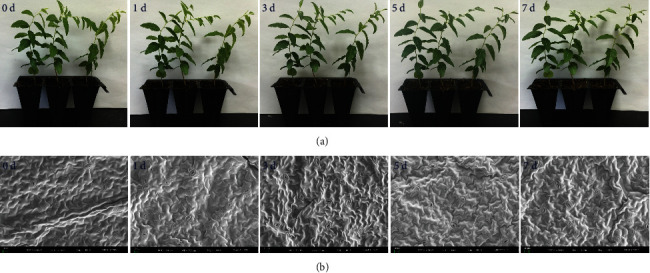
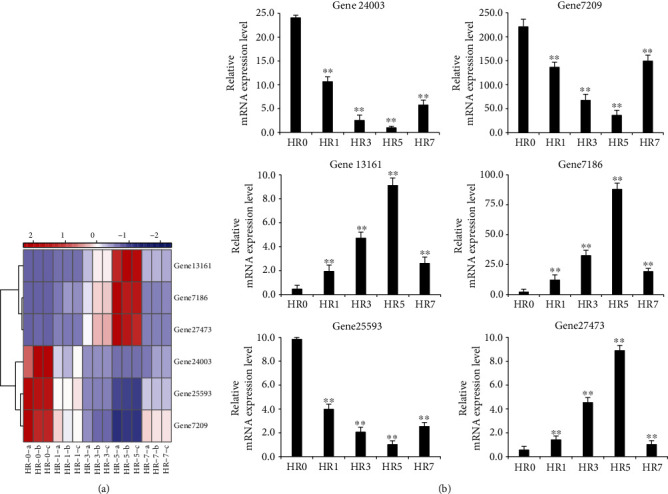
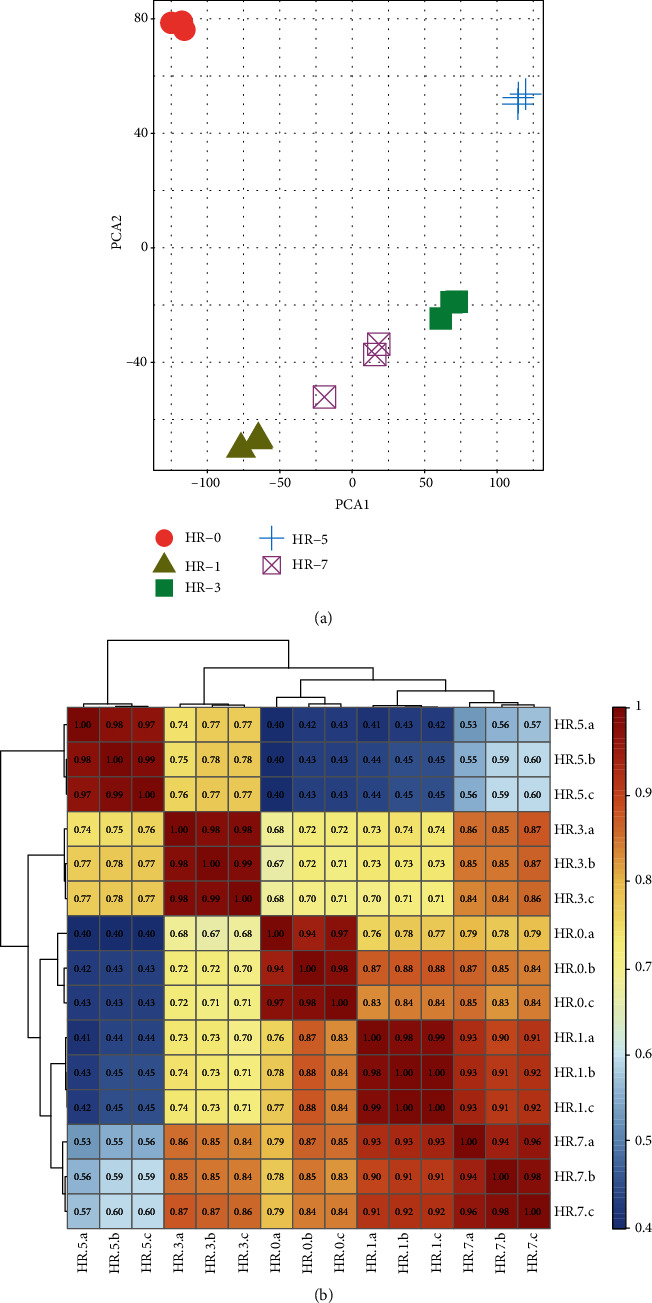
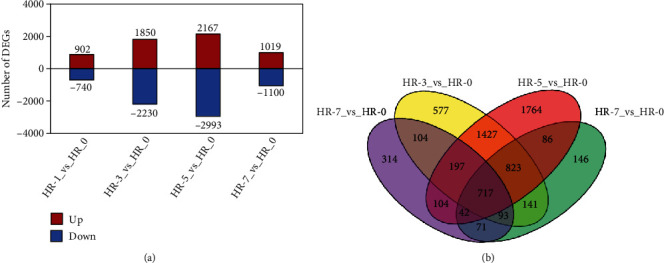
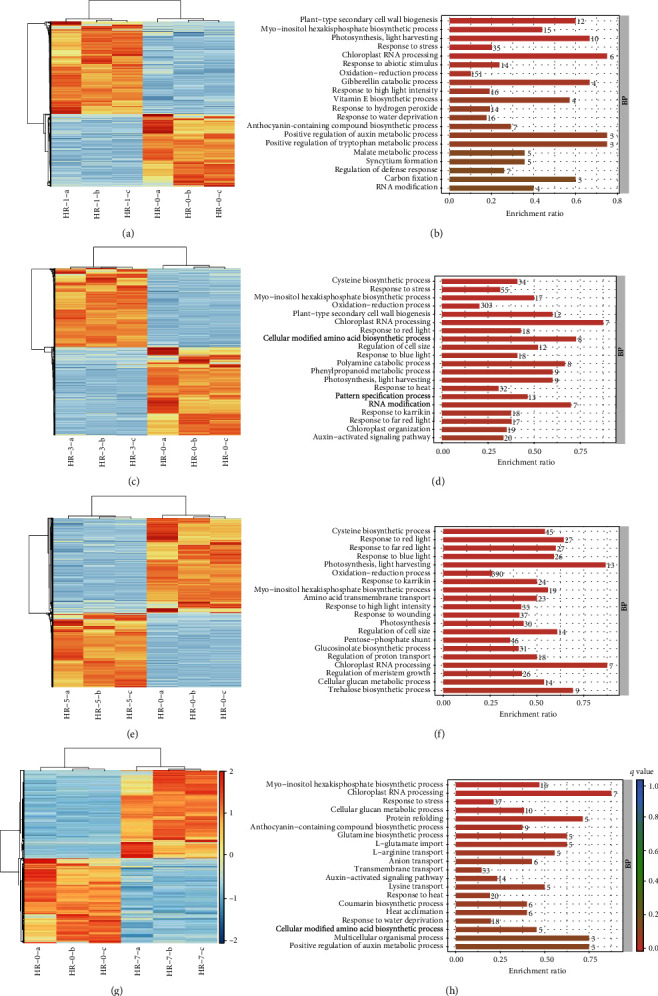
Heat stress (HS) is a common stress influencing the growth and reproduction of plant species. Jujube ( Mill.) is an economically important tree with strong abiotic stress resistance, but the molecular mechanism of its response to HS remains elusive. In this study, we subjected seedlings of cultivar "Hqing1-HR" to HS (45°C) for 0, 1, 3, 5, and 7 days, respectively, and collected the leaf samples (HR0, HR1, HR3, HR5, and HR7) accordingly. Fifteen cDNA libraries from leaves were constructed for transcriptomics assays. RNA sequencing and transcriptomics identified 1,642, 4,080, 5,160, and 2,119 differentially expressed genes (DEGs) in comparisons of HR1 vs. HR0, HR3 vs. HR0, HR5 vs. HR0, and HR7 vs. HR0, respectively. Gene ontology analyses of the DEGs from these comparisons revealed enrichment in a series of biological processes involved in stress responses, photosynthesis, and metabolism, suggesting that lowering or upregulating expression of these genes might play important roles in the response to HS. This study contributed to our understanding of the molecular mechanism of jujube response to HS and will be beneficial for developing jujube cultivars with improved heat resistance.
热胁迫(HS)是影响植物物种生长和繁殖的常见胁迫。枣(Mill.)是一种具有重要经济价值且抗非生物胁迫能力强的树种,但其对热胁迫响应的分子机制仍不清楚。在本研究中,我们分别对枣品种“壶瓶枣-HR”的幼苗进行0、1、3、5和7天的热胁迫(45°C)处理,并相应地采集叶片样本(HR0、HR1、HR3、HR5和HR7)。构建了15个来自叶片的cDNA文库用于转录组学分析。RNA测序和转录组学分析分别在HR1与HR0、HR3与HR0、HR5与HR0以及HR7与HR0的比较中鉴定出1642、4080、5160和2119个差异表达基因(DEG)。对这些比较中的DEG进行基因本体分析,结果显示在一系列参与胁迫响应、光合作用和代谢的生物学过程中富集,这表明下调或上调这些基因的表达可能在对热胁迫的响应中发挥重要作用。本研究有助于我们理解枣对热胁迫响应的分子机制,并将有助于培育耐热性更强的枣品种。