Department of Clinical Molecular Biology, University of Oslo and Akershus University Hospital, Lørenskog, Norway.
Institute of Healthy Ageing, Department of Genetics, Evolution and Environment, University College London, London, UK.
Nat Aging. 2021 Aug;1(8):634-650. doi: 10.1038/s43587-021-00098-4. Epub 2021 Aug 12.
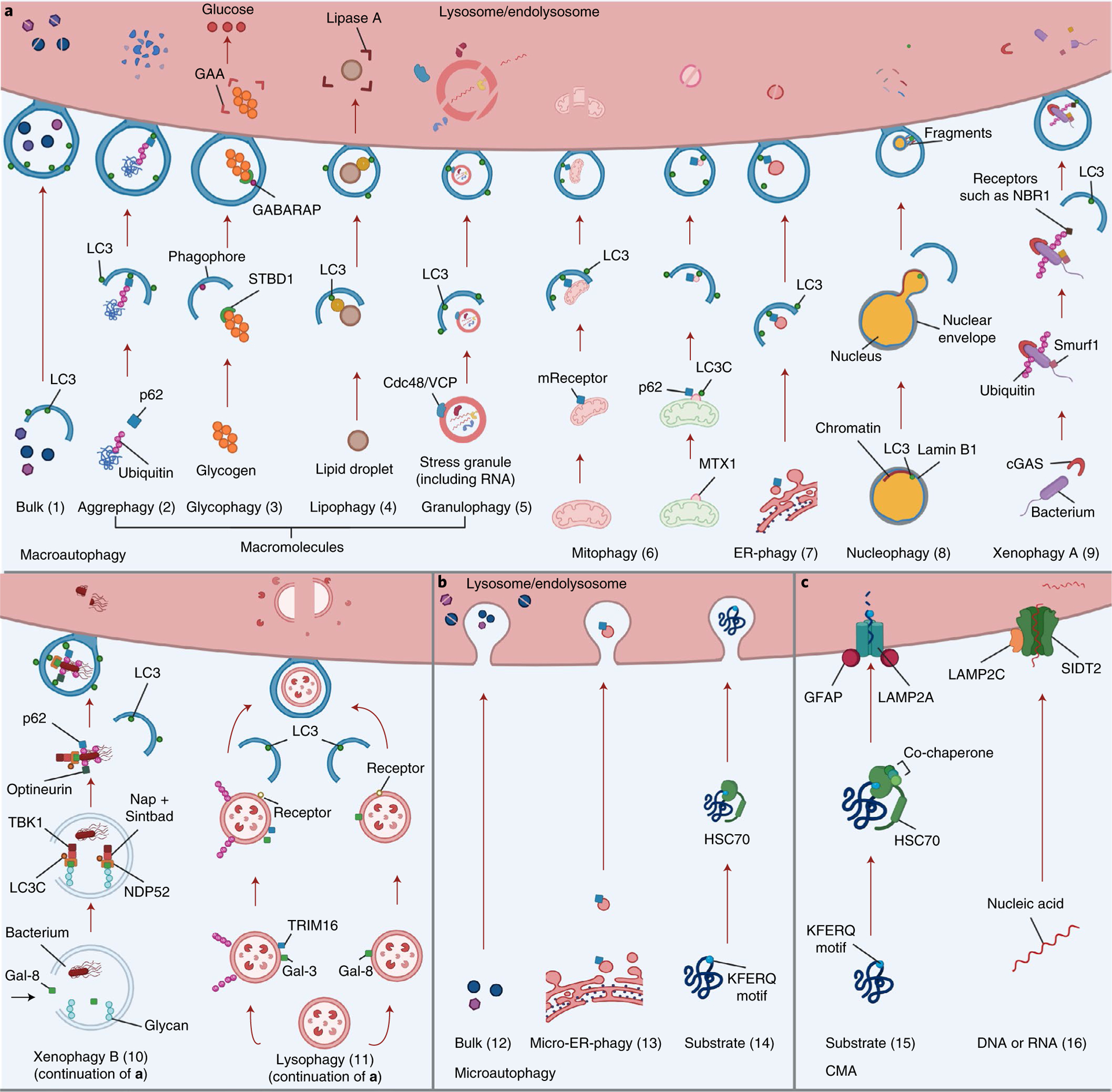
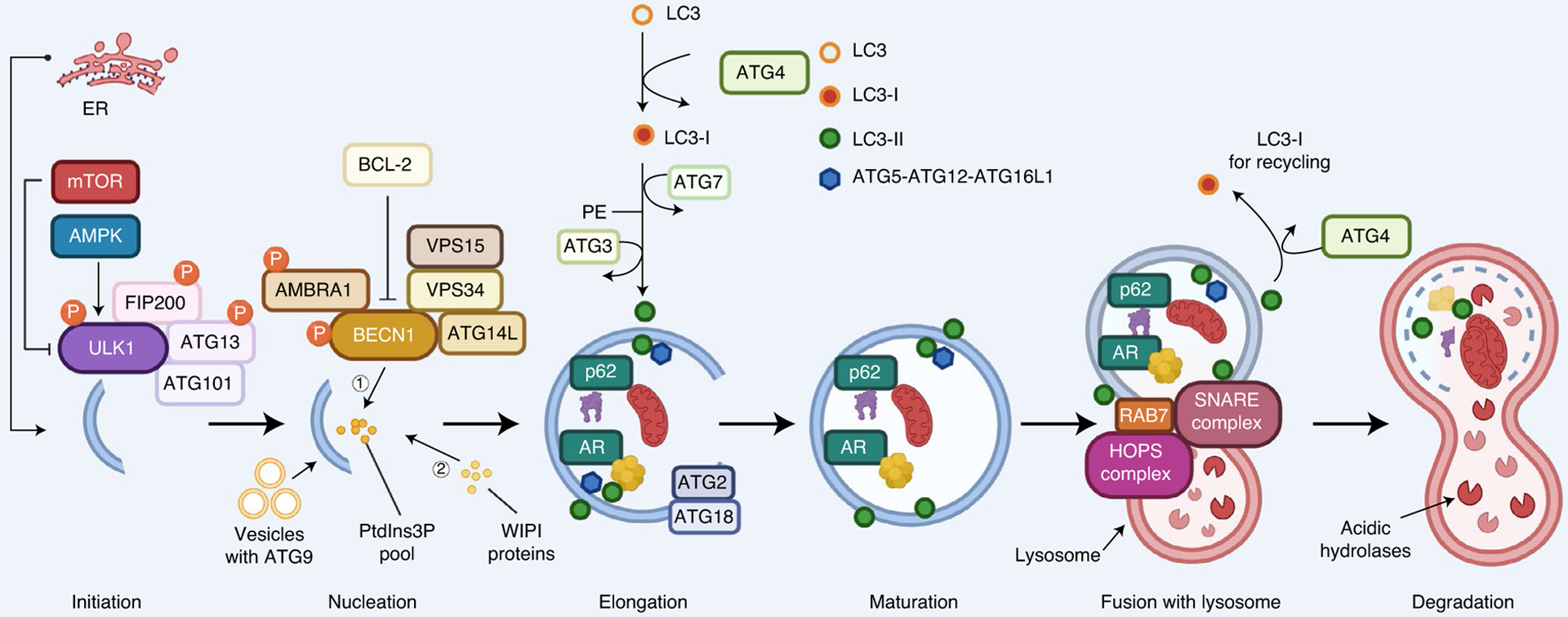
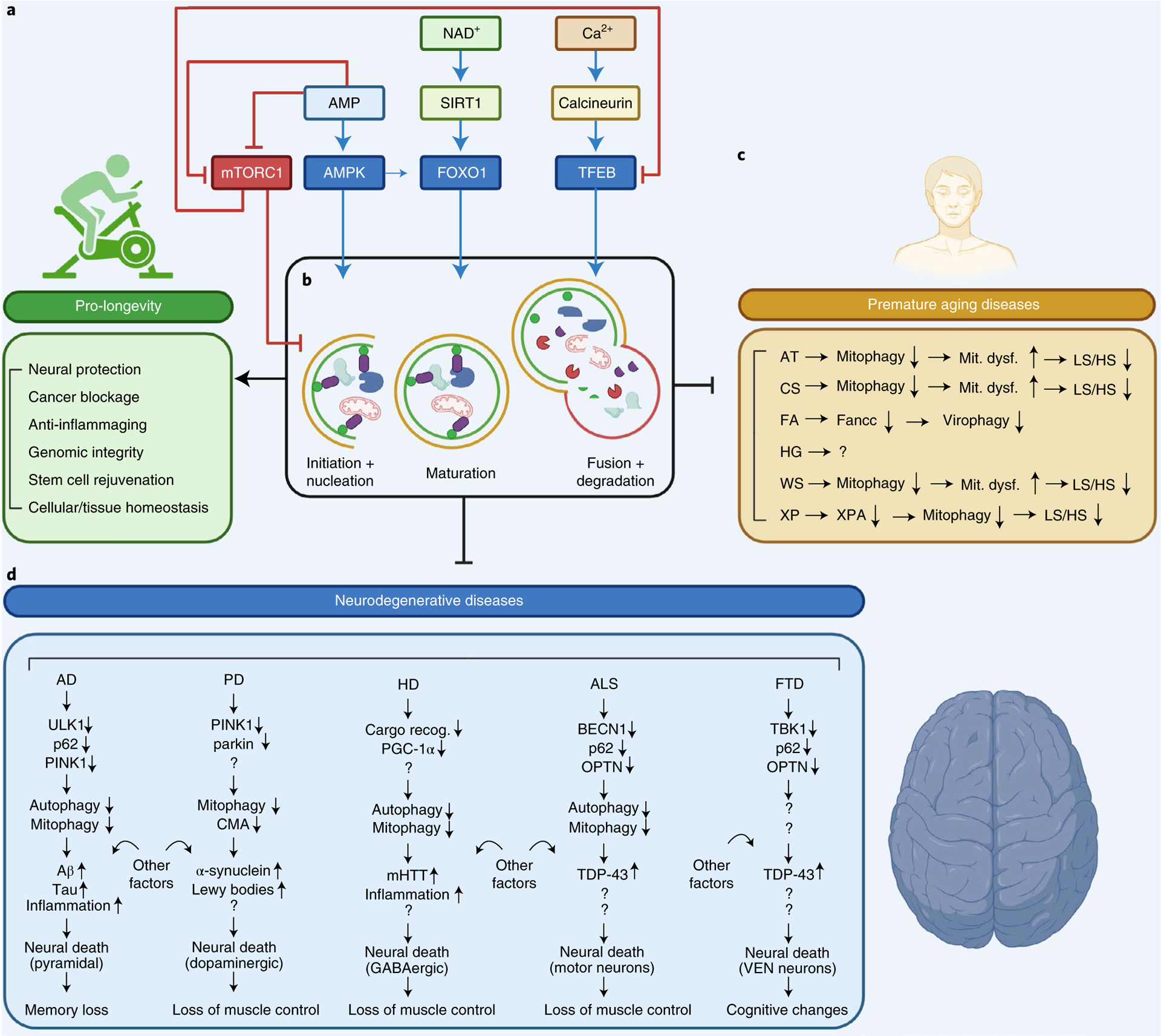
Autophagy is a fundamental cellular process that eliminates molecules and subcellular elements, including nucleic acids, proteins, lipids and organelles, via lysosome-mediated degradation to promote homeostasis, differentiation, development and survival. While autophagy is intimately linked to health, the intricate relationship among autophagy, aging and disease remains unclear. This Review examines several emerging features of autophagy and postulates how they may be linked to aging as well as to the development and progression of disease. In addition, we discuss current preclinical evidence arguing for the use of autophagy modulators as suppressors of age-related pathologies such as neurodegenerative diseases. Finally, we highlight key questions and propose novel research avenues that will likely reveal new links between autophagy and the hallmarks of aging. Understanding the precise interplay between autophagy and the risk of age-related pathologies across organisms will eventually facilitate the development of clinical applications that promote long-term health.
自噬是一种基本的细胞过程,通过溶酶体介导的降解来消除分子和亚细胞成分,包括核酸、蛋白质、脂质和细胞器,以促进体内平衡、分化、发育和存活。虽然自噬与健康密切相关,但自噬、衰老和疾病之间的复杂关系仍不清楚。这篇综述探讨了自噬的几个新特征,并假设它们可能与衰老以及疾病的发生和发展有关。此外,我们还讨论了目前支持使用自噬调节剂作为抑制神经退行性等与年龄相关的病理的临床前证据。最后,我们强调了关键问题,并提出了新的研究途径,这可能揭示自噬与衰老标志之间的新联系。了解自噬与跨生物机体的与年龄相关的病理风险之间的确切相互作用,最终将有助于开发促进长期健康的临床应用。