Plaza-Zabala Ainhoa, Sierra-Torre Virginia, Sierra Amanda
Achucarro Basque Center for Neuroscience, 48170 Zamudio, Spain.
Department of Neurosciences, University of the Basque Country EHU/UPV, 48940 Leioa, Spain.
Int J Mol Sci. 2017 Mar 9;18(3):598. doi: 10.3390/ijms18030598.
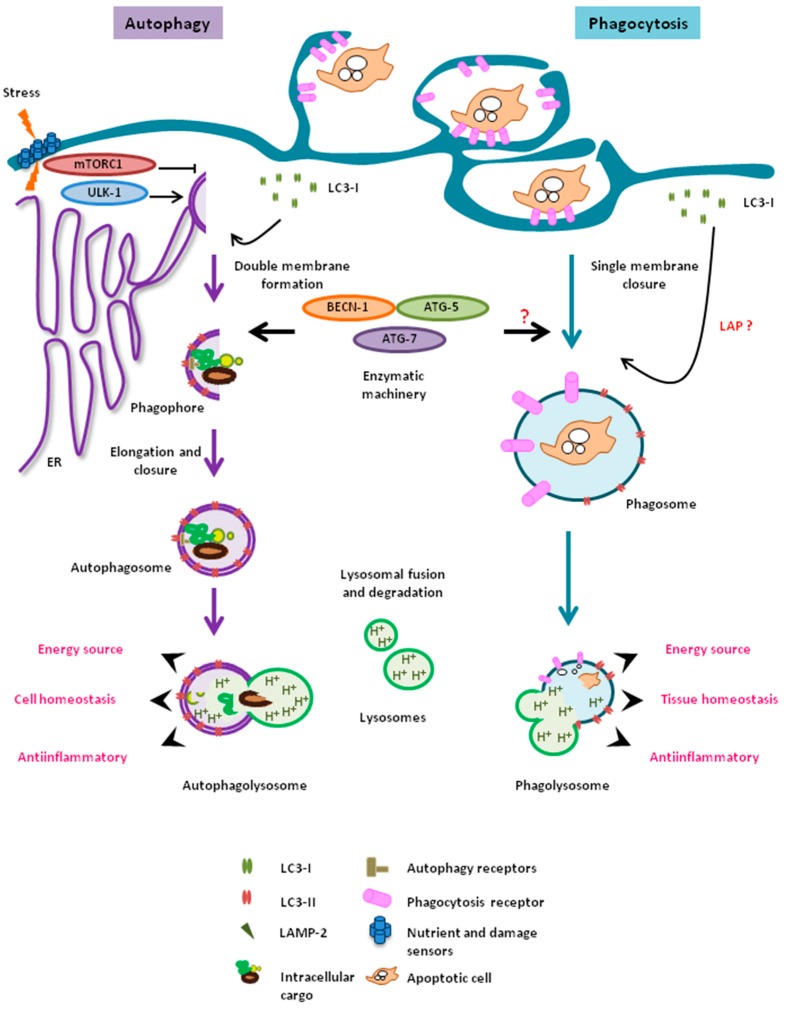
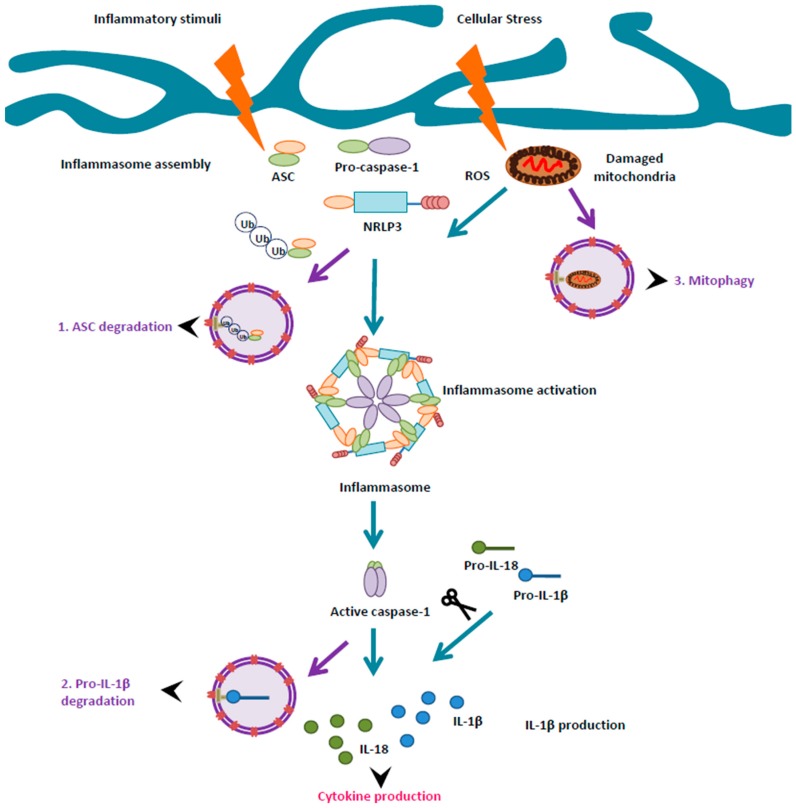
Autophagy is emerging as a core regulator of Central Nervous System (CNS) aging and neurodegeneration. In the brain, it has mostly been studied in neurons, where the delivery of toxic molecules and organelles to the lysosome by autophagy is crucial for neuronal health and survival. However, we propose that the (dys)regulation of autophagy in microglia also affects innate immune functions such as phagocytosis and inflammation, which in turn contribute to the pathophysiology of aging and neurodegenerative diseases. Herein, we first describe the basic concepts of autophagy and its regulation, discuss key aspects for its accurate monitoring at the experimental level, and summarize the evidence linking autophagy impairment to CNS senescence and disease. We focus on acute, chronic, and autoimmunity-mediated neurodegeneration, including ischemia/stroke, Alzheimer's, Parkinson's, and Huntington's diseases, and multiple sclerosis. Next, we describe the actual and potential impact of autophagy on microglial phagocytic and inflammatory function. Thus, we provide evidence of how autophagy may affect microglial phagocytosis of apoptotic cells, amyloid-β, synaptic material, and myelin debris, and regulate the progression of age-associated neurodegenerative diseases. We also discuss data linking autophagy to the regulation of the microglial inflammatory phenotype, which is known to contribute to age-related brain dysfunction. Overall, we update the current knowledge of autophagy and microglia, and highlight as yet unexplored mechanisms whereby autophagy in microglia may contribute to CNS disease and senescence.
自噬正逐渐成为中枢神经系统(CNS)衰老和神经退行性变的核心调节因子。在大脑中,自噬主要在神经元中得到研究,在神经元中,自噬将有毒分子和细胞器转运至溶酶体对神经元的健康和存活至关重要。然而,我们提出,小胶质细胞中自噬的(失调)调节也会影响吞噬作用和炎症等固有免疫功能,而这些功能反过来又会促进衰老和神经退行性疾病的病理生理学进程。在此,我们首先描述自噬的基本概念及其调节机制,讨论在实验水平准确监测自噬的关键方面,并总结将自噬损伤与CNS衰老和疾病联系起来的证据。我们重点关注急性、慢性和自身免疫介导的神经退行性变,包括缺血/中风、阿尔茨海默病、帕金森病、亨廷顿病以及多发性硬化症。接下来,我们描述自噬对小胶质细胞吞噬和炎症功能的实际及潜在影响。因此,我们提供证据表明自噬如何影响小胶质细胞对凋亡细胞、淀粉样β蛋白、突触物质和髓鞘碎片的吞噬作用,并调节与年龄相关的神经退行性疾病的进展。我们还讨论了将自噬与小胶质细胞炎症表型调节联系起来的数据,已知该表型会导致与年龄相关的脑功能障碍。总体而言,我们更新了关于自噬和小胶质细胞的现有知识,并强调了小胶质细胞自噬可能导致CNS疾病和衰老的尚未探索的机制。