Department of Pharmacology and Pharmacotherapy, Semmelweis University, Nagyvárad tér 4., Budapest, 1089, Hungary.
Programme of Proteomics, Department of Neuroproteomics, Paracelsus Private Medical University, Strubergasse 21, 5020, Salzburg, Austria.
Sci Rep. 2021 Dec 14;11(1):23962. doi: 10.1038/s41598-021-03372-y.
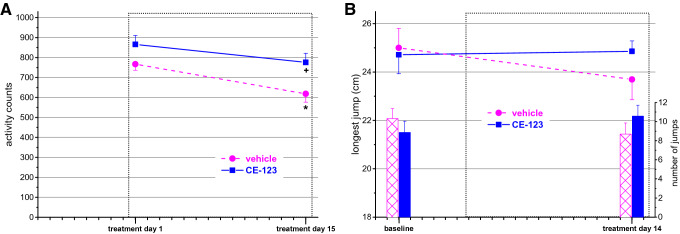
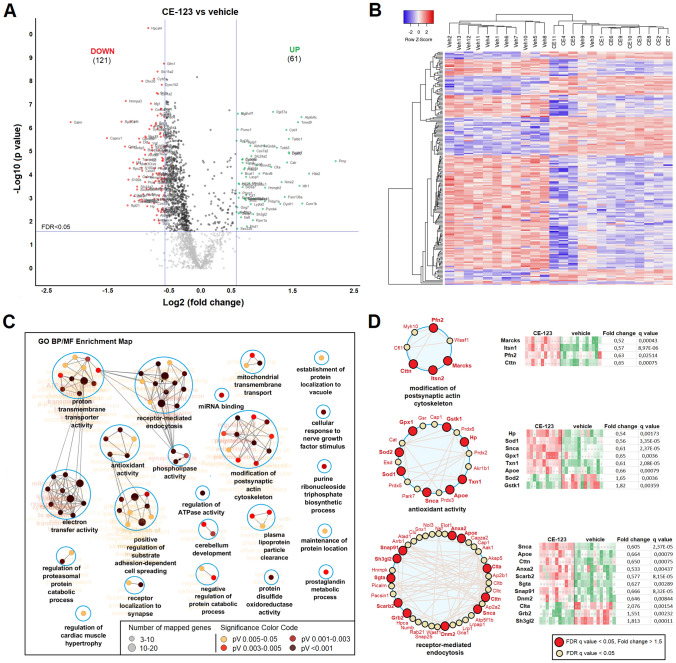
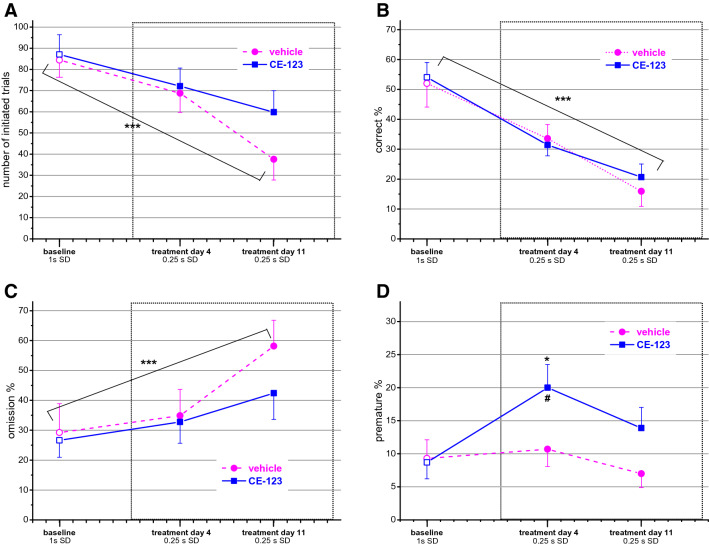
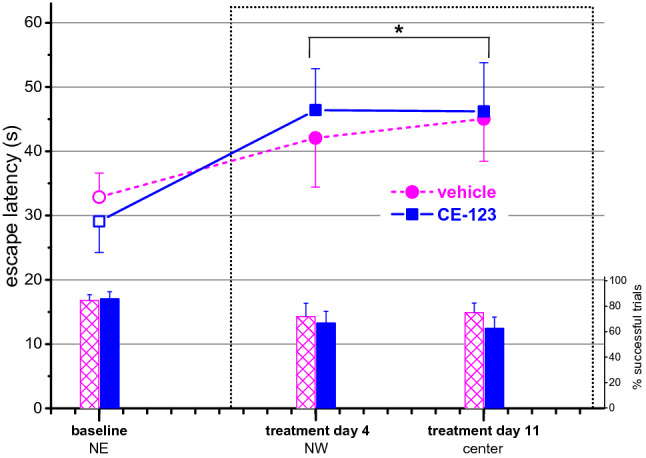
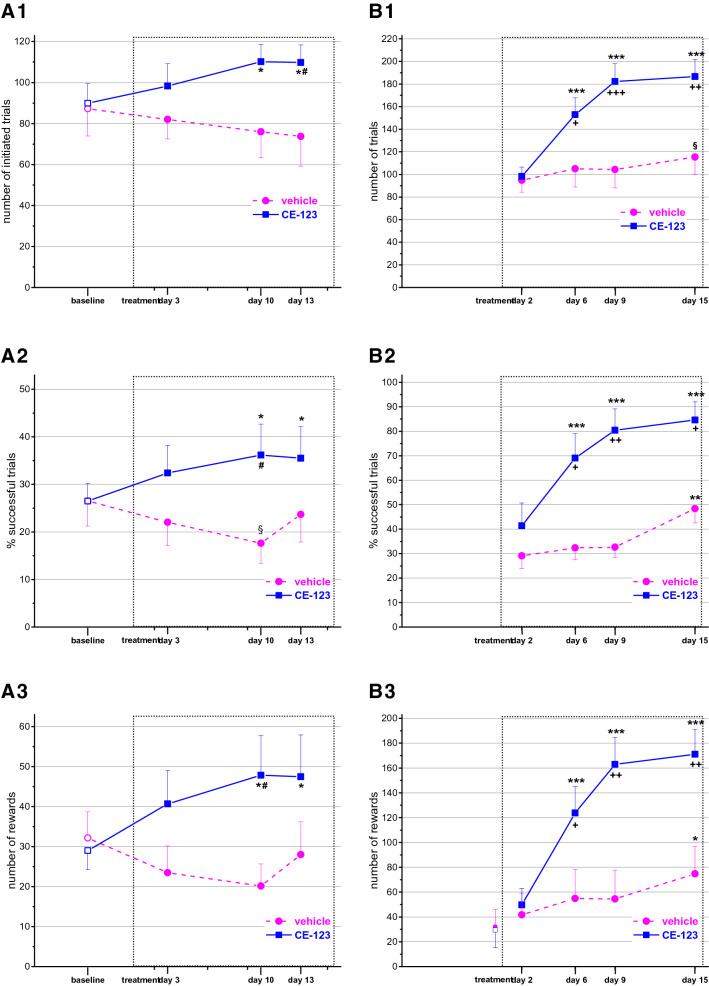
The lack of novel cognitive enhancer drugs in the clinic highlights the prediction problems of animal assays. The objective of the current study was to test a putative cognitive enhancer in a rodent cognitive test system with improved translational validity and clinical predictivity. Cognitive profiling was complemented with post mortem proteomic analysis. Twenty-seven male Lister Hooded rats (26 months old) having learned several cognitive tasks were subchronically treated with S-CE-123 (CE-123) in a randomized blind experiment. Rats were sacrificed after the last behavioural procedure and plasma and brains were collected. A label-free quantification approach was used to characterize proteomic changes in the synaptosomal fraction of the prefrontal cortex. CE-123 markedly enhanced motivation which resulted in superior performance in a new-to-learn operant discrimination task and in a cooperation assay of social cognition, and mildly increased impulsivity. The compound did not affect attention, spatial and motor learning. Proteomic quantification revealed 182 protein groups significantly different between treatment groups containing several proteins associated with aging and neurodegeneration. Bioinformatic analysis showed the most relevant clusters delineating synaptic vesicle recycling, synapse organisation and antioxidant activity. The cognitive profile of CE-123 mapped by the test system resembles that of modafinil in the clinic showing the translational validity of the test system. The findings of modulated synaptic systems are paralleling behavioral results and are in line with previous evidence for the role of altered synaptosomal protein groups in mechanisms of cognitive function.
临床缺乏新型认知增强药物突出了动物检测的预测问题。本研究的目的是在具有改善的转化有效性和临床预测性的啮齿动物认知测试系统中测试一种假定的认知增强剂。认知分析辅以死后蛋白质组学分析。27 只雄性 Lister Hooded 大鼠(26 个月大)在接受几种认知任务的训练后,在一项随机盲实验中接受 S-CE-123(CE-123)的亚慢性治疗。最后一次行为程序后,大鼠被牺牲,收集血浆和大脑。使用无标签定量方法来描述前额叶皮层突触体部分的蛋白质组学变化。CE-123 明显增强了动机,从而导致在新学习操作性辨别任务和社会认知合作测定中表现更好,并且轻微增加了冲动性。该化合物不影响注意力、空间和运动学习。蛋白质组学定量显示 182 个蛋白组在治疗组之间存在显著差异,其中包含几种与衰老和神经退行性变相关的蛋白。生物信息学分析显示,最相关的簇描绘了突触囊泡回收、突触组织和抗氧化活性。该测试系统描绘的 CE-123 认知特征类似于莫达非尼在临床上的特征,表明了测试系统的转化有效性。调制的突触系统的发现与行为结果平行,并与以前关于改变的突触体蛋白组在认知功能机制中的作用的证据一致。