Sahu Kuleshwar, Langeh Urvashi, Singh Charan, Singh Arti
Department of Pharmacology, ISF College of Pharmacy, Moga, 142001, Punjab, India.
Department of Pharmaceutics, ISF College of Pharmacy, Moga, 142001, Punjab, India.
Curr Res Pharmacol Drug Discov. 2021 Aug 19;2:100047. doi: 10.1016/j.crphar.2021.100047. eCollection 2021.
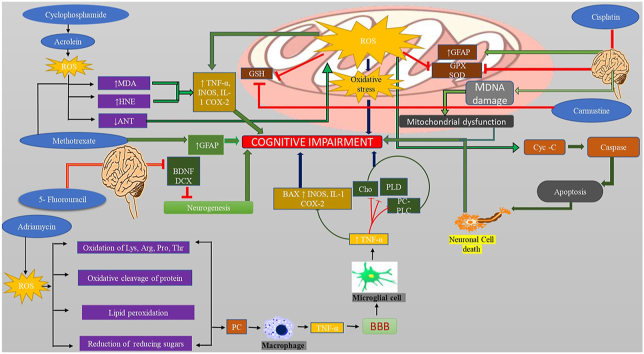
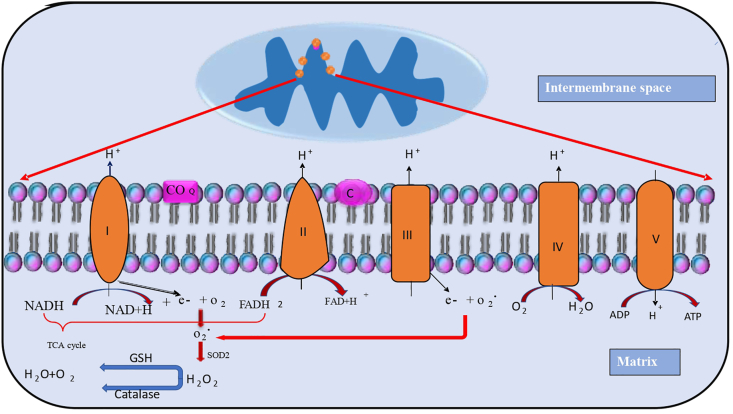
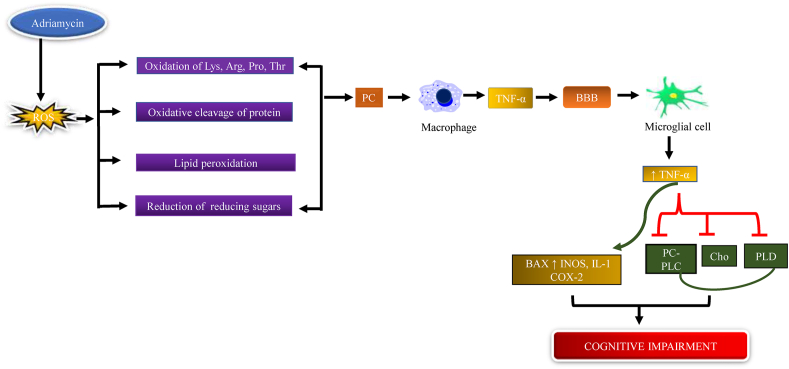
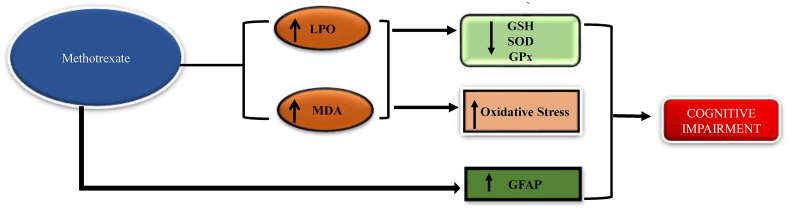
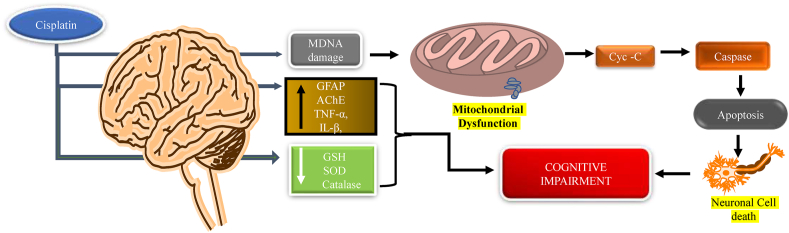
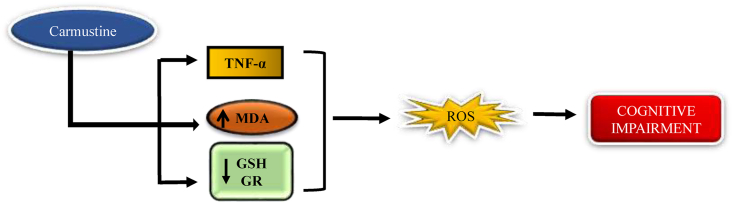
Chemotherapy is an important component of cancer treatment, which has side effects like vomiting, peripheral neuropathy, and numerous organ toxicity but the most significant outcomes of chemotherapy are cognitive impairment, which is mainly referred to as chemobrain or CICI (chemotherapy-induced cognitive impairment). It is characterized by difficulty with language, concentrating, processing speed, learning, and memory, as it affects the hippocampus areas of the brain. Mitochondrial dysfunction and oxidative stress are one of the major mechanisms causing chemobrain. The generation of reactive oxygen species (byproducts of oxidative phosphorylation) mainly occurs in mitochondria that play a prominent role in the induction of oxidative stress. The homeostasis of ROS in the mitochondria is maintained by mitochondrial antioxidant mechanism via enzymes like catalase, glutathione, and superoxide dismutase. Lungs and breast cancer are the two most common types of cancer, which are the most leading cancers in the world with about 4.18 million cases. In this review we exposed the current knowledge regarding chemotherapy-induced oxidative stress and mitochondrial dysfunction to cause cognitive impairment.We especially focused on the antineoplastic agent (ADRIAMYCIN, CYCLOPHOSPHAMIDE), platinum group agent CISPLATIN, antimetabolite agents (METHOTREXATE), and nitrogen mustard agent (CARMUSTINE) which increase oxidative stress and inflammatory markers in the PNS (peripheral nervous system) as well as the central nervous system. We also highlight the behavioural and functional changes in the brain.
化疗是癌症治疗的重要组成部分,它会产生诸如呕吐、周围神经病变和多种器官毒性等副作用,但化疗最显著的后果是认知障碍,主要表现为化疗脑或化疗诱导的认知障碍(CICI)。其特征是语言、注意力集中、处理速度、学习和记忆方面存在困难,因为它会影响大脑的海马体区域。线粒体功能障碍和氧化应激是导致化疗脑的主要机制之一。活性氧(氧化磷酸化的副产物)的产生主要发生在线粒体中,线粒体在氧化应激的诱导中起重要作用。线粒体中的活性氧稳态通过过氧化氢酶、谷胱甘肽和超氧化物歧化酶等酶的线粒体抗氧化机制来维持。肺癌和乳腺癌是两种最常见的癌症类型,是全球最主要的癌症,病例数约为418万。在本综述中,我们阐述了关于化疗诱导氧化应激和线粒体功能障碍导致认知障碍的现有知识。我们特别关注了抗肿瘤药物(阿霉素、环磷酰胺)、铂类药物顺铂、抗代谢药物(甲氨蝶呤)和氮芥类药物(卡莫司汀),这些药物会增加外周神经系统(PNS)以及中枢神经系统中的氧化应激和炎症标志物。我们还强调了大脑中的行为和功能变化。