Institute for Stroke and Dementia Research (S.F., R.M., M.K.G., M.D.), University Hospital, LMU Munich, Germany.
Department of Cardiology (M.F.S.), University Hospital, LMU Munich, Germany.
Stroke. 2022 Apr;53(4):e130-e135. doi: 10.1161/STROKEAHA.121.036306. Epub 2021 Dec 16.
Observational studies suggest an association of stroke with cardiac traits beyond atrial fibrillation, the leading source of cardioembolism. However, controversy remains regarding a causal role of these traits in stroke pathogenesis. Here, we leveraged genetic data to systematically assess associations between cardiac traits and stroke risk using a Mendelian Randomization framework.
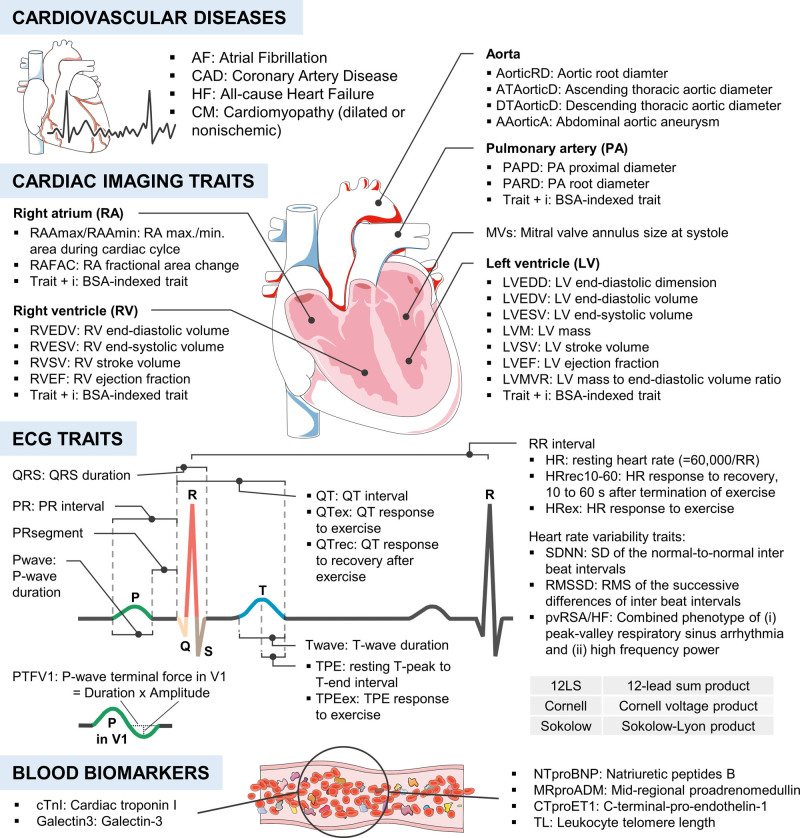
We studied 66 cardiac traits including cardiovascular diseases, magnetic resonance imaging-derived cardiac imaging, echocardiographic imaging, and electrocardiographic measures, as well as blood biomarkers in a 2-sample Mendelian Randomization approach. Genetic predisposition to each trait was explored for associations with risk of stroke and stroke subtypes in data from the MEGASTROKE consortium (40 585 cases/406 111 controls). Using multivariable Mendelian Randomization, we adjusted for potential pleiotropic or mediating effects relating to atrial fibrillation, coronary artery disease, and systolic blood pressure.
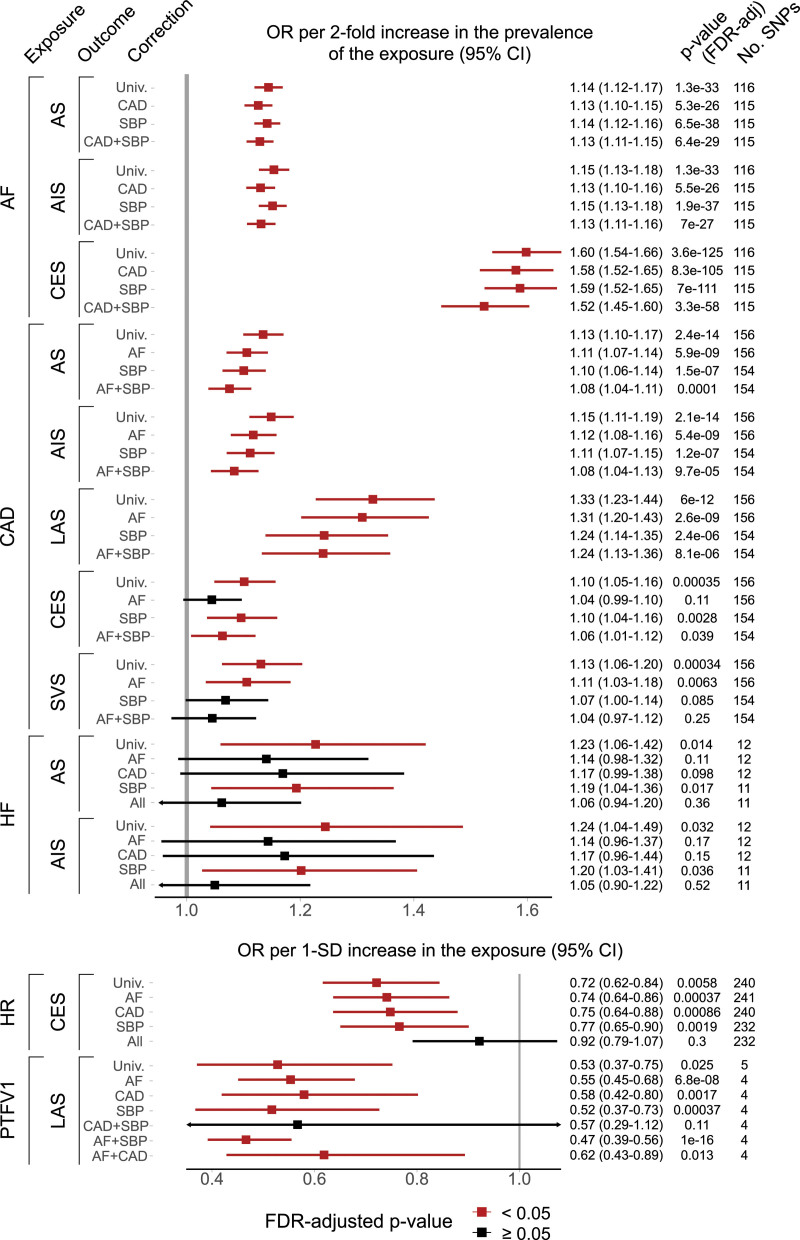
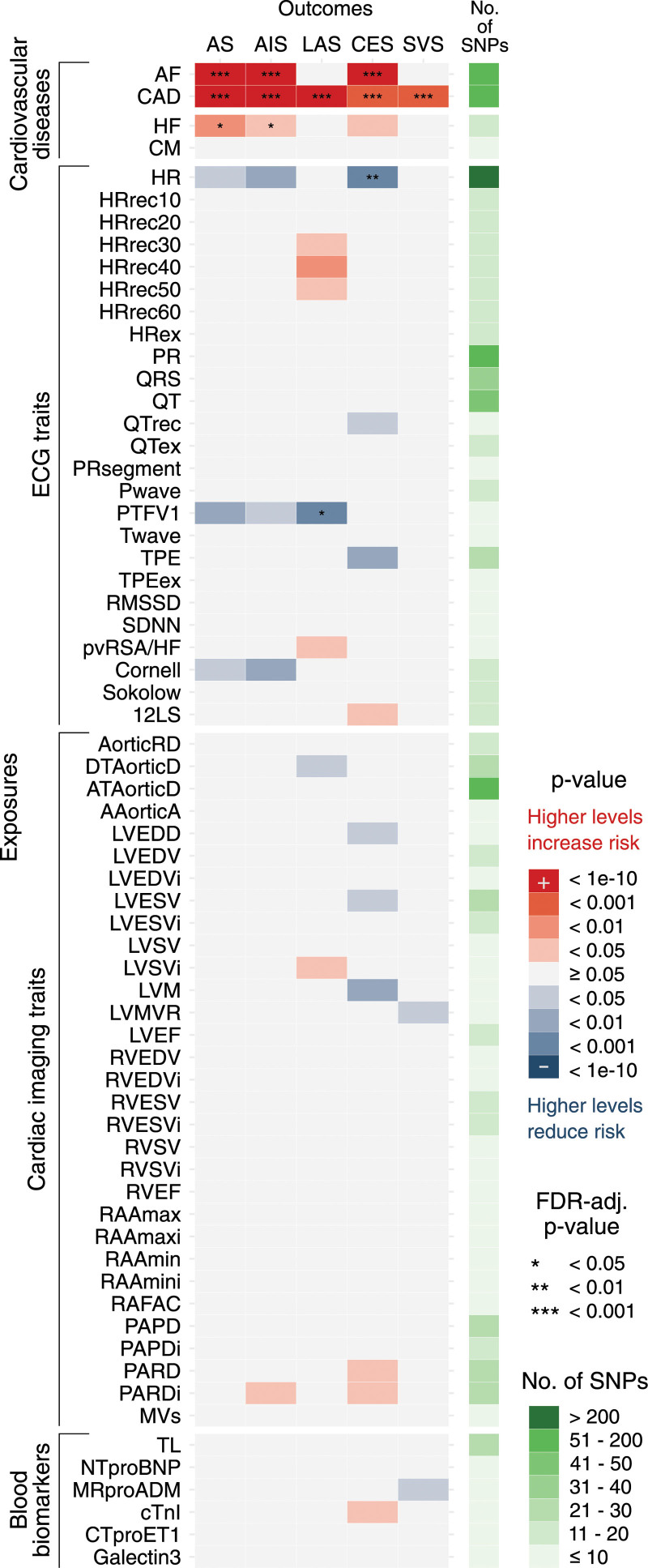
As expected, we observed strong independent associations between genetic predisposition to atrial fibrillation and cardioembolic stroke and between genetic predisposition to coronary artery disease as a proxy for atherosclerosis and large-artery stroke. Our data-driven analyses further indicated associations of genetic predisposition to both heart failure and lower resting heart rate with stroke. However, these associations were explained by atrial fibrillation, coronary artery disease, and systolic blood pressure in multivariable analyses. Genetically predicted P-wave terminal force in V1, an electrocardiographic marker for atrial cardiopathy, was inversely associated with large-artery stroke.
Available genetic data do not support substantial effects of cardiac traits on the risk of stroke beyond known clinical risk factors. Our findings highlight the need to carefully control for confounding and other potential biases in studies examining candidate cardiac risk factors for stroke.
观察性研究表明,除了房颤(心源性栓塞的主要来源)以外,心脏特征与中风之间存在关联。然而,这些特征在中风发病机制中是否具有因果作用仍存在争议。在这里,我们利用遗传数据,通过孟德尔随机化框架系统地评估了心脏特征与中风风险之间的关联。
我们在两样本孟德尔随机化方法中研究了 66 种心脏特征,包括心血管疾病、磁共振成像衍生的心脏成像、超声心动图成像和心电图测量以及血液生物标志物。在 MEGASTROKE 联盟的数据中(40585 例病例/406111 例对照),我们研究了每种特征的遗传易感性与中风风险和中风亚型之间的关联。使用多变量孟德尔随机化,我们调整了与房颤、冠心病和收缩压相关的潜在多效性或中介效应。
正如预期的那样,我们观察到遗传易感性与房颤和心源性栓塞性中风之间存在强烈的独立关联,以及遗传易感性与动脉粥样硬化和大动脉性中风的替代标志物冠心病之间存在独立关联。我们的数据驱动分析还表明,遗传易感性与心力衰竭和静息心率降低均与中风有关。然而,在多变量分析中,这些关联可以用房颤、冠心病和收缩压来解释。心电图的 P 波终末电势 V1(心房心肌病的心电图标志物)的遗传预测值与大动脉性中风呈负相关。
现有遗传数据不支持心脏特征对中风风险的影响超过已知的临床危险因素。我们的研究结果强调了在研究候选性心脏中风危险因素时,需要仔细控制混杂因素和其他潜在偏倚。